View from the Dominican Republic

OUR COVERAGE OF THE JUNOT DIAZ CONTROVERSY CONTINUES

viewfinder

WE’VE been receiving a certain number of tips and information regarding the Junot Diaz matter and are trying to look into all of them. Several of them come from the Dominican Republic.

One, for instance, about the mysterious @Get_Hip twitter account. This person joined the anti-Junot Diaz bandwagon when news broke, claiming to be from the Dominican Republic. Journalist Anna Silman even encouraged this individual to contact her– but when “Get Hip” was questioned about her claims the twitter account swiftly vanished. One of Monica Byrne’s apocryphal 38 names?

punta_cana

AMONG other emails we’ve received, I can excerpt these quotes, from individuals who wish to remain anonymous:

One (almost) invisible aspect– at least in the mainstream media–of this saga is the silence of the Dominican artistic community. Why? you might wonder. According to a well respected male Dominican writer and early supporter of Junot –and early means the time he was starving like a dog–there is a climate of fear thanks to the way some people have reclaimed the #MeToo movement or sentiment to advance their own personal, reactionary and individualistic agendas that have nothing to do with fighting for women’s liberation or fighting for a just and better world. So some people are waiting to see how it all ends. No one wants their careers, personal reputations or livelihoods destroyed by a media frenzy. Despues de la tormenta viene la calma.

And this:

When the Junot affair exploded it also had important ramifications in the Dominican Republic where most people adore him except for right wingers because of his political outlook. In social media, right-wingers used Zinzi Clemmons’ words to destroy Junot and demonstrate what a ‘pervert” and “degenerate” he was. For right wingers, Junot should be silenced at all cost for his outspoken support of social justice causes: immigrant rights, abortion, gay liberation, etc. Was Zinzi aware of the damage she was inflicting on Junot or the Dominican community? Did she know that by attacking Junot she was also silencing someone who spoke out against injustice against immigrants and other marginalized groups in society not only in the Dominican Republic but also in the US? Perhaps she never cared about the consequences or she was not aware of the activism Junot was involved. Or better yet, she never cared. The middle class never cares. Clearly, there are class issues at play. 

Zinzi and the others aided far right xenophobic elements in the Dominican Republic who now argue that Junot is a rapist or a sexual predator. Her actions damaged the reputation of one of the most outspoken writers of these last decades in the US and the world, someone who went to picket lines; denounced corrupt politicians here and abroad and expressed solidarity for the best causes. And the end, this is the story of how a media frenzy was able to silence–for the time being– a public intellectual.
*******

THESE quotes are a mix of information, speculation, and opinion. I’m offering them here for information purposes– our goal to present vantage points not given by the mainstream media. Take them for what you will– Dominican writers can better judge their accuracy than I can.

THOUGH I think in some sense the affair is over– or should be over, given what’s been discovered about the weakness of the accusations against Junot Diaz– I also believe there’s more to find out about the larger picture. Including the full role of media people in creating this controversy on May 4.

If YOU have credible information to add, feel free to send it to us c/o newpoplitATgmailDOTcom.

*******

-Karl Wenclas for New Pop Lit News

How Does a News Story Go Viral?
PUBLICITY IN THE JUNOT DIAZ CONTROVERSY

epstein in cavern

I ADMIT IT. I’m amazed at how fast the publicity game has changed, thanks to social media. Compared to ten years ago, the creation of buzz moves now at lightning speed.

It’s the difference between military techniques in World Wars One and Two. The speed of blitzkrieg in the latter contest revolutionized the game.

As I’ve said a couple times in this series: Who wins the debate over the sexual harassment allegations about prize-winning author Junot Diaz will be decided by who’s better at PR. Institutions (MIT; Boston Review) cleared Diaz, but it’s out of their hands. In the new media age, static bureaucracies have been left behind.

A key post of ours in this regard is “System versus Zeitgeist.”

The Junot Diaz camp is now fully in the game with their army of twitter fans and trolls. They’ve moved quickly up to speed. Will it be enough?

We have two opinion armies maneuvering against one another online– across twitter, blogs, and media sites.

The accusers’ side has made significant mistakes– but their opening moves in the chess game which began May 4th were breathtaking.

CREATING HYSTERIA

epstein again

THE GREATEST publicity feat of all time was the creation of Beatlemania. Most people believe it was spontaneous. Yeah, yeah, the band was talented and young people liked them. As simple as that? Not really.

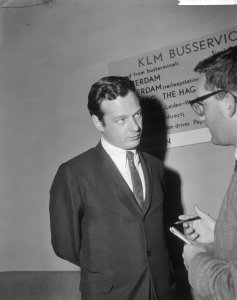
In November, 1961, Liverpool record store manager Brian Epstein saw an unkempt band playing in an underground club in that beaten-down UK working class city and thought, “I can make these guys bigger than Elvis Presley.” A hidden genius behind the scenes, Brian Epstein was in back of every step of the band’s rise. Some of the facts of how he accomplished this are known. For instance, mass hysteria in New York City in February 1964 when the little-known (in America) band landed for the first time. Reluctant Capitol Records was forced by Epstein to spend $70,000 ($570,000 in today’s dollars) to promote their arrival and the concurrent release of their single, “I Want to Hold Your Hand.”

The-Beatles-At-JFK-tarmac-530x353

WE ALSO know the mob of kids holding signs at the airport wasn’t a spontaneous happening. Their presence was arranged. The kick-off of Beatlemania was staged.

MAY 4 ANTI-JUNOT DIAZ HYSTERIA

I’m still amazed at how quickly fervor against Junot Diaz took place. Three threads of tweets from Zinzi Clemmons, Monica Byrne, and Carmen Maria Machado taking place in the middle of night, one right after another. By morning they’d gone viral. To such extent that The Cut’s Anna Silman was already contacting Monica Byrne for a statement.

Spontaneous? Byrne said to Silman, “The network was activated”– which might be clue enough for an explanation.

Monica Byrne’s unsupported rumors about Melania Trump in June 2017, which went viral, albeit on a smaller scale, served as trial run for this situation. This time out Byrne had at least a smattering of substance to the story, and other women on her side. Enough substance that even the mighty and respectable New York Times joined the generated hysteria.

QUESTION: Was the hysteria against Junot Diaz generated or spontaneous?

Another tweet from Monica:

AIDING buzz creation was dramatic language used by the accusers in the tweeted narratives.

BYRNE: “I’ve never faced such virulent misogyny in my adult life.”

MACHADO: “–a blast of misogynist rage.”

Promotional blitzkrieg on May 4th worked masterfully– on that very same day the accusations were news across the globe. The feat deserves a chapter of its own in the history of publicity. The planning and coordination worked– but not well enough to claim quick victory. No knockout. Junot Diaz apologized, but he and his institutional backers held firm. By now, today, the controversy has settled into trench warfare– both sides sniping at each other from steady lines, World War One-style.
For the time being, the controversy is at a stalemate.

wwI
****

WILL the stalemate continue? More to come from:

-New Pop Lit News-
https://newpoplitnews.wordpress.com/

-Karl Wenclas on the literary news beat.


How to Write a Hatchet Job

PRELUDE TO EXAMINING SLATE’S JUNOT DIAZ ARTICLE

axe3

THE TRUTH is that a character assassination can be written on anyone– especially when you delve into the person’s long history of writings and cherry pick from them to bolster your argument.

Did Slate‘s Lili Loofbourow do this in her examination of the Junot Diaz sexual harassment controversy now dividing the literary world?

THE TRICK is that the same treatment could be performed on Ms. Loofbourow. For instance, two minutes of google searching found this article:

“In Praise of Fleabag and the Unapologetically Flawed Female Antihero.”

fleabag

The television show Loofbourow acclaims is, in her own words, “–a tremendous, oddly nourishing show about a liar and thief.” “It’s the story . . . of a woman who reads people too well and takes advantage of them,” “somehow desperate,” “a lean, amoral Matilda with no impulse control.”

(Anyone we know. . . ?)

Reading the article, one would think Lili Loofbourow doesn’t care, really, about apologies– nor about ethical behavior and truth. One could readily believe that Lili Loofbourow is simply a media gun-for-hire, fixing her opinions to fit the needs of her editors– or those of the greater conglomerate media herd.

That would be unfair.

***
THE SLATE article is interesting to me, because it reminds me of a long essay that was written fifteen years ago for a major literary publication, about an activist writers group. A writers group coincidentally devoted to exposing blatant corruption in the established literary world. That long-ago essay was a well-written hatchet job, filled with half-truths, distortions, and omissions. It defined us, creating a narrative which became “the truth” about us in everyone’s heads, so much so that any journalist afterward covering the organization read that essay as part of their research on it, viewing it through the same prism of misconceptions.
***

I’m not complaining. I’m stating how the game is played. Those who rise to a position where they crank out articles for a variety of publications play the game very, very well.

The solution? To create an alternative literary world, and alternative lit-media, not based in the shark tank of New York– one devoted to facts, talent, and truth.

COMING SOON: A more direct look at the Slate article.

-Karl Wenclas for New Pop Lit News.

Playboy and Today’s War Between the Sexes

OR: WHY ARE PROGRESSIVE MEN HARASSING WOMEN?

New Pop Lit

The question isn’t as off-the-wall as it seems. What’s taking place is an internal war between two parts of the sexual/social/cultural revolution which kicked-off in the 1960’s and is ongoing.

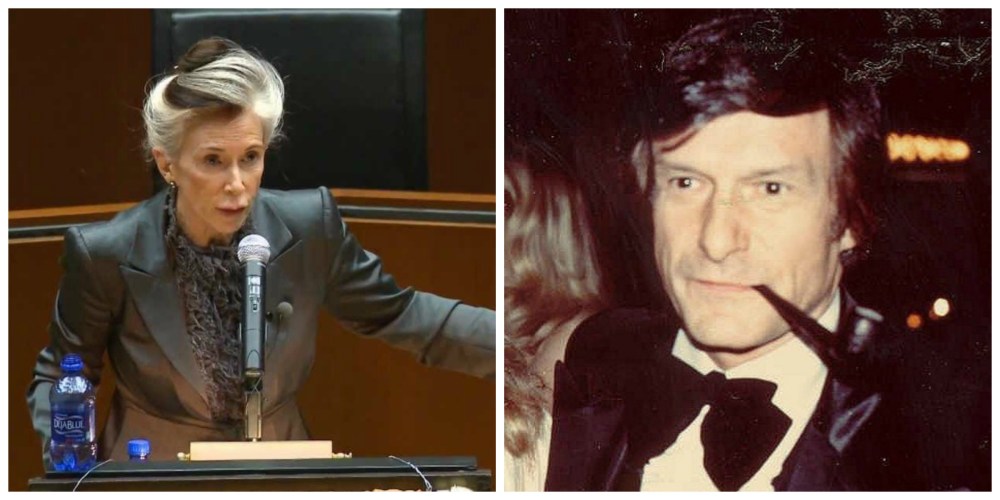
ON ONE SIDE you have the hedonists and free-love people. Their first advocate was Hugh Hefner of Playboy magazine fame.

playboy

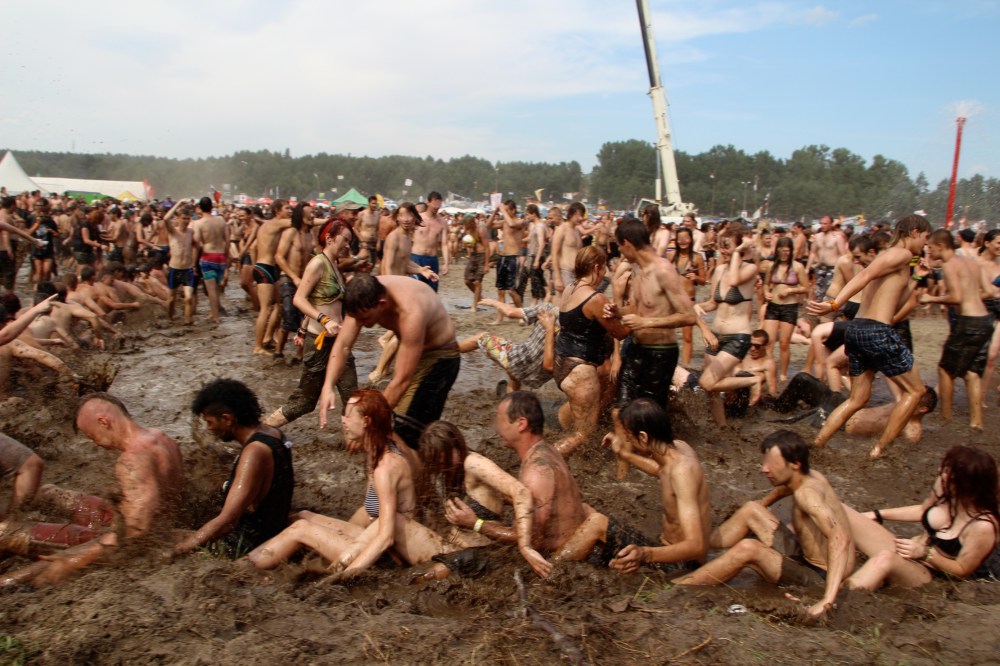
Recall his ethos? The playboy devotes himself to having as many women as he can, all the time. A generation of men– several generations, really– were raised to believe that their share of the sexual revolution could be summed up in one word, which begins with a “p.” (It’s not “playboy.”) Give women their rights; give them their freedom, and this in return was the payment. Another “p” word, “the Pill,” made this, at least for a time, reality. Woodstock, 1969:

Przystanek Woodstock 2012

Free love. Old-fashioned monogamy destroyed.

THOSE MEN who eagerly embraced this were sexist pigs, yes, but many were on the left– or, if they weren’t to start with, soon enough joined it. Businessmen throwing away their ties and grabbing paisley shirts and beads before eagerly jumping into the pigpen with the rest of the gang. Liberation.

*******

THE OTHER SIDE in this battle is the feminist movement, a huge portion of which has pulled back on this unlimited freedom, no limits, appetite-all-the-time part of the deal. Their avatar is Catherine MacKinnon.

mackinnon

What does this have to do with men accused of sexual harassment in the literary realm?

HAVE progressive men, in sympathy with women and women’s issues, felt at liberty to go beyond normal bounds with them?

I’ll explore this, with examples, in my next post. Coming soon.

-K.W.

(Be sure to follow this blog to get all the updates. Much is upcoming.)

Hard Truths

NOT A WRAP-UP OF THE JUNOT DIAZ CONTROVERSY

MIT1

Some truths for both sides of the issue to ponder:

A.)  For the Anti-Junot Crowd:

While Junot Diaz was cleared of charges of harassment by Boston Review and MIT (the same animal), in large part for institutional reasons, it’d be naive to think they didn’t do “due diligence” beyond that stated. The scope of their investigation no doubt did extend beyond the narrow and stuffy walls of MIT. One has to believe they did look thoroughly into those making the accusations. They’re not speaking about this for their own (decipherable) reasons.

B.)  For the Pro-Junot Crowd:

Don’t think for a moment that Junot Diaz is not entirely a creature of that same elitist institution. And others like it such as his literary agent, Aragi; his publisher, Penguin Random House; and the Pulitzer Board, safely placed at the center of east coast institutional power at Columbia University.

Junot Diaz is not a free agent– and can’t be. These forces made him, and so he’s had little say on how any of this game has been played. (Though he’s likely maneuvered behind the scenes.) I’d wager others have dictated what he’s said– always making the proper statements, because he’s always made the proper statements.

I take responsibility for my past . . . This conversation is important and must continueI am listening to and learning from women’s stories in this essential and overdue cultural movement. We must continue to teach all men about consent and boundaries.

Perfectly the right thing (via a statement from his literary agent).

Instead of telling all concerned to go f— themselves and walking away. But that’s not how the game is played.

There are huge benefits but also costs to being a cog in the established literary system, part of its never-ending manipulations.

MIT2

THE ONE QUESTION no one is asking: Why is so much sexual harassment happening, from the very progressive men who declaim loudest against it?

Answers? Does anyone have answers?

-K.W.

(Be sure to follow this blog to not miss any updates.)


Unlocking the Junot Diaz Puzzle

SEVENTH IN A SERIES

lock

Abuser or non-abuser? Who, in the end, is telling the truth about this puzzling lit-world affair? Is there or will there ever be a way to tell?

THE CASE against famed author Junot Diaz is fairly well presented here, where you’ll find the statements– the charges, if you will– against him.

THE STORY is in the descriptions of these encounters– the crux of the matter in this passage taken from Monica Byrne’s narrative:

The table struck up a light conversation about the significance of statistics in publishing. I made a point emphasizing how personal narrative is important in empowering the marginalized. He said (and this is my memory, so I’m not including quotation marks), Well, I don’t know if you know how statistics work, but that’s like saying, Oh, I haven’t been RAPED, so RAPE must not exist.

Monica Byrne mentions the importance of personal narrative. Junot Diaz disagrees with her. Ironically, the accusations against him are three examples of personal narrative and the question is to what extent we should trust them.

Three intense narratives. Three brief encounters with Junot Diaz which occurred four-to-seven years ago. Are the narratives strictly accurate?

The three women were aspiring young writers meeting one of their idols. Could anyone in that situation not treat it as an important encounter?  Would (just asking) the impact of any dismissive or abrupt gesture, a raising of his voice– any formidable disagreement from him– be multiplied several times over?

One of the encounters has already been unlocked. Read the Carmen Maria Machado description– of her encounter with Diaz– linked to above. Then listen to the recorded audio of the same event (their exchange begins at the 33 minute mark):

https://drive.google.com/file/d/1Oc-g4-jx-jlCQG_cuWsJa3IFrET1-3uV/view

A window into history. A disputed event six years ago is history.

A PARALLEL?

moviescreen

When I was a kid my dad kept around the house a collection of boxing magazines. He wasn’t much of a reader– never read a book in his life– but he’d boxed a little in his youth and did like boxing magazines. One of the mags detailed the changes in perception wrought by film archivist Jim Jacobs, who restored footage of many of the classic fights of the late 19th century and beyond, including the Jim Corbett versus Bob Fitzsimmons heavyweight contest of 1897.

BY the 1960’s and 70’s, when these magazines were published, the old-time fights had gained the gravity of myth, due to hyperbolic descriptions in publications like The Police Gazette— which after all needed to sell copies and had to have something exciting to present.

In print, these were terribly contentious, blood-drenched battles. When grizzled boxing writers who’d been raised on the legends saw the long-lost footage, their jaws dropped. Cigars fell from their mouths. Action on the screen was minimal. Being no-limit fights in the hot sun, the boxers paced themselves. The men were merely human beings, not superheroes. (Fitzsimmons knocked-out Corbett in the thirteenth round.)

corbettfizknockout

DRAMATIC LANGUAGE

The reporters in 1897 used dramatic language which colored their descriptions, adding intensity to the event. “Fitzsimmons face was pouring blood–“ Pouring? He had a cut.

Does Machado, a creative writer, color her description?

–he became freshly enraged when I refused to capitulate . . . all (“all”) I got was a blast of misogynist rage and public humiliation– 

IS this in the audio?

*******

IN THE DESCRIPTION of her encounter with Junot Diaz, author Monica Byrne– who I covered in this blog’s previous two posts– writes with similar intensity.

His response was completely bizarre, disproportionate, and violent. I was speechless and felt sick.

Understandable, if Junot Diaz was indeed shouting at her. The question– was he?

UNLOCKING HISTORY

The past gives us innumerable examples of historical events or periods which have been colored in some way– intensified, romanticized, or toned-down– overstated or understated– by later narratives.

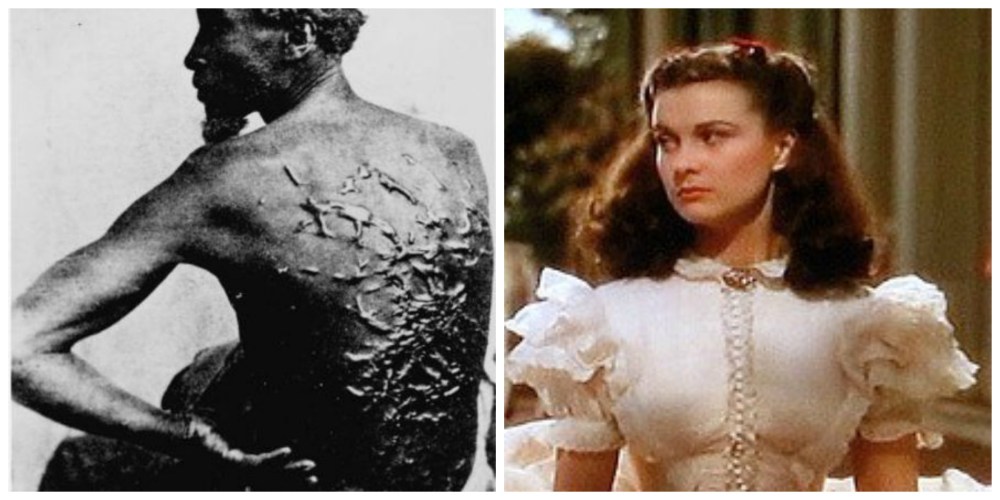
A ready example from the world of letters would be Margaret Mitchell’s novel Gone With the Wind. Mitchell was raised on descriptions of antebellum times in the Old South. She learned the romance of those days, not the horrors.

PicMonkey Collage4

****

THE FLIPSIDE to this is today’s accepted narrative about the 1950’s. Perhaps due to Eisenhower’s low-key presidency (Gore Vidal: “The Great Golfer”), and that it preceded the tumultuous 60’s, it’s considered a bland decade.

Natalie_Wood_and_James_Dean_in_Rebel_Without_a_Cause_trailer_2

Part of this perception was intentionally created by the polemicists of cultural rebellion. They needed a punching bag to knock around. In truth, in the aftermath of the nightmare of the Second World War, America embraced its traditions of country, home, church, and family. Much of the decade was indeed conformist– though hardly as machine-conformist as now.

YET when vintage 50’s cars parade on avenues in display in summer “dream cruises”– a tradition in the Detroit area– perception changes. One can only remark, “Wow!” at the colors and outrageousness on display.

classiccarscollage

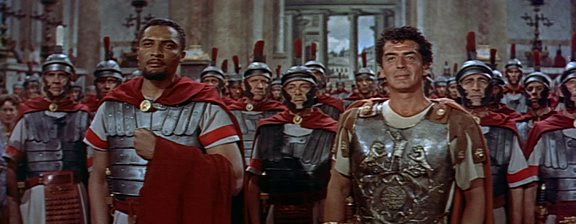
Another example is the sumptuous wide-screen Technicolor movies of the era. No restrained tones or muted emotions in that era. Actors declaimed, music scores blasted and garish color bled from the screen.

DEMETRIUS-AND-THE-GLADIATORS_

ABUSIVE LANGUAGE

HOW do we classify speech as abusive? Where are the lines drawn? Who draws them?

Should we begin regulating not only what a writer says, but how he says it?

Fortunate for Junot Diaz that he publicly speaks in the low-key tones of an academic. He has circulated long enough in the homogenized land of the gentry, and seems to know their codes.

But what of those whose voices are naturally loud and aggressive? Whose personas in public performance and discussion go beyond the acceptable bounds? Can this be allowed?

Questions, questions. Never-ending questions. . . .

-Karl Wenclas


The Cult of Junot Diaz

FOURTH IN A SERIES ON THE JUNOT DIAZ-BOSTON REVIEW CONTROVERSY

beatlemania-beatles-fans-1399906643-view-0

RARE INDEED is it for a writer in  this day and age to create an obsessive fan base– but by all appearances Junot Diaz has done it, as I’m discovering while covering the ongoing controversy over whether he should or should not resign as Boston Review‘s fiction editor. His defenders guard twitter night and day, obsessively noting every hashtag related to the issue and commenting instantaneously. As someone who worries about the health of literature in this country, this is good to see.

THE QUESTION I’ve raised is to what extent the Junot Diaz persona matches the actual person beneath?

It’s unquestionable that he’s an intelligent person– by all indications a fairly complex one. It’d be naive to think he’s not to some extent in his public appearances playing to the needs of his audience. Would this be unusual? Not at all– not even in the pristine land of today’s literary scene, which some want to believe is all sunshine and cotton candy.

(Does anyone truly believe that the public good-guy persona of author-publisher Dave Eggers, for instance, is the actual person? Is anyone that naive?)

THERE’S ALSO the question implied by Carmen Maria Machado in her infamous recorded exchange with Junot Diaz. Namely, to what extent does the character Yunior in his book of stories match himself? A little? A lot? Does Diaz’s actual life match in any way the incidents described in the book? Is Junior in any way an aspect of Junot Diaz’s own personality?

These are questions which his defenders believe aren’t supposed to be asked about him– even though they’ve been asked about nearly every famous author who’s ever existed. (Did Hemingway’s characters resemble himself? Scott Fitzgerald’s? Naw! No way!)

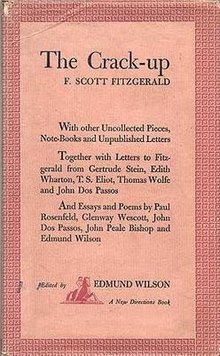
ANOTHER PROBLEM the Cult of Junot has is with anyone who thinks his revelatory memoir in The New Yorker magazine was a mistake. Significantly, most who think it wasn’t are women. But I bring to the question the perspective of a man, taking the stance of the aforementioned Hemingway in regard to a confessional memoir called “The Crack-Up” penned by the aforementioned F. Scott Fitzgerald. Hemingway felt the publication of such material was a mistake; that it was better dealt with obliquely in a novel. Ernest Hemingway followed a stoic code forgotten or dismissed in this day and age.

220px-FScottFitzgerald_TheCrackUp

The New Yorker wants its male writers to reveal– if not revel in– their vulnerability. For example we need go only as far as one of the stories in their current fiction issue, “Fungus” by David Gilbert, which has the weepy male lead character searching at the end of the overwritten tale for a “pregnant tree.”

(We’re doing a feature on “Hamlet” at our main site in a day or two. I’m reminded of one of that character’s lines: “–wise men know well enough what monsters you make of them.”)

WHAT’S HAPPENING

VULNERABILITY. That word is the secret for Junot Diaz’s fanatical defenders and opponents, not a one who’s able to view the recent accusations against him dispassionately. They’re emotionally invested in the guy– likely because he exudes a sense of vulnerability. Women are attracted to this quality in a public personality– as could be proven by a long list of movie stars and pop music idols.

Are Junot Diaz’s accusers in fact (has been charged by his fanatic defenders) themselves frustrated fans? Ex-members of the Cult of Junot Diaz? (One anyway had an affair with him.)

There’s some logic to the idea. And as I said, if people are getting worked up over a writer, pro or con, that’s good to see. (David Gilbert no doubt wistfully wishes he could create that level of hysteria. . . .)

tree

MORE TO COME?

-Karl Wenclas on the New Pop Lit news beat.

Will Junot Diaz Survive?


THE BOSTON REVIEW CONTROVERSY CONTINUES

220px-JunotDíaz069

ART like the world is three-dimensional and should be approached three-dimensionally. A great novel then, ideally, should use multiple viewpoints. To understand an issue– as we’re trying to understand this issue– the critic or commentator should look at it from multiple angles.

Popova_Air_Man_Space

(“Air, Man, Space” by Lyubov Popova.)

YET on this issue of whether Junot Diaz is an abusive misogynist and whether he’s assaulted women and been insulting and patronizing and whether or not he should resign or be fired from the Boston Review, everyone is taking a side. Everyone wants a fast decision (even though there’s a lot of gray in the issue). “Yes! No! Guilty! Innocent!” Dueling mobs, only in this case it’s one mob, with a few deputies standing outside the jailhouse door with shotguns, guarding it like out of an old western movie.

Txrangers3

The mentality is binary. Which is curious, because Boston Review and its opponents stress their support of non-binary persons, but in no sense do they engage in non-binary thinking.

We’re conditioned to think in terms of two choices– Column A or Column B. The court system– protagonist versus antagonist; defense attorney against prosecutor, with no middle ground between them. Politics: red state or blue state. Either-or. Two choices at the ballot box. Which is your party? All-in either way, with no give-and-take. Black-white. Good guys or bad guys. The world as soccer field: choose your side.

IRONICALLY enough, the Boston Review plays this game as strongly as anybody. They present a one-track mindset.

The Boston Review editors know. They have the truth on every issue and are out advocating it– only this time the perceived truth is blowing up in their faces.
****

I LISTENED to the recorded exchange (starts 33:00) between Carmen Maria Machado– one of the main accusers– and Junot Diaz. It’s not an argument, not even a debate. Is Diaz condescending and arrogant? Possibly. The recording is like a modernist painting that the listener sees what he or she wants to see in it.

More interesting is the way Junot Diaz reaffirms his politically-correct stance throughout the talk– even before Machado enters into it. He takes the requisite swing against white supremacy. He mentions “masculine privilege” and “toxic misogyny.” “Sexism,” he says about a book, “is going to be implicit on every fuckin’ page.” He’s saying, “I’m on your side.” Shocked he must be that he’s on women’s side– so he proclaims– but they’re not necessarily on his.

The same holds true many times over for the chief editors at Boston Review, Deborah Chasman and Joshua Cohen. Every article takes a political stand, in the most progressive fashion. It might be the most progressive and politically-correct journal you will ever read. They’re against the cakeshop ruling, neoliberal market police, wealthy whites, and Elon Musk (that chic billionaire– boo!), and pro- California, Afrofuturism, and Planet Earth. Every base covered.

None of this surprising when you realize Joshua Cohen has taught political science at Stanford and MIT, or that his stated mission when taking over as editor in 1991 was to have the journal become more politically oriented, while retaining a profile in fiction and poetry.

The impression given when listening to the recorded Junot Diaz lecture, and studying the Boston Review website, is that literature has become thoroughly politicized. Politics is a major part of the Diaz recording– every question asked and answered comes through a political lens. The audience and Junot Diaz are presumed to be on the same side– indeed, everyone there is. That room for disagreement was found despite this becomes fascinating.

WHAT’S HAPPENING

Revolutions tend to eat their own, whether Danton and Robespierre in one instance, Zinoviev and Bukharin in another.

Stalin-Bukharin

Joshua Cohen and men like him spearheaded a cultural revolution in America. It began in the 1960’s and never stopped. At some point the original grass roots revolutionary impulse became co-opted and since it’s been stage-managed from above. Cohen himself is a graduate of both Yale and Harvard. Elite of the elite. Select of the select. His periodical Boston Review has the superstructure of MIT behind it, as well as this list of powerful individual and institutional donors. Joshua Cohen defines the term white patriarch. Now he finds the forces he helped unleash don’t always behave as he wants.

Arrogance? Of a sort, in that Joshua Cohen doesn’t seem to understand the rules of the game even though he helped create them. In other words, at some level, or many levels, the dispute is about power. Who’ll hold it within the tottering structure of established literature? Who should hold it?

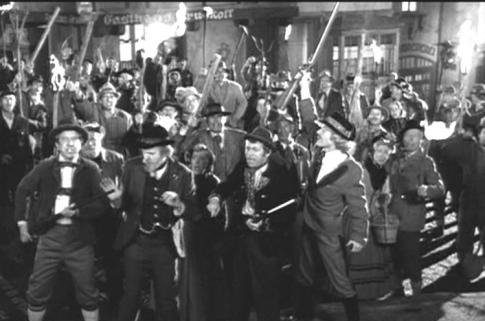
(The lynch mob marches down the street with rope and torches– “Where is he?”– Joshua Cohen at the front of it. “This way!” he shouts. A culprit is found and taken to the scaffold, rope put around his neck– he turns to face the crowd and Joshua Cohen finds to his shock and horror that the figure about to be lynched is him.)

Lynch-mob-2-e1525465690886

MORE TO COME

-Karl Wenclas

Are Comic Books Propaganda?

COMICSGATE EXAMINED

captainamerica1

HOW FAR should one take politics in art?

The question arises with the ongoing “comicsgate” controversy which has split the comic book publishing world. (Background on the issue is available here  and here. Debate has raged across the internet, especially on twitter, for weeks.

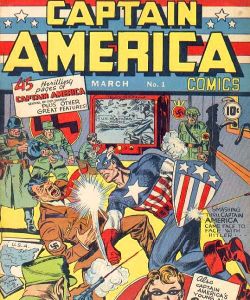
A point made by those on the social justice side of the issue is that superhero comics have always been political. Nazis in particular have been socked by superheroes for decades.

They’re right. Superhero comics have been political almost from the start. The kicker is they’ve been more than political. From World War II through the Cold War they were outright propaganda. Cheerleaders for American empire.

WORLD WAR II

WWIIposter

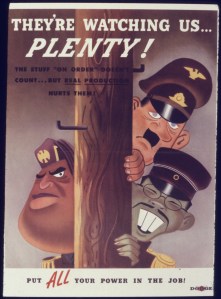
The Second World War was a battle for civilization– a no-holds-barred fight to the death, during which all rules of civilized behavior were broken, by all sides. This was reflected in the propaganda.

wwIIpropposter

Comic books were a big part of this– including “Superman,” fighting for truth, justice, and the American Way.

supermanwwII

STAN LEE AND JACK KIRBY

The two great creators of Marvel characters and storylines during its formative years were both New York City natives who fought in World War II. Both firmly bought into Franklin Roosevelt’s ethos of America saving the world. Given the nightmarish regimes on the other side of the oceans, this was an understandable, even necessary viewpoint.

Kirby and Lee retained this ethos after the war. (Evidence suggests that Stan Lee retains it now.) In the 1960’s they launched “Sgt. Fury and His Howling Commandos,” refighting the same battles.

Sgt_Fury_Vol_1_78

NOT that this was unusual– Germans continued as cartoonish villains across the culture, from movies to television shows to professional wrestling, which featured arrogant Nazi bad guys such as the nasty “Baron Von Raschke.”

baron2

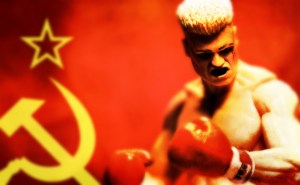
ALL’S FAIR in love and war, as they say, even when the war’s long over. Or even when it’s a Cold War. So, while Sylvester Stallone fought cartoonish Russian movie monsters like Ivan Drago–

drago

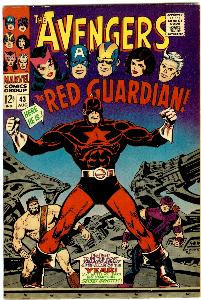
— Marvel’s Captain America battled his Soviet nemesis, Red Guardian.

Avengers-43

The question can legitimately be asked: When were superhero comic books not outright propaganda for Pax Americana– usually of the most jingoistic variety?

MANY of Marvel’s recent superhero movies– the “Captain America” and “Iron Man” series come quickly to mind– have continued this mindset. Always with a global, America-running-the-world mindset. One “Iron Man” flick had the character outdoing drone missiles in blowing up bad guys in Afghanistan. (See this Noah Berlatsky review of it.)

new pop lit's new blog

THE SURPRISE is that today’s social justice warriors in the comic book realm, ostensibly on the left, use these precedents as justification for their political aesthetic now.

(It could just be that “left” and “right” are obsolete concepts for truly understanding today’s world.)

CONTRADICTIONS

When dealing with issues like fascism and anti-fascism, one will always run into a host of contradictions. A good example is recently deceased award-winning novelist Philip Roth. Roth’s 2004 novel, The Plot Against America, depicts a world in which Charles Lindbergh has become U.S. President and imposed a fascist-like regime, with Franklin D. Roosevelt offstage as ostensible good guy. Kind of a misguided slant on history, in that Lindbergh was politically inept and non-interventionist. The contradiction is that FDR himself came closer to being a dictator than any President before or since. Elected for four terms; hyper-devious and charismatic; a popular demagogue; knew how to use media, particularly radio; built America’s military-industrial complex and empowered giant corporations in order to do so; put an unpopular ethnic group into concentration camps; tried many maneuvers to get around the U.S. Constitution; etc. etc.

THIS was the offstage ideologue and ideology which comics creators like Stan Lee and Jack Kirby explicitly followed– a worldwide American interventionist viewpoint.

TODAY

The big comic book companies today have a different agenda– or are pandering to a different agenda. As before, the goal is some level of social engineering– real life masters of the universe deciding from above what the brave new world should look like. Art usually gets lost in the process, and always has.

ART AND PROPAGANDA

CAN art be polemical and at the same time, important art?

THAT Frank Norris’s populist novel The Octopus, and Ayn Rand’s The Fountainhead— the first from the left, the other from the right– are both polemical, yet two of the best American novels ever written, says the answer to the question is “Yes.” But there are lines to be crossed. (Rand crossed them herself in her next major work.)

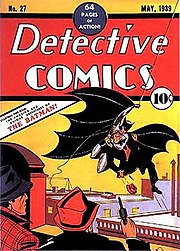
In this critic’s opinion, two major comic book superhero series have crossed into the realm of important, even mythic, art: “Batman” and “Spiderman.” Most of the rest have either been harmless entertainment or indoctrination pamphlets.

180px-Detective_Comics_27

-Karl Wenclas


New Pop Lit’s K.M.C. at WC3!

Wayne_County_Community_College_District_Downriver_Campus_Taylor_Michigan

HEADS-UP that New Pop Lit Contributing Editor Kathleen Marie Crane will be speaking this Thursday, May 24, at Wayne County Community College’s downriver campus in Taylor, Michigan as part of an “Images of Resilience” exhibit. The topic: Recovery. The event will take place at the Heinz Prechter Arts Center. Reception at 6 p.m., storytelling event to begin at 7 p.m. Other featured speakers include marathoner Matt Lockwood and former NFL quarterback Eric Hipple, with NPR’s Shannon Cason as emcee. Don’t miss it!

Address: 21000 Northline Road, Taylor, Michigan.

kathimagesofresilience - Edited

(K.M.C. with the other featured speakers.)