Hyper-Talents of the New Literary Age

book-cover-rex-beach

Part I: STORYTELLERS

The foundation of American fiction from its beginning is the ability to tell a story. Ernest Hemingway referred to this ability when he announced that “All modern American literature comes from one book by Mark Twain called Huckleberry Finn.”

 American literature as a unique art form began as an expression of stories told not in refined drawing rooms, but on whaling ships, on riverboats or trains; around prairie campfires or cracker barrel stores. The story– many told orally in regions without books (at best, with cheap pulp journals and dime novels). Certainly, from a time and place without televisions or smartphones.

In his novel The Virginian, Owen Wister celebrated American storytelling via an extended tall tale told by one of his characters. A tale within a tale. Another example is Mark Twain’s celebrated story, “The Celebrated Frog of Calaveras County.”

The main feature of this style of fiction is the narrative thread. The idea: To keep the listener listening. The reader reading.

This ability has extended through the history of American lit. From the Big Fish That Got Away stories of Herman Melville, to popular magazine stories like Richard Connell’s “The Most Dangerous Game.” From rugged populists like Jack London, Frank Norris, and Rex Beach, through William Faulkner with his gothic legends of the South; even, perhaps, to present-day page turners.

Through operating this modest but ambitious project, we’ve encountered two men whose work embodies the traditional ability to tell a story, while making that story relevant to what’s happening in the present-day world.

****

scott-cannon-photo-2

Our introduction to Scott Cannon‘s art was his long, eerie tale, “Lucid Dreamer,” which combines imagination with the possible, so that it has the feel of an unsettling story told in the woods. Or under a streetlamp at night on an urban streetcorner.

We have, as part of this series, a new story from Scott, with quite a different setting. “Yacht Party” exhibits the writer’s ability to have you see, through sharp description and economy of words, what his characters are experiencing. The best fiction doesn’t distract the reader with unwieldy linguistic fireworks. It puts the reader in the moment. With the plot having something to do with Iran, the story is eerily timely. (Scott sure is a fast writer!)

Check it out!
****

Another storytelling talent we’ve published multiple times is Tom Ray.

tom-ray-photo

As with Scott, Tom’s stories are often quite long. They depend upon hooking the reader at the outset.

Tom Ray’s best setting is Washington D.C., that playground of creepy politicians, oily lobbyists, and the staffers who keep the entire complex bureaucratic machine operating. Could any subject be more topical?!

Our most recent story from Tom, “Benjamin Franklin and the Witch of Endor,” gives us an experienced Insider look. Like Scott, Tom Ray seems to have begun seriously writing after establishing himself in another career, as if he built-up a reservoir of knowledge and stories inside his head waiting to break out.
****

Why do we open this series with two storytellers whose style is traditional?

Because American literature’s opportunity to renew itself depends upon a foundation of authentic American writing. A foundation upon which to build. To express American culture, one has to know American reality and American roots– and know writers whose style is an expression, consciously or not, of those roots. A continuation of a storytelling heritage, combined with the American landscape, which made our writers and writing unique.
****

NEXT: We look at “Portraitists.” Stay tuned!


PLRKNIB: A Book Review

“Stand-Up Comedy and Writing”

A REVIEW OF ALEX BERNSTEIN’S PLRKNIB

Is stand-up comedy a good training ground for becoming a writer?

The question comes up after reading Alex Bernstein’s new memoir, Plrknib. Plrknib is about Alex’s days as a 17 year-old stand-up comic at a comedy club in Cincinnati, Ohio. One gets the impression this is an experience Alex had to write about. It’s a necessary prelude to his becoming a writer.

The book is a primer on stand-up– or at least, a great introduction to it. Despite this, the narrative is insightful more than humorous. Bernstein cautions the reader about this at the outset. Jokes aplenty are scattered throughout the pages, but he makes clear that the effectiveness of a joke depends on the delivery. On how it’s told, the confidence behind it. Confidence communicated to the audience.

(Has Jay Leno ever– ever– told a truly funny joke? Leno is adept at selling a joke, with his big grin and big jaw, hand slapping into the other when the joke’s finished as his eyes scan the audience for confirmation.)

Like a comedian’s joke, Plrknib is the kind of narrative you fight against when you start reading it, but it pulls you along despite yourself. Like most of Bernstein’s writing, it’s irresistibly absorbing. Where is this book heading, you ask? What does “plrknib” mean? You’re skeptical, but you continue reading.

The connection is made: good stand-up operates on the same principle as good writing. The first task is to keep the listener listening. The reader, reading. Alex Bernstein does this in his writing with hooks, but most of all with clarity of style. His voice is infectiously engaging. The effectiveness of any narrative depends on its delivery.

Which doesn’t limit Bernstein to stand-up routines, but sets a foundation for studies of situations and character. In Plrknib Alex Bernstein’s lead character– himself– finds himself again and again in real situations. The kind with which we can all identify.

This is the real punchline.

(Buy Plrknib here.)

Interview with Sonia Christensen

typewriter-keys

(Literary news is when we publish the best new short fiction featured anywhere. In conjunction with the story “Dry Bones” we interviewed the author.)

NEW POP LIT: Hi Sonia. Are you a morning writer or evening writer?

SONIA CHRISTENSEN: Definitely evening, or better yet, night. There’s something about writing in the dark—it’s easier to be honest in the dark, I think, and it’s easier to get lost in your story.

NPL: When did you first begin writing?

SC: I was pretty young when I first started writing. There was a story I wrote in te fourth grade about a girl hiding under a tree (in some kind of cavern? Underground treehouse? Not sure). My mom kept that one in her memories box for years. And then I didn’t have to take gym in the seventh grade because I took writing instead, which is one of the best things that has happened to me to date. I’d say I got serious about writing my sophomore year of college though.

NPL: What was the impetus for your story, “Dry Bones?”

SC: Well the cat was actually real. I had to take the bus to work one day and I ended up walking with a coworker from the bus stop to the warehouse and there was an actual cat there and she did actually say “oh god it’s still there,” and that got my attention to say the least.

NPL: How much of the story is imagined? How much is reality?

SC: So the cat itself was real, although I only saw it the one day and I don’t know what happened to it. Everything else is fictional.

NPL: Who’s your favorite novelist? Story writer?

SC: I’m not sure, my favorites change so often. I just read Bastard out of Carolina and fell in love with Dorothy Allison. But I also love Daniel Woodrell and Gillian Flynn and lately again my childhood favorite, Agatha Christie. Short story-wise I’d have to say Lydia Davis, George Saunders and Tobias Wolff.

***

Thanks, Sonia!

What Is PLRKNIB?

For one thing, Plrknib is the title of a new memoir by Alex Bernstein. But it’s also more than that. We’ll be reviewing the book right here, upcoming. The first of several new releases worth discussing, from America’s best new writers. What’s happening? For literary news we’re the go-to place.

Meanwhile, if you want to get a jump on the crowd and discover for yourself the “plrknib” secret, get a copy via this page.

Report: New Pop Lit in 2016

npl-promo

What were the year’s highlights for the literary project known as New Pop Lit?

Among them have to be the two big Lit Questions we asked writers and editors of all stripes, which received terrific feedback. The first Question was about the contemporary short story. Our second Lit Question was about Ernest Hemingway. You’ll find the answers we received in both cases to be stimulating reading.

The Hemingway question was part of our celebration of Hemingway Day 2016. Another part of that celebration was an excursion by New Pop Lit editors to classic Hemingway country in northern Michigan. If you’re a fan of Hem, or of American literature, or of writing period, our little search for the man and myth makes must reading.

dsc06460

***

Another highlight for us was our appearance at the Troy Public Library, giving a presentation as part of NaNoWriMo (National Writing Month). (Much thanks to Erin Chapman for setting this up.)

dsc06534

***

In-between we found time to feature an array of new fiction and poetry from Tom Ray (twice), Ron Singer, Ian Lahey, Scott Cannon (twice), Jess Mize (three times), Dave Petraglia, (our own) Kathleen M. Crane, Joshua Isard, John Grochalski, Anne Leigh Parrish, “Fishspit” (twice), James Guthrie, Ken O’Steen, Erin Knowles Chapman, Jeff Schroeck, Steve Slavin, Samuel Stevens, Andy Tu, A.N. Block, Alex Bernstein, Andrew Sacks, Bruce Dale Wise, Timmy Chong, David R. Gwyn, Yoav Fisher, Lori Cramer, and a featured book review by Andrea Gregovich, AND several interviews with writers, some of them linked at our “Hype” page at our main site. I’m sure I’ve missed a name or two. Thanks to all the talented people who made our literary project an artistic success.

Last but not least we started a new feature we call Fun Pop Poetry, which can be found at our Interactive blog, along with other cool things. We included there the very best pop poets in America, as well as some of our favorite writers. Please read all 23 pop poetry entries– you’ll find them entertaining.

We’re here to entertain you. (We sneak our artistic theories in the back door peripherally and subliminally.) We’ll be doing a lot more entertaining in 2017.

-K.W.


Our Pushcart Nominations and Why

pushcart-2016

We at New Pop Lit have joined the annual flood of mail sent off to the good people at Pushcart Press in Wainscott, New York, in the form of six nominations for consideration for Pushcart Prizes. Winners are included in the Pushcart Prize annual collection.

Every year the Pushcart people receive thousands of nominations from hundreds of literary outfits. The competition is stiff, to say the least.

If the editors have a bias, it’s understandably toward print journals, as they continue to operate in print. They may also be biased toward “name” writers– we’ve seen the likes of Joyce Carol Oates and Mary Gaitskill in their collection. This is understandable also. The Pushcart people seek credibility and recognition, just like the rest of us.

OUR OBJECTIVES

What should be our objectives when deciding which works published in the past year to nominate?

1.) To nominate some of our best/favorite writings. Including work that pleased our readers.

2.) To present an eclectic mix. We’ve included in our nominations this year a poem and a book review. “Eclectic” in our mind includes mixing younger and older writers.

3.) To give ourselves an outside chance that one of our nominations wins a Pushcart Prize. Which means, long stories or essays are out. As a print publication, Pushcart has strictly limited space. If an upstart like ourselves has ANY shot to be included, it’s with a short work that grabs their attention.

Perhaps the best story we published in the past year was “Lucid Dreamer,” by Scott Cannon. It starts slow, and is quite long. This excluded it, in our eyes, from being nominated. Fortunately, we ran a shorter work by Scott in 2016 which is also an excellent story.

The other side of the coin is that we nominated not one of the “flash fiction” stories we published. Which brings us to our fourth criterion:

4.) To indulge our capricious whims. We’re writers– artists– ourselves. Which means at some point we throw away logic and operate on emotion and instinct. if we don’t have fun doing this project– what’s the point?

*******

OUR NOMINATIONS

“Clarity,” a story by Alex Bernstein.

“Ergo Propter Hoc,” a story by Scott Cannon.

“Diminutives,” a story by Samuel Stevens.

“The Old Neighborhood,” a story by Andy Tu.

“Colapinto’s Undone,” a book review by Andrea Gregovich.

“Death in the Medicine Cabinet,” a poem by Blixa BelGrande.

*******

Many thanks also to Anne Leigh Parrish, Tom Ray, Jess Mize, Ian Lahey, Erin Chapman, “Fishspit,” Tarzana Joe, Dan Nielsen, Wred Fright, and the other talented writers we could’ve or should’ve nominated this year.

*******

Thanks most of all to the people at Pushcart Press. The best way to support what they do is to purchase one of their collections– at a bookstore near you.

A National Book Awards Skeptic

IT’S ALWAYS HEARTENING to see contrarian viewpoints within the often-monolithic established literary world. One of the consistent contrarians is critic and book reviewer Thomas Leclair. Recently he wrote this provocative examination of the National Book Award fiction finalists. (Winners were announced last Wednesday, November 16.) We agree with Leclair’s calling for more nominees from the small press– though we may be thinking of a different small press than he is. Our favored small press is in the process of creation– presenting neither “Big Five” commercialized crap, nor excessively “literary” scribblings penned by an insular literary elite disconnected from the vital currents of the American people and land. We look for a new hybrid– literary art which will be both popular, relevant, and original. A new American literature.

We also note that Leclair avoided the question of political correctness– of whether or not politics and/or ideology played a role in the NBA selection process. The task of the writer– of any artist– is to avoid the trap of an approved status quo viewpoint.

We trust that Thomas Leclair will continue to question the literary status quo, whatever his viewpoint.

(Also see our own recent look at the National Book Award poetry finalists. The announced winner shows the topsy-turvy alternate-universe world of American literature now.)

New Pop Lit at NaNoWriMo!

nanowrimo-banner-1024x290

New Pop Lit editors Karl Wenclas and Kathleen M. Crane are scheduled to make a rare public appearance at the Troy Public Library  on Thursday, November 17th in connection with National Novel Writing Month. Register for NaNoWriMo and read about Troy happenings here, then scroll down for information about our specific event. Or register for our event directly here.

For new writers, we intend ours to be THE NaNoWriMo event to attend. We’ve registered for NaNoWriMo ourselves. Kathleen has begun a new novel. Several of the stories in her collection, Aloha from Detroit, were taken from a novel she wrote. (Yes, writers are allowed to cannibalize their own work.)  Karl meanwhile has resurrected an unfinished novel of his own, excerpts of which were recently posted here.

We also of course edit one of the hottest literary sites around, New Pop Lit, whose mission is to discover exciting new writers. We’ve also published a print issue which we expect to be the foundation for a small press devoted to dynamic writing.

What are various ways to write a novel? How does one overcome writer’s block? How does the new author publish and promote the book once it’s finished? These are questions we’ll address at the event. Are we “experts”? No! We’re in the same boat as you the struggling writer– finding our way in a new publishing environment in which, over the past ten years, all the set rules have been overturned. Never have there been more options for authors– more opportunities. These are exciting times for writing and reading– we’re in the early stages of more changes to come.

See you in Troy next Thursday!


National Book Award Poetry Finalists

dove_rita

LAST WEEK the National Book Foundation in New York, at the center of establishment arts culture, announced their nominees for this year’s Poetry award. Each one of the five finalists has been highly awarded by the current literary system– by foundations, universities and/or governments. One would expect this to be the best of the best.

We did a quick perusal of bios, then examined one poem from each poet. Our grades follow.

***

Daniel Borzutzky. P.C. factor: Of Chilean heritage. The poem: “Sentence”

We found Borzutzky to be a cross between an Allen Ginsberg wannabe and a flarf poet who jams random words and sentence fragments together. The result is pretentious nonsense. We give him a point or two for being tongue-in-cheek, and to be fair, he’s called what he does “Non-Writing.” We won’t disagree. (And, he’s making quite a living from minimal artistic investment, so kudos for that.)

Grade: D.

***

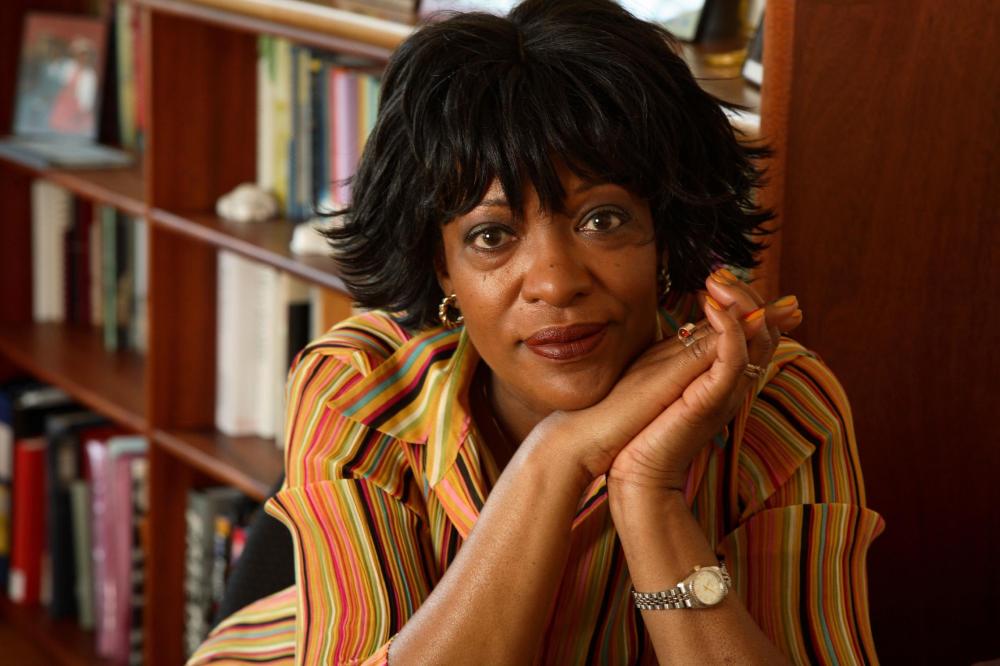
Rita Dove. P.C. factor: African-American woman. The poem: “Heart to Heart”

A short, simple poem which expresses clarity and emotion.

Grade: B.

***

Peter Gizzi. P.C. factor: Token white guy. The poem: “In Defense of Nothing”

Before Gizzi became part of the official literary game, he was a Do-It-Yourselfer. We’d like to give him the benefit of the doubt– but in this case his poem is aptly titled.

Grade: D+.

***

Jay Hopler. P.C. factor: Born in Puerto Rico. The poem: “So Many Birds to Kill and So Few Stones”

We like Hopler’s use of alliteration. Here’s a poet who’s given at least some thought to craft. Still, the title and content are a tad too sober-serious for our taste– as is Hopler’s bio photo. Hopler’s clearly going for the “Poetry is serious business!” crowd.

Grade: C.

***

Solmaz Sharif. P.C. factor: Turkish-born woman. The poem: “Vulnerability Study”

A very simple poem– but we like the juxtapositions. Easy seriousness.

Grade: C.

***

Conclusion: The poems are a tad better then we expected– we’ve seen far worse come out of the academy. But we’re still left saying, “Is that all there is?” Is this all we’re competing against, in our fledgling campaign to remake and renew the art form? At their best, the poems are unexceptional. Not one is going to be remembered and quoted by readers– in the way people quote Poe, or Dylan Thomas, or Shakespeare. Not one will cause a person to sit up in shock or surprise– or outrage– or roar with laughter.

We want better poems!


Interview with a Poet

bruce-photo-007-hawaii

Pop poetry is news. Today we interview poet Bruce Dale Wise, who isn’t specifically a pop poet– though he tells us he’s been writing pop poems, as well as other forms, for years. Bruce is kind of a one-man poem factory. Not surprisingly, he includes poems in his answers.
***

NEW POP LIT:  You’ve said the 1950’s was not the peak period of American poetry. In your opinion, what period was?

BRUCE DALE WISE:  I’m absolutely sure American poetry has not reached its peak yet. I think American poetry will go beyond all that it has achieved.
Though there are good poems and poets from every period, and each era has good qualities that the others lack, I lean to our time, the New Millennial period; the Internet has opened up the possibilities of American poetry, and I think it is exciting to be writing right now.

NPL:  In what ways is your poetry classical? In what ways is it postmodern?

BDW:  It’s classical in that I download ancients, like antanaclasis, am ironic, have epithets will unravel, use synecdoche, symbol and simile, employ metonymy, metaphor, and metre, weigh syllables, and like rhyme.

It’s Postmodern in that I intertext, like retro, am playful, have multiple identities, am hyperreal, and like the royal nonesuch.

NPL:  Please give capsule comments of any or all of the following:

-Edgar Allan Poe

psycho-dark, trochaic crow

-Emily Dickinson

balladeer in headlights

-Walt Whitman

diehard yawper, selfie-unleashed

-T.S. Eliot

new-rotic thief

-Ezra Pound

orphick maniac

-Robert Frost

circumspect rustic

-Kenneth Rexroth

trance-later

-Robert Lowell

robert-lowell
On the Mediocre Manifestations of Robert Lowell
for G. M. H. Thomson

The poetry of Robert Lowell would better serve as planks
in whalers or for firewood for stern New England Yanks.
That grand inquisitor of narcissism left his curse
of wooden, Puritannical, rhetoric’lly-stiff verse.
Lord Weary’s Castle is so ti-rrr-ing it wears one down;
its Quaker Graveyard in Nantucket bores one to the ground.
If Frost had been a piece of cardboard soaked in turpentine
for seventy long years, he’d have become a Lowell twine.
L. Bogan nailed his style—high-pitched, Baroque intensity—
a cross between Donne’s Metafizz and Melville’s density.

-Allen Ginsberg

howling be-attitude

-Sylvia Plath

bi-polar bearer

-Robert Creeley

pop-psych Cyclops

-Maya Angelou

uncaged macaw

-language poetry

languishing, anguishing, hang out the washing, wishing machine

-flarf poetry

Another Literary (Bowel) Movement

“No poet…has his complete meaning alone.”
—T. S. Eliot, Tradition and Individual Talent

If flarf is only so much avante-garde rehashed,
a cutting up of texts, bizarre trajectories,
then it is nothing more than bloviating, mashed-
montage junkspeech, a splash of crushing nectarines.
If flarf is only so much fluff without dream’s stuff,
its reject glories but reshuffled errancies,
a googol Google-goggles gone up in a guff,
then it’s damn yadda dada data dayadhvam.
If flarf is only one technique, a stylized puff,
a sweep of e. e. cummings going o’er the dam
of jetsam/flotsam/get-some/got-some crashflash smashed,
without tradition, it is individu’l spam.

-hip-hop

scop shop (pronounced shope shop)

-open mics

Poetic Slams

Poetic slams are all the rage. The people rise
up, yes, to let it all out—Pentacostally.
Perhaps they grab a mike with fire in their eyes,
and then proceed t’ orate, o, so passionately.
Like lovers giving lovers kisses, they begin
to let fly words. A hundred at a time, words flee
from out round mouths, o, hundreds at a time they spin.
And then it all starts to add up to thousands, yow,
so that one cannot count them all in such a din.
They go at it, like wolves out in the night—and howl—
intoxicated, soaring on linguistic cries
and verbal acrobatics, slamming, whamming, zow.

-poetry in the academy

itty-bitty uni-verse

NPL:  Who is the best current American poet, in your opinion?

BDW:  I sure as hell am trying to do my best, but as for best…

America is chock-a-block with poets; there are millions; and you can learn something from nearly all of ’em, even if it’s learning what not to do.

NPL:  How do you view the future of American poetry?

BDW:  Jetsonic, like the Jetsons, out there—boldly going where no one has gone before—at warp speed.
***

(For more Bruce Dale Wise poetry see our Four Poems feature on Bruce.)