The Decline of Literary Criticism?

OR THE DECLINE OF LITERATURE?

ERNEST HEMINGWAY

AN INTERESTING ARTICLE appeared last week at the Time Literary Supplement“Death of the Critic?” by Michael LaPointe. The article addresses the topic of the decline of literary criticism via addressing two recent books on the subject.

LaPointe argues against nostalgia for bygone literary days. He says the importance of literary critics circa 1950 was an aberration. In his eyes the absence of strong figures like Edmund Wilson and Lionel and Diana Trilling today is not to be taken too seriously. He concludes, in fact, by suggesting literature must become more detached from the culture-at-large. From general society. You know, like monks scribbling away in monasteries in bygone medieval days.

The bigger story is right in front of him, but Michael LaPointe waves the story away– the decline of literature in the culture.

CULTURAL FOOTPRINTS

Publishing seems as healthy as it’s ever been. Book readership has kept pace with GDP growth, demographic changes and the like. But that’s the point– it’s only kept pace the last seven decades, maintaining incremental improvement year-by-year, while overall cultural noise has exploded exponentially. While rival claimants for attention– notably sports and music– have increased their cultural profile many times over.

QUICK: Can anyone name an NFL player from 1950? Bob Waterfield maybe? Or a basketball player??

c o ebay(photo c/o ebay.)

In 1950 NFL football was scarcely a blip on the cultural radar screen. It produced zero (0) figures as recognizable and renowned as Ernest Hemingway.

Today the situation is reversed. With the rise of the NFL has come countless commentators and analysts– magazines by the score and entire cable networks– devoted exclusively to picking apart every last personality and encounter involving their favorite game.

Music? The music business began increasing its cultural footprint beginning in 1956– interest generated by energetic new products and wildly charismatic personalities.
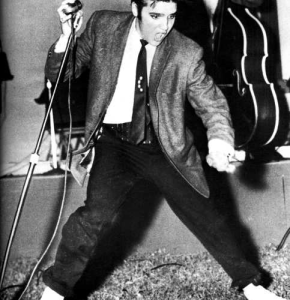
elvis-1

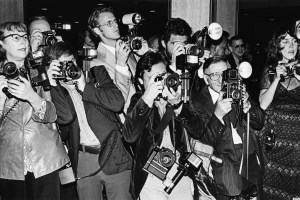
With the rise of rock came the creation of the rock critic, via flagship rock magazines like Creem, Rolling Stone, and many others.
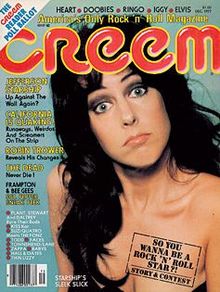
creem

Meanwhile, the ship of literature floated placidly along. Unconcerned. Unaware. Complacently satisfied that within the stuffy world of letters, all seemed fine.
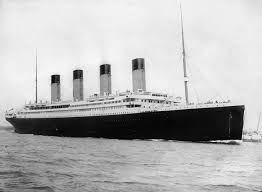
titanic

Literature’s leading figures became less charismatic, less interesting. Finally– with the likes of Donna Tartt and Jonathan Franzen– either reclusive or irredeemably bland.

Jonathan_Franzen

The art’s attempts to reverse this situation– with authors literary or popular from Roxane Gay to George R.R. Martin– are going no place. (Bret Easton Ellis fights heroically to gain cultural attention, but is himself too identified with a moribund and stuffy “Big 5”-backed establishment literary scene to make much headway.)

Without an exciting underlying art to describe, there are unlikely to be exciting critics to describe it.

IS THERE A SOLUTION? 

YES! The solution is the one we prescribe: to mesh both poles of the art, the literary and the popular, creating a new synthesis that’s relevant and meaningful yet connects with a large portion of the populace at the same time. Popular critics would arrive as byproduct.

This starts with a better product. (See recent posts of ours about the 3D Short Story here and here and here.)

Then, more striking personalities to become faces of a renewed art.

Quixotic? Maybe. Art is never transformed by the timid.

Titanic_the_sinking

It’s time for literature to walk away from its clubby salons and musty university lounges and step fully back into the game.

THE 3D STORY DEBUTS JUNE 6 AT OUR MAIN SITE.

http://www.newpoplit.com
*******

-Karl Wenclas, New Pop Lit NEWS

Literature of Limits

THOUGHTS ON SALLY ROONEY’S NOVEL NORMAL PEOPLE

steel box

ONE CAN’T HELP but notice, with the massive hype accompanying the U.S. release of the Sally Rooney novel Normal People, how willing literary people today are to settle for limited accomplishment from limited talents. To accept the achievement of small effects, delicately arrived at.

I read the novel before most because a friend of ours in the U.K. gave it to us. It’s not a bad novel. Not at all. But the final emotion given this reader upon finishing it was, “So what?” Is this really the best Big Five London-New York publishing can come up with? Careful language, careful plotting, careful characters, careful themes and ideas– as if today’s world of political correctness has put today’s writer into a cage.

rusted-lock-on-the-fence

Maybe it’s not politics (though there are signs that it is). Possibly it’s the temperament of this age, to see the world in muted tones. Melodrama? Heavens no. The reverse. By and large no drama– other than a couple brief appearances of a mostly offstage male villain in the form of an angry brother– whose rage is never explained or understood. Or the drama of deciding which MFA writing program to enroll in. (I kid you not.)

For temperament and limits, this novel can be compared to the delicate poems of recently deceased award-winning poet Mary Oliver, which aim for modest achievement, limited effects. Worthy, if that’s all you want– but a distinct dropping off from the exuberance of a Walt Whitman or Allen Ginsberg. Or the craft and passion of a Sylvia Plath.

Today’s literature exists inside the constraints of a cage or a box. It’s time to crash out.

(As we’ll attempt to do with our 3D Story project.)

3-D BIG 4-page-001 - Edited
*******

-Karl Wenclas, New Pop Lit News

Media Insanity Report

KEEPING UP ON MAINSTREAM MEDIA ANTICS

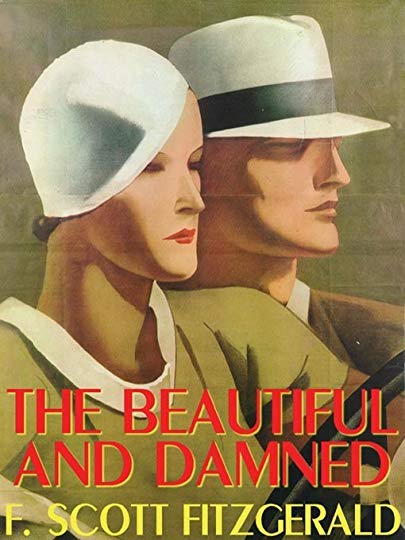
beautiful and damned

-A NEW FEATURE-

WE JUST learned today that the term “lady” is now considered unacceptable by the Orwellian arbiters of thought and language. I’ve seen the notorious wannabe-totalitarians known as the Poetry Cops complain about the term. Now, from someone a bit higher up on the media power ladder– Ginia Bellafante of “paper of record” The New York Times.

QUESTIONS arise.

-Is the term “gentleman” also considered offensive? (Does this explain Brett Kavanaugh‘s alleged behavior in the past?)

-Does the prospective outlawing of these terms explain a lot of behavior from a great many people in recent years?

And finally–

-WHO is going to tell Lady Mary?

downton-lady-mary_3061685b

THE spectacular success of Downton Abbey (movie version being filmed as I type this) might be because a large part of the populace is tired of people looking like slobs. They’d like a return to those old-fashioned concepts of grace, beauty, class, and style.

Even (gasp!) a return to ladies, and gentlemen.
*******

-Karl Wenclas, New Pop Lit NEWS

Unreason and Literature

OBJECTIVE TRUTH IN THE JUNOT DIAZ CONTROVERSY

scalesofjustice

Interesting to me is how the Junot Diaz accusers and the accusers’ supporters aren’t interested in the truth of the matter. To them, objective truth is an outmoded concept. To them, objectivity is impossible. They don’t care about evidence or the lack of evidence, because to them, evidence is irrelevant.

Most important is the cause.

An anti-Junot Diaz advocate tweeted this quote from Nietzsche:

All things are subject to interpretation. Whichever interpretation prevails at a given time is a function of power and not truth.

Nietzsche

It’s a Nietzschean concept, and also a Hitlerian one.

We’re living in a post-truth age. We’ve seen this in fiction for awhile. More and more, best-selling novels are about fantasy, not reality. Fantasy of some kind, be it vampires, zombies, sci-fi– or the medieval dragons of George R. R. Martin and Company.  Quite a difference from, say, sixty years ago when readers still lived in reality and expected to encounter reality in their reading.

2010-01-C&E_Dragon(Artwork: David Revoy/Blender Foundation.)

A noteworthy example of this change is chief planner, organizer, and accuser in the Junot Diaz Controversy, Monica Byrne. Would that her novel was as well plotted as the Diaz takedown. Instead, it’s an assault of Too Much Information– experiences and imaginings jammed together with uncountable settings, characters, and ideas in a well-written but ultimately incoherent story.

Byrne classifies herself as a Christian– a style of Christianity untethered to any church or doctrine. A belief system where the individual herself determines her own beliefs, her own morality.

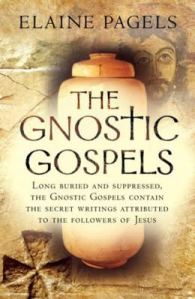
It’s old-fashioned Gnosticism, which gave established Christianity heavy competition around 150 A.D.

the-gnostic-gospels

-Whoever follows the direction of his own mind need not accept anyone else’s advice.

-Convinced that the only answers were to be found within, the gnostic engaged in an intensely private interior journey.

-Elaine Pagels
***

TODAY: Post-truth, post-reality, post-objectivity– spawned by postmodern philosophies which began with Nietzsche. Truth merely a construct. Who’s better at selling their version of truth? One version is as good as another– the conflict little more than a PR battle.

1979 Grammy Music Awards

Pretended truths and made-up belief systems on all sides. It’s not new. Nietzsche brought forth from his own insanities nothing new. The mindset has been with us for millennia.

Gnosticism matches the attitude toward objective truth found among the Junot Diaz accusers and their supporters. If it’s “your truth,” that’s all that matters. Your truth, your reality, accuser always believed. The accused is assumed to be guilty.
***
Responses to these remarks are invited.

-Karl Wenclas, New Pop Lit NEWS


Junot Diaz and the Sensitivity Police

SENSITIVITY TRAINING FOR ALL NOVELISTS?

USAF_Mess_Dress

(NOT the Sensitivity Police.)

I DISCUSSED the matter months ago in the latter part of my second post about the Junot Diaz controversy. The rules and standards the writer must obey, and the lines he or she must never cross, expand by the day. Maybe the hour.

The writer’s personal behavior is subject to scrutiny in the new Orwellian literary world. But as important is a person’s writings. Fiction is no longer regarded as fiction. It will be used in judging you.

dress uni woman w knife

Case in point is this essay by Lyta Gold from the precocious characters at Current Affairs which appeared on May 8th. (I’ve covered Current Affairs before at this blog, including here.) Note how, referring to Junot Diaz, Lyta Gold has “strongly suspected, from his prose alone, that he’s a virulent misogynist.” Quite a leap. (Was the character Popeye in William Faulkner’s novel Sanctuary based on Faulkner? Who knows!)

The atmosphere of Gold’s essay is not that of literature, but religion. Current Affairs‘ peculiar pseudo-Communist/Social Justice religion.

Military_of_Hungary-welcome

The giveaway line is when Lyta Gold says, about Junot Diaz’s writing, “his work was presumptively taken to be flawless and free of sin. . . .”

Free of sin? Is this how writing is being judged?

Nun_ruler - Edited

Lyta Gold further says that “no writer . . . gets to be validated by invisible particles of virtue.”

Well, yeah. But is this the standard? Is this why Junot Diaz was validated to begin with?

Virtue?

David_A_Christian_in_dress_uniform(Literary awards– for virtue?)

Or because of his writing? Why are writers published? If all that will be accepted, after thorough personal screenings and background checks, are virtuous writers, the art of literature will be in even more trouble than it is now.
***

current affairs staff

(Current Affairs staff, from their website.)

PART of what’s happening, ironically enough, is the imposition of bourgeois morality. The Current Affairs staff, like many such staffs, is completely bourgeois in background and sensibility. When expedient– in feeding their own selfish needs and conveniences– they’re as egoistic as Ayn Rand. In the case of Current Affairs, ambitious careerist ladder climbers. Harvard grads, most of them.

The happenings which Junot Diaz puts into his stories and novels are outside their experience. Not surprising, then, that they’re thrown by them. Which doesn’t justify an easily applied label like “misogynist” (a clinical term). If we start judging writers by their musings, their fantasies, and their fictional characters, we’re all in trouble.

This could be the future, if the Sensitivity Police have their way. A kinder, gentler literature– innocuous, harmless, and irrelevant.

The_Bow_(11106700545)

Comments are welcomed.
****

-Karl Wenclas for New Pop Lit NEWS