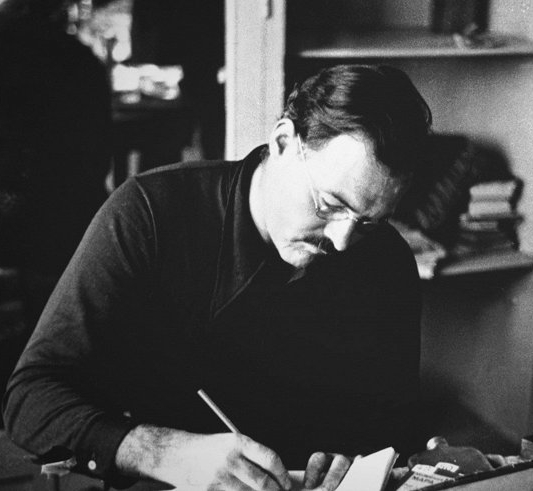
How Ernest Hemingway Reinvented the Literary Game

(image c/o Everett)

Achieving Artistic Breakthrough

Has Literature Failed the American People?

All About “The Loud Boys”

Styles of Failed Literature

MOVING BEYOND THE PRESENT: A DISTEMPERED ANALYSIS

fahren 451

FEW individuals involved in the creation and packaging of literature would argue there are any failed styles. After all, the Big Five book conglomerates remain in place, authors still receive six-or-seven-figure advances, and several of their books sell millions of copies. The industry chugs along.

HOWEVER, if the goal is to push the art and industry to new levels– to no longer consider “literature” as a separate phenomenon, but to compare it with other cultural happenings such as sports, movies, music– then as a whole literature is failing, because it’s no longer at the center of culture (as it once was), and is not connecting to large segments of the public in any fashion.

CURRENT OPTIONS

What are several of the current alternatives for writers and readers?

MEDICINE LITERATURE

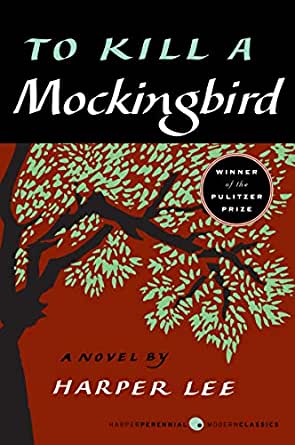
harper lee

This comprises novels and books you’re supposed to read because they’re good for you. They address a cause or societal ill. At times they’re “of the moment” and sell well. Usually though they’re hitting you over the head with a problem you already know about, are poorly written, and deadly dull. They win plaudits and awards, but 999 out 1,000 aren’t going to generate excitement within the culture-at-large, sorry. Life isn’t fair.

“LITERATURE” LITERATURE

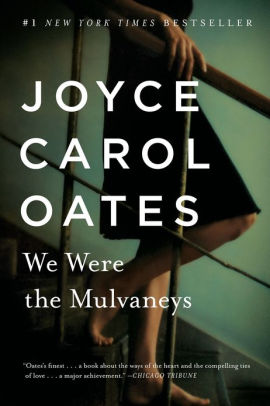
oates 2

This category includes standard big novels written by the likes of Joyce Carol Oates, as well as short stories by Oates, John Updike, Jonathan Franzen, Alice Munro, ad infinitum. The works are distinguished by Detail Disease, aka word clot. Meaning, they’re a slog to get through. Only the most intrepid young person (or adult) will make the effort. For those who do, it’s all the same tepid insights and weak-tea conclusions. Going to save literature, when it’s been the cause of literature’s downfall? Nope.

ADOLESCENT FANTASY LITERATURE

martin 2

An enormous category with a host of big-selling authors cranking out massive volumes of unending sagas. Behind them await tens of thousands of other wannabe-novelists creating their own interminable tomes. Why are these novels not the answer? After all, they do sell.

They’re not the answer because they’re crap. It’s impossible for any serious person beyond the age of seventeen– or twelve– to take any of it seriously. Yes, many do. You see them dressed in bizarre costumes at fantasy or sci-fi conventions. The books are popular. That’s good. There are lessons to be taken from it. It remains silliness, not great art.

On top of that, none of the famed authors has the requisite charismatic persona to upend the culture. George R.R. Martin is not going to.

DYSTOPIAN AND POST-APOCALYPTIC LITERATURE

atwood

Margaret Atwood is the best-known contemporary practitioner of this kind of work. In the Age of Hysteria we’re living through, they add more hysteria. Truth is, there have been two or three, tops, of these kind of authors who’ve been any good, George Orwell among them. Even Brave New World is a terrible novel.

DEPRAVITY LITERATURE

martin-bukowski

Maybe horror novels can be grouped in this category (though many belong in fantasy with the vampires and werewolves). This category includes sub-Bukowski Lit, where the author becomes as gross and psychotic as possible in constructing the narrative– and likely, in real life, is. (Incel Lit is a new variation.)

NEOCON LITERATURE

brad thor

This category was popularized by Tom Clancy of Hunt for Red October fame, but might be more typified by spy novelists Robert Ludlum, Vince Flynn, and Brad Thor, who each presumably have teams of agents in Langley, Virginia writing their books for them. (They’d have to, because Ludlum and Flynn have moved on from this world.)

My attitude toward these novels might be typified by a review I wrote about one of their number back in 2012 at a now-defunct blog.

CONCLUSION

My informed conclusion is that nothing coming from one of these categories will rescue the literary game. They’re accepted and known.

What will take the literary art to another level?

THAT is what we’re working on. Stay tuned.

<<<<>>>>

-Karl Wenclas for New Pop Lit NEWS


Why Reading Is Important–

–TO ME AND TO SOCIETY

0823191148

My father could scarcely read.

At the time I was born already well into middle age, my father was from a different era and a very tough background. Had dropped out of school in his teens. After he married, my mother forced him to attend night school while he worked days in Detroit shops and factories. By the time I came around he was semi-proficient. What he most enjoyed were the comic sections in newspapers, and boxing magazines.

My gateway to reading– like many young guys– was comic books. Spiderman and company. After awhile I became hungry for more challenging reading. Mysteries were stimulating. I devoured everything by Raymond Chandler, whose paperback books carried enticing titles on dangerous-looking covers.

the high window

Eventually, while working nights as a clerk in a railroad yard– with time to kill between trains– I moved up to the heavyweights of reading: Tolstoy and Dostoevsky. War and Peace and The Idiot. Life-changing novels. The kind of artistic experience which expands the mind and the imagination, opening up new vistas, entire worlds.
*******

HOW important is reading to the development of the mind?

Many educational experts have believed it’s critically important. Here’s one named Samuel L. Blumenfeld on the topic, from an old book called How to Tutor:

Reading is the most important single skill a child will learn during his entire school career, for on the ability to read depends the development of everything else. In fact, reading is the beginning of real intellectual development, and if the child is not taught to read properly, his entire intellectual development will be handicapped. The reason for this is quite simple. Language is the vehicle of thought. We formulate all our concepts in terms of words. If we restricted our thinking and learning only to the words we heard and spoke, our intellectual development would not be very great. The written word, however, is the depository of all humanity’s complex thinking, and an individual must have easy access to the world of written language to be able to increase his own intellectual development. Thus, the facility with which a person reads can influence the degree of his intellectual growth. If a child is taught to read via methods which make reading disagreeable to him, he will turn away from the written word entirely and deprive himself of man’s principle means of intellectual development.

TODAY among the new generation, within schools and outside of them, are millions of functional illiterates. Wasted potential. I know. I’ve worked as a substitute teacher in inner city schools and I’ve seen how schools are failing kids.

NOTHING IS MORE IMPORTANT for the future of this society, this civilization, than finding ways to connect with these young people– to get them reading. Reading is the gateway to survival in this ultra-competitive world. Reading opens neuropathways in the brain, increasing real intelligence. Contrary to what genetics apologists at publications like Quillette believe, no one is assigned their fate at birth. The best way to adjust that fate is by reading. 

It’s no accident that billionaire industrialist Elon Musk– he of the gigantic imagination conceiving exciting electric cars and spaceships to Mars, then building them– as a child was an avid reader. According to his biographer, Ashlee Vance, “The most striking part of Elon’s character as a young boy was his compulsion to read.” Musk’s self-imposed reading regimen included two sets of encyclopedias.

IS literature today reaching the mass of people? No way! To compete in this fast-paced hyper-busy age, writing will need to grab new readers from the first sentence and not let go of them.

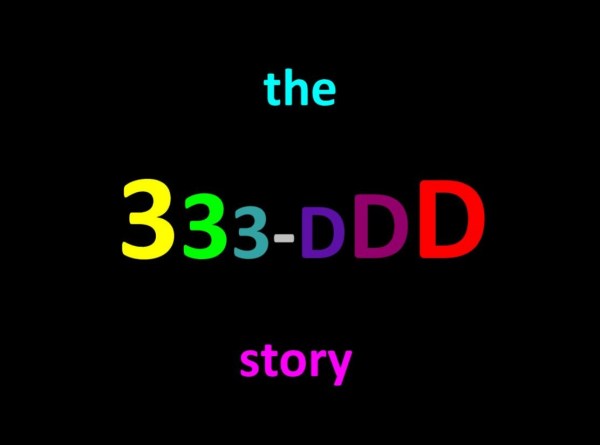
This is the objective we’re striving for with our development of the “3D” multidimensional short story. Narratives of speed and immediacy which demand to be read.

333DDD 2-page-001 - Edited

To achieve our ends we’ll need writers willing to discard past ways of thinking. At the moment even most “alternative” literary sites and presses are run by intellectuals or pseudo-intellectuals more interested in impressing the reader than connecting with the person.

Yet to expand the market for books, zeens, reading, connection is everything.

Our mission is to create the new literary product– which we call Pop Lit– exciting reading packaged in a striking format. Then begin spreading those new creations into schools and neighborhoods. An ambitious task– but worth pursuing.
*******

-Karl Wenclas, New Pop Lit NEWS
What’s the Future of Bookselling?

A TRIP TO A BOOKSTORE

Barnes_&amp;_Noble_Interior

WE HAPPENED to step into a Barnes and Noble bookstore the other day. The experience set the wheels in my head turning– reawakening ideas I’ve had for a while.

On one level the experience was disheartening. An enormous store filled with tens of thousands of titles of well-packaged books on every possible subject– with about seven customers in the entire gigantic place, counting the two of us. As it was, there were two clerks for the store– several registers sitting closed, as well as an information counter. We eventually found a stray clerk to help us– the other was at a front register which seemed a mile away.

I’ve often thought that while big box stores may work in some instances, they aren’t ideal for books. You need large turnover– one would think– simply to pay for leasing, lighting, and heating the monster places. High-ceilings yet. Tremendous overhead– not to mention the amount of stock.

Titles, yes, and authors. Too many for any of them to stand out.

book stacks

What am I saying? Less is more. Smaller is better. Avoiding Too Much Information is the first rule of sales.

OR– a new style of bookstore could be developed– it’s on our drawing board. It would work only in conjunction with the right kind of promotion, driving demand, and with an entirely new style of literary writing designed to stand out. Which hits the reader hard from the start.

The novel itself needs to be overhauled.

No easy trick– but possible.
*******

-Karl Wenclas, New Pop Lit NEWS
How Does a News Story Go Viral?

PUBLICITY IN THE JUNOT DIAZ CONTROVERSY

epstein in cavern

I ADMIT IT. I’m amazed at how fast the publicity game has changed, thanks to social media. Compared to ten years ago, the creation of buzz moves now at lightning speed.

It’s the difference between military techniques in World Wars One and Two. The speed of blitzkrieg in the latter contest revolutionized the game.

As I’ve said a couple times in this series: Who wins the debate over the sexual harassment allegations about prize-winning author Junot Diaz will be decided by who’s better at PR. Institutions (MIT; Boston Review) cleared Diaz, but it’s out of their hands. In the new media age, static bureaucracies have been left behind.

A key post of ours in this regard is “System versus Zeitgeist.”

The Junot Diaz camp is now fully in the game with their army of twitter fans and trolls. They’ve moved quickly up to speed. Will it be enough?

We have two opinion armies maneuvering against one another online– across twitter, blogs, and media sites.

The accusers’ side has made significant mistakes– but their opening moves in the chess game which began May 4th were breathtaking.

CREATING HYSTERIA

epstein again

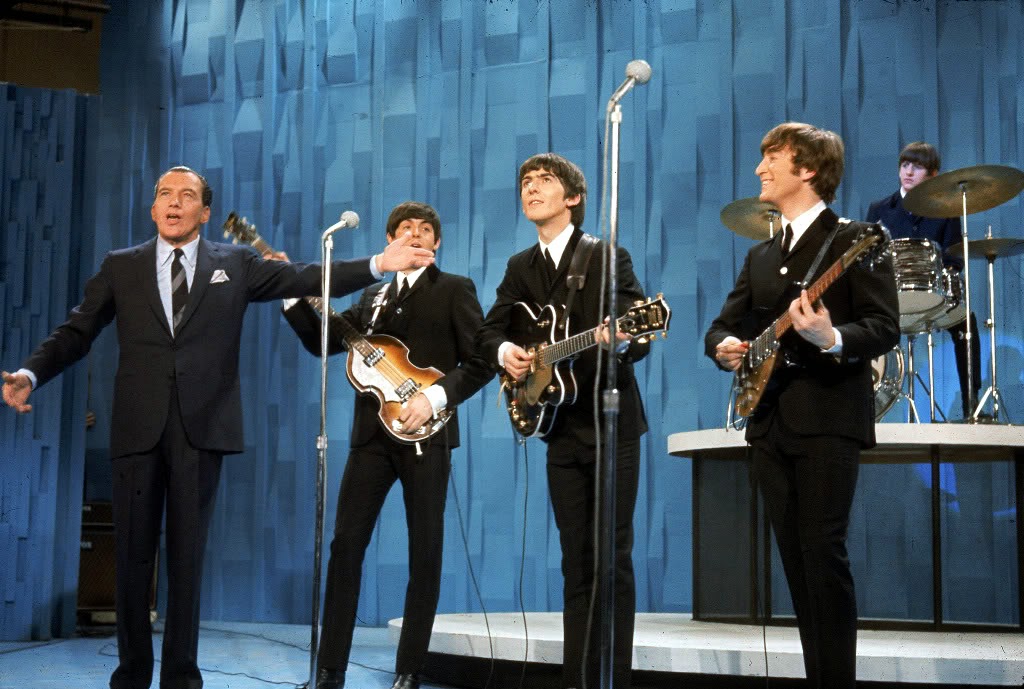
THE GREATEST publicity feat of all time was the creation of Beatlemania. Most people believe it was spontaneous. Yeah, yeah, the band was talented and young people liked them. As simple as that? Not really.

In November, 1961, Liverpool record store manager Brian Epstein saw an unkempt band playing in an underground club in that beaten-down UK working class city and thought, “I can make these guys bigger than Elvis Presley.” A hidden genius behind the scenes, Brian Epstein was in back of every step of the band’s rise. Some of the facts of how he accomplished this are known. For instance, mass hysteria in New York City in February 1964 when the little-known (in America) band landed for the first time. Reluctant Capitol Records was forced by Epstein to spend $70,000 ($570,000 in today’s dollars) to promote their arrival and the concurrent release of their single, “I Want to Hold Your Hand.”

The-Beatles-At-JFK-tarmac-530x353

WE ALSO know the mob of kids holding signs at the airport wasn’t a spontaneous happening. Their presence was arranged. The kick-off of Beatlemania was staged.

MAY 4 ANTI-JUNOT DIAZ HYSTERIA

I’m still amazed at how quickly fervor against Junot Diaz took place. Three threads of tweets from Zinzi Clemmons, Monica Byrne, and Carmen Maria Machado taking place in the middle of night, one right after another. By morning they’d gone viral. To such extent that The Cut’s Anna Silman was already contacting Monica Byrne for a statement.

Spontaneous? Byrne said to Silman, “The network was activated”– which might be clue enough for an explanation.

Monica Byrne’s unsupported rumors about Melania Trump in June 2017, which went viral, albeit on a smaller scale, served as trial run for this situation. This time out Byrne had at least a smattering of substance to the story, and other women on her side. Enough substance that even the mighty and respectable New York Times joined the generated hysteria.

QUESTION: Was the hysteria against Junot Diaz generated or spontaneous?

Another tweet from Monica:

AIDING buzz creation was dramatic language used by the accusers in the tweeted narratives.

BYRNE: “I’ve never faced such virulent misogyny in my adult life.”

MACHADO: “–a blast of misogynist rage.”

Promotional blitzkrieg on May 4th worked masterfully– on that very same day the accusations were news across the globe. The feat deserves a chapter of its own in the history of publicity. The planning and coordination worked– but not well enough to claim quick victory. No knockout. Junot Diaz apologized, but he and his institutional backers held firm. By now, today, the controversy has settled into trench warfare– both sides sniping at each other from steady lines, World War One-style.

For the time being, the controversy is at a stalemate.

wwI
****

WILL the stalemate continue? More to come from:

-New Pop Lit News-
https://newpoplitnews.wordpress.com/

-Karl Wenclas on the literary news beat.


Alpha Male Wannabes

baboon

THE LATEST NEWS among the established intellectual community is they’re all in a frenzy over renegade professor Jordan Peterson, who’s begun to follow his own thoughts and ideas– independently!– and has left the politically-correct intellectual reservation.

AND SO, every intellectual pretender has penned his-or-her own takedown of the guy, the latest coming from Current Affairs head editor Nathan J. Robinson, whose own project we profiled recently. As in, last week. (See my last two posts.)

LIKE his colleague Briahna Joy Gray’s essay on rock n roll history and cultural appropriation, Robinson’s is skewed and from a narrow viewpoint. Also like her essay (see this) it misses the real story.

It’s by his essay’s one-sidedness that Robinson gives his own game away.

Noteworthy about Nathan J. Robinson is his lack of self-knowledge. He seems to live in a bubble-world constructed of his own role-playing. In his complaints about white males and the patriarchy, he doesn’t notice that he’s a white male, and Current Affairs is a patriarchy.

What bothers Robinson most about fellow academic, fellow Anglo-Saxon Jordan Peterson? That Peterson has the #1 book on virtually all best-seller lists! Robinson mentions this pointedly. Jordan B. Peterson (not he, Nathan J. Robinson) is at the top of the intellectual hierarchy. The alpha male of that scene. And so, Robinson attacks him vociferously.

Jordan Peterson, a Jungian psychologist, must be amused by the attack– as well as what wannabe Robinson misses in Peterson’s ideas. Jordan Peterson is essentially right– that behind our masks we’re brutal animals. Much of our communication and most of our behavior can be explained by subconscious forces which, often against our will, drive us. Nathan Robinson acts this out in his posturing with his magazine.

And yes, Jordan Peterson is right that without the strictures and controls of civilization, relations would return to a more primal reality. Notice what occurs at stray times when civilization leaves. One recent example is the end of World War II in Europe, when Patton’s army moved east and a horde of German women moved west, giving themselves to American G.I.’s to avoid the more brutal celebrations of the New Soviet Man coming from the east. Little acknowledged but able to be found in dusty military histories, or in anecdotes from American vets, is that the end of the war was a rape fest. A reversion to type?

A Jungian would notice monsters of the Id. Those we try to wipe away, like Dr. Morbius confronting his Id near the end of the 50’s sci-fi classic “Forbidden Planet.”

fplanet110

***

The Jungian would notice hidden forces in Brooklyn hipsters, wearing long beards and lumberjack shirts, markers of masculinization, as their subconscious minds rebel against their own socially-compelled feminization.

hipster

***

What then of Nathan J. Robinson, who usually appears clean-shaven? Deliberately nerdy and harmless. How does he fit this analysis?

One could surmise the harmlessness is merely a mask, obscuring the ruthless being– the alpha male wannabe– lurking beneath.

-K.W.

Barnes and Noble: More Layoffs

b&amp;n

NEWS ITEM: “Barnes & Noble Is Laying Off Workers Amid Declining Sales”– headlines at news outlets like Forbes proclaim. What’s really happening?

The big box model for books was always flawed, in our estimation. Gigantic structures. Enormous space with attendant high rent and heating costs. Too many titles (yes: oversupply reducing the value of writers). Plus, half the customers read books or magazines at the cafe without buying them. I always suspected the cafe was the most (only?) profitable part of the enterprise.

Can we do better? We do happen to have on our drawing board our own model for a profitable-and-fun bookstore. One piece in our foundation for a new literature which we’re putting in place.

Just saying.

-K.W.