Achieving Artistic Breakthrough
EVERYONE involved with today’s literary scene knows the art is in trouble. Complaints pour in from every direction. “Not enough male readers!” “The New Yorker story is overwritten!!” “Genre fiction is all the same!!!”
Proposed solutions to the problem are tepid at best. Needed: drastic change in the art itself to better connect literature to the general public. To wake people up. To shock the world like a sudden surge of electrical current leading to artistic and cultural–
BREAKTHROUGH!
To get to that point, all received wisdom– every stale assumption about what is-or-isn’t allowable– needs to be set aside. Prevailing prescriptions for the health of the literary art don’t work.
THE STATUS QUO
The problem with approved literary intellectuals is they know only one direction. They pursue it relentlessly, under the influence of their literary gods and icons. The Approved Canonical Works: texts written as if existing within a narrow corridor, the narratives trapped, unable to escape. The reader follows the verbiage as it travels along, constricted, words following words, then more words. Where is it headed? What does it mean?
Professors are employed full-time at universities to explain what it means, along with esteemed critics– stuffed and mounted on metaphorical walls– at highly touted stuffy publications, and you can only say in response to their explanations, “Makes sense, I guess?” Bullied to accept every part of it, because, after all, these are the experts. Authorities. A circle of approval perpetuating itself like a clock, existing without independent thought.
But those approved tomes haven’t connected to your life or the ongoing life of the society around you. They haven’t moved or enlightened you and they certainly haven’t entertained you.
When it comes to saving literature, the only credible solution is to turn pop into art– or art into pop.
BUT HOW?
Our primary idea has been pop-lit: the fusion of popular writing with the “literary” to create an all-new hybrid reflecting the best of both styles. Going a step beyond that, more recently we’ve been working on “hyper-pop” multiple viewpoint stories in order to achieve a quicker, quirkier, more 3-D effect. (See, for one example, the novella The Loud Boys.) Impetus for this is our belief that anyone who can radically change the art of fiction, improving the reading experience, will own the future of the art.

We see the New Pop Lit project as an Innovation Island, but without the crutch– the necessity– of new electronic technology. THAT innovation wave has peaked, and is showing signs (AI) of increasing desperation to keep the investment bubble backing it inflated.
Better: A new wave of creativity based on long dormant human-centered innovation.
WAVE THEORY
Most people in this mad technocratic world are indoctrinated from birth into a linear mindset. One step followed by another. This includes a progressive, linear view of history. They’re unaware of the concept of waves, articulated by Nikolai Kondratieff, Ralph Nelson Elliott and others. The question always is where a cultural form is, in its particular wave or cycle. In the early stages? Ascending? Peaking? At a plateau? In decline?
BOTTOMING OUT? Which is where I place American literature at the present moment.
THE LAST GREAT CULTURAL WAVE
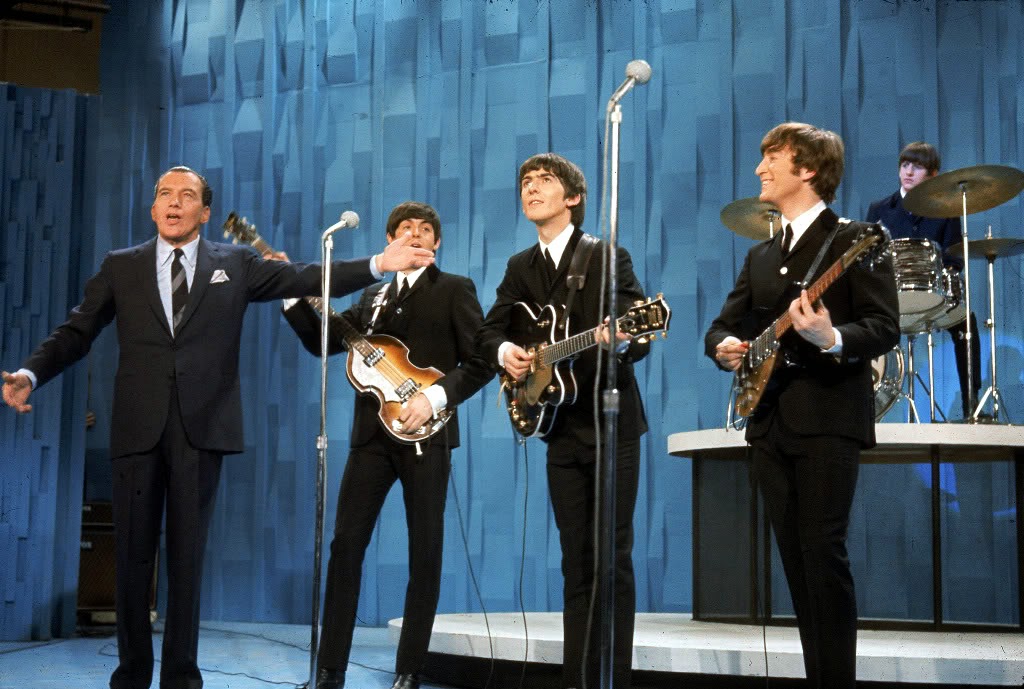
That would have to be rock-pop music, which coalesced around various strains of roots music– blues, folk, gospel, country– in the mid-20th century, before igniting and taking off like a rocket ship on February 9th, 1964, when The Beatles appeared on the Ed Sullivan Show.
INSTANTANEITY
To better understand exactly what happened then– the quick cultural breakthrough– I’ve been reading several books on the period. Among them, Revolution In the Head by Ian MacDonald, which analyzes Beatles records and their impact. One term MacDonald uses caught my attention: instantaneity. He described it as “an elusive maelstrom of fragmentary impressions, perceptions, and jokes reflecting the collage spirit of an instantaneous, simultaneous, chance-embracing new age.”
But, he adds: “Not that The Beatles were fans of formlessness; quite the opposite.”
Structured chaos? A controlled cultural nuclear explosion? The term, anyway, gives us much to think about as we attempt to leap ahead of the literary pack with new artistic ideas.
-Karl Wenclas for New Pop Lit NEWS



 newpoplitnews.com