Literary Introverts Versus Extroverts

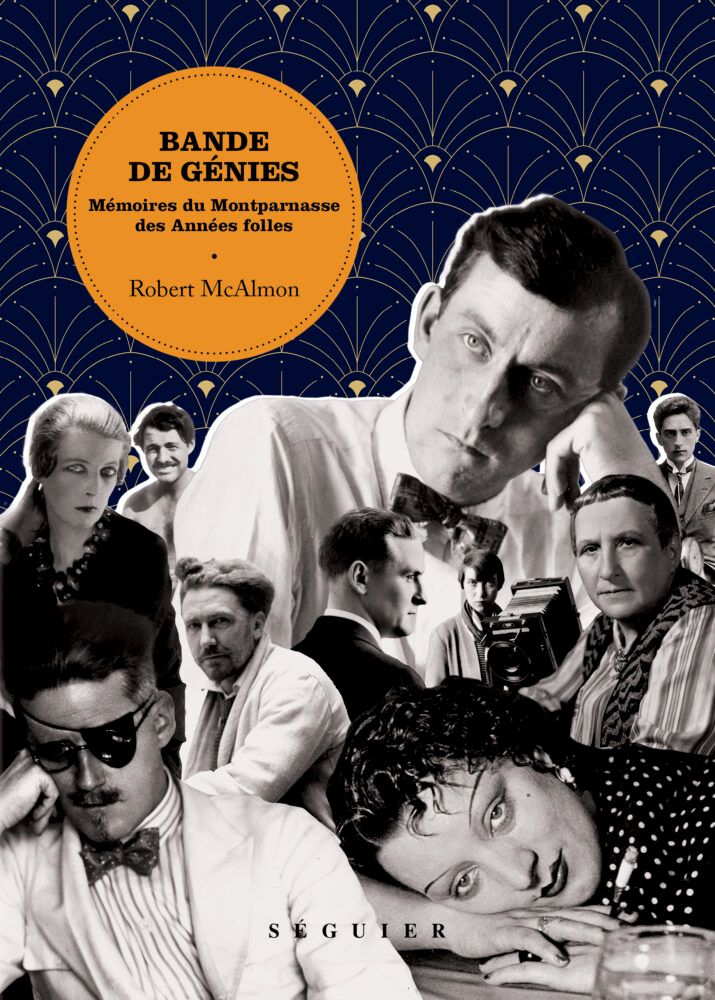
But when Wade is confronted by writing she doesn’t understand, curiosity rather than resentment wins the day. As she gets deeper into Stein’s epic, Wade finds herself “hooked by its rhythms” and “eager to follow Stein’s restless sentences as they quest toward conclusion,” an experience she describes as “intoxicating.” Though never credulous toward her notoriously “self-mythologizing” subject, Wade argues that the best way to read Stein is to “trust her.”  

Our Best of the Net

Ballyhoo Writing Style

(photo c/o zobiedotcom)

Achieving Artistic Breakthrough

Has Literature Failed the American People?

The Inside Game of AI

“The Coming AI Assault”

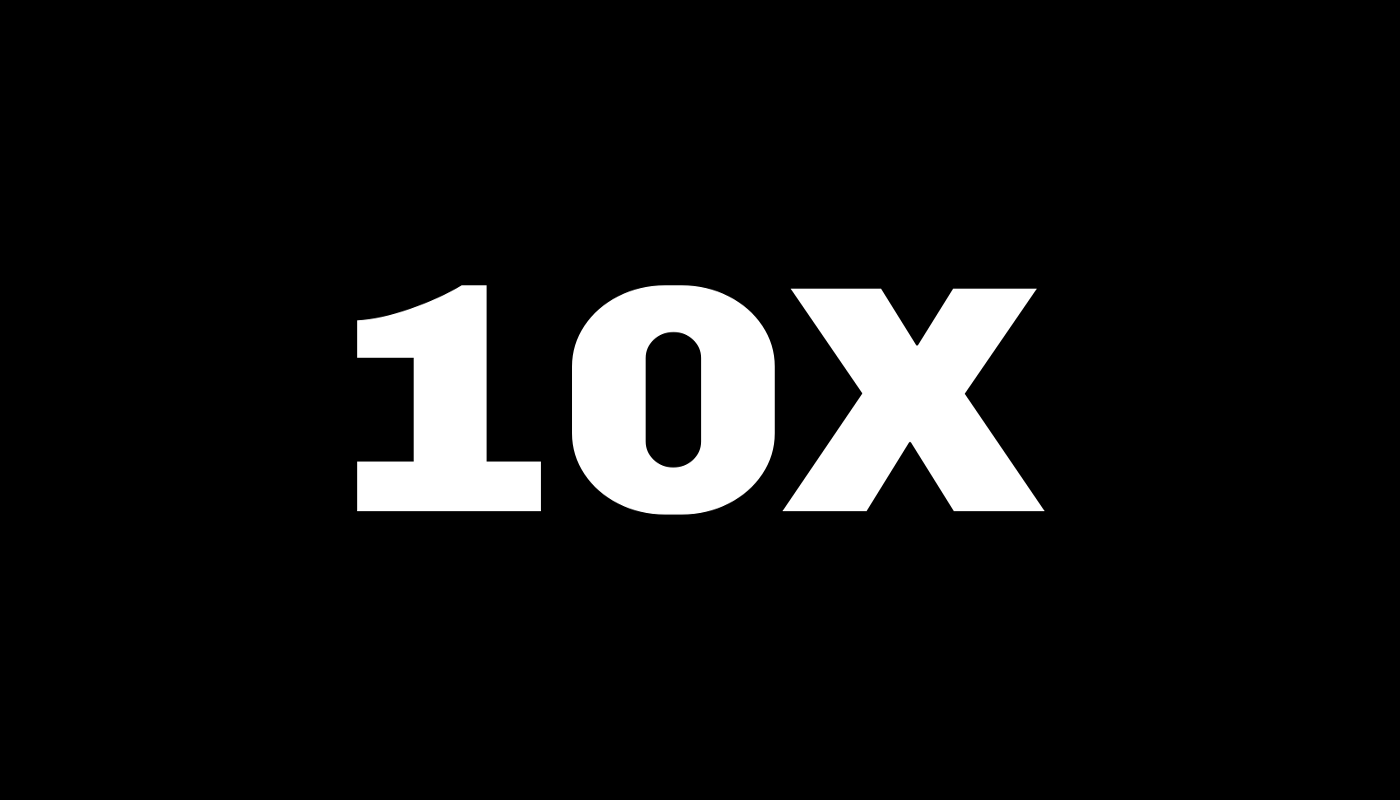
The 10X Scenario


Many people fail to grasp that one of this country’s chief problems is too much productivity. Including in the literary world. We’re drowning in productivity.

Legions of tech fanatics on Twitter and elsewhere continually claim that A.I. chatbots are or will be ten times more productive, for writers and other creators, than what existed prior. Few consider the consequences.

A.) If a magazine staff is suddenly ten times more productive, will this mean eliminating nine-tenths of the staff?

B.) If authors– self-published or mainstream– are ten times more productive, will ten times the number of books enter the book market?


ALREADY a host of genre authors make a living off the sheer volume of their novels. The more prolific produce ten novels a year (some more), now. What happens when they can release a new novel every week? Or every day?

Opportunists and financial operators exist who will take advantage of any opening. (There’s the example of author “Mari Silva,” who’s produced 340+ books in the past few years, before ChatGPT. The books have been traced to a real estate guy in Canada. A slick business, no doubt profitable, with no concern with such niceties as copyrights.)

100X

A figure as high as one-hundred times productivity becomes conceivable if every person who ever had the passing thought to write a book or novel, but lacked the ability to do so, decides to, using a chatbot.

(The figures of ChatGPT usage already are astounding, per this article, which sees increase in its use continuing at least until the end of 2024.)

It doesn’t matter if the resulting mass of books and ebooks are inept, or– as promised by AI tech fans– indistinguishable from human-written books. Of minimal quality or not, numbers of product will skyrocket. The question becomes: how many books will overwhelm an already-saturated market? Ten times what exists today? 30X? 100X?

Simple supply and demand: dumping too much product onto a market, without corresponding increase in demand, lessens the value of the product. In this case, books and writers.

The end of the Beanie Baby craze all over again: value plummeting to nothing.


The same situation will apply, by the way, to stories and poems sent to literary journals like ours. The increased bombardment will detract from the genuine article. For the serious individual poet or writer: the number of other poets and writers you’ll be competing against will be that much greater. It will be that much harder for the talented new writer to be discovered.

LIT-MAGS

Another problem for online literary sites and small press publishers will be upstart AI sites like this one, which is publishing as many as fifteen new AI-generated short stories per day. Given that search engines give preference to frequency of publication, it might become impossible for any human-powered literary magazine, no matter how well staffed, to keep up.

NOTE: Dozens of AI fiction-story generator websites are already available, including those run by established outfits like Canva and Reedsy– which seems, for those two enterprises, a betrayal of their previous customer base of actual artists and writers.

FIRST-STEP SOLUTION

A necessary first step is having all books which are generated by AI devices labeled as such, so readers know what they’re purchasing. Which is the point of our “Save the Writer!” petition.

Its real purpose: to draw attention to the problem and offer some pushback to the growing storm of AI operators.

Have you signed it yet?

XXX

-Karl Wenclas for New Pop Lit News.

Dimensions of Disaster


Are there reasons I’m pushing hard for writers and readers to sign the “Save the Writer” petition– whose purpose is to alert the literary world about the coming storm of botbooks?

Yes! I’m doing so because ailments which afflict literature and publishing didn’t just begin two months ago with AI-generated books. The devaluing of the writer has been ongoing for the past twenty years. Now the dimensions of disaster are accelerating.

All one need do to realize this is to look at how many tech reporters there are at every news outlet, magazine, and mainstream website. They’re ubiquitous– and they’re biased toward the wonders of technology. They have no doubt of the domination of AI– their only questions are how “ethical” it will be (if the term can seriously be used); how effective, and which of the monster corporations and hyper-wealthy plutocrats– Gates, Musk, Bezos, Page, Brin, Thiel– will have the best products and make the most profits. And there certainly will be a funnel of money and profits headed straight toward the top.

The change in this Internet Age has been gradual enough that few people have noticed what’s occurred.

What HAS occurred?

Where are the book reviewers and reporters on happenings in the publishing world? Book review sections in newspapers across the country have vanished– as newspapers themselves have been vanishing. Books are an ever-diminishing realm. The attitude of techies glorying in the arrival of Artificial Intelligence– the ultimate sci-fi dream becoming reality to satisfy the fantasy cartoon world within which they live– is dismissive. “Adapt or die” is their mantra, seen across social media. (Or at least on Twitter.) They consider books an obsolete and possibly unnecessary technology. Why would anyone read– they think– when a chatbot can give them all information?

In all seriousness, the position of books and writers within the greater culture is shrinking. The arrival of chatbots and botbooks is merely the latest assault.

SEA CHANGE


A complete sea change, in attitude and art, is required. To find a way to turn the culture upside down, and thereby return literature to its previous position of cultural prominence.

If it can be imagined it can happen.

-Karl Wenclas for New Pop Lit

Shakespeare and Creativity

Shakespeare and friends at the Mermaid Tavern by John Faed

ONE THING to be noticed about the use of A.I. programs for writing, copyediting, and education is the way the programs enforce conformity and stifle creativity by forcing written language into an ever-narrower template of rules. Type something “wrong” in a document or email and the “correction” instantly appears. I’m sure most writers, especially new ones, immediately comply.

(The latest step in conformity is ChatGPT, which will do all your writing for you, by recycling lines and ideas from past writing– with not a shred of originality. We have a petition ongoing about that matter, which we suggest everyone read.)

Yet these processes, spawned by top-down systems, work contrary to the mode of operating of the greatest writer of them all, one William Shakespeare.

Stratford Will grew up in a time and place that was still largely an oral culture. Written communication was used first for legal documents, while the printing of books was strictly controlled and limited. Language was a verbal phenomenon, and that’s how people used it. Dictionaries had yet to be invented, while grammar was in a state of flux. Spelling was creative, to put it mildly– often used to give cues for how sentences were spoken— which words or syllables to emphasize, depending on context. Spoken language was the main thing– especially for Will and his colleagues in their acting company, as their art was a verbal, not written, art. Literature, for them, was a very different creature for them from what it is for us today.

In other words, it was a milieu designed for creativity. Everything about William Shakespeare’s life enhanced that freedom of creativity. Rules? What rules?! Shakespeare invented hundreds of words, often by turning nouns into verbs. (Today he’d be told, by a teacher or professor or bot, “You can’t do that!”) He was the son of a glovemaker, perhaps learned some of the trade himself, receiving the mental stimulation which comes from skilled manual labor. Also of course, he wasn’t just a writer, or just an actor, but more. Like his fellows, Will was a businessman, stagehand, salesman, and part everything else that went into the acting company’s productions. A jack-of-all-trades, or a “Johannes Factotum” as he was once scornfully described.

FINDING THE REAL SHAKESPEARE

Ironically, it’s the Stratfordian establishment itself which has perpetuated misconceptions of the man, his friends, and his times, in their effort to canonize him.

(Something similar happened with the Beats here in the USA. Free-wheeling fun-loving bohemians taking joy in words and art, they’ve been co-opted in total by a rigidly elitist literary establishment– canonized; or rather fossilized, preserved in amber and placed behind glass– though no one should dare write or behave, in this constipated world, too much like them. As evidenced by a protest at Columbia University back in 2006 by a performance troupe of which I happened to be part.)

The mistake academies make about Shakespeare’s poems and plays is treating them as artworks to be read– when they were created to be seen and heard. To be performed. Without that performance one can’t fully understand the plays or the men who created them.

To find the real William Shakespeare one has to read up on his friends and partners in the Lord Chamberlain’s Men acting company, started by working class carpenter, actor, and entrepreneur James Burbage and his two sons. The company was a collection of characters. My favorite might be Robert Armin, a goldsmith apprentice who was sent one day to collect a debt owed his master. Unable to collect it, he scrawled witty verses of complaint on the walls of the inn with chalk. Queen Elizabeth’s personal jester, Tarlton, noticed them and recruited young Armin into a different form of apprenticeship– one of acting, comedy, and playwrighting. (Note the suffix of “wright”: one who builds, repairs, or creates, such as a shipwright. The connection between skilled manual labor– dextrous work done with the hands– and literary creation.)

KEYS TO CREATIVITY AND ART


Vincent van Gogh’s artistic wonders were based on his ability to escape the systems of his day– to seek grounding in earthy reality. Here’s a quote from one of his letters to his brother Theo:

I wish those who mean well by me would understand that my actions proceed from a deep feeling and need for love, that recklessness and pride and indifference are not the springs that move the machine, and this step is a proof of my taking root at a low level on life’s way. I do not think I should do well in aiming at a higher station or in trying to change my character. I must have much more experience, I must learn still more, before I shall be ripe, but that is a question of time and perseverence.

(Interesting that Van Gogh’s emphasis on experience undoubtedly opened new neuropathways in his brain and gave him a stronger foundation of empathy and knowledge. On the path to genius.)

———————————–

We have more systems today than ever, enforcing conformity by regulating and controlling every aspect of our lives. The artist’s job is to throw off those shackles and escape those controls.

XXXX

Coming soon: The Burbage Spoken Word Prize

XXXX

-Karl Wenclas for New Pop Lit News