Neo-Beats Out of Control!

style

(Classic style.)

At least, they’ve taken over the New Pop Lit site. New Beat writing in all its various iterations.

First, a review of an anthology of Beat-style in-the-larger-sense fiction and poetry.

Second, a current poetry feature of lakebeatgrunge poems from beat56.

AND, a home page Intro to all of this.

HELP!!!

(Our self-appointed task is to cover what’s happening in the lit world. What’s happening at the moment might be right here.)

A NOTE ON STYLE

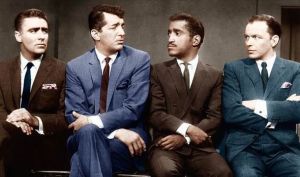
One thing the cultural period of the late 1950’s and early 60’s had was style. The Beats were the obverse to the established “Mad Men” look. (Think Frank Sinatra’s Rat Pack, pictured.)

rat pack

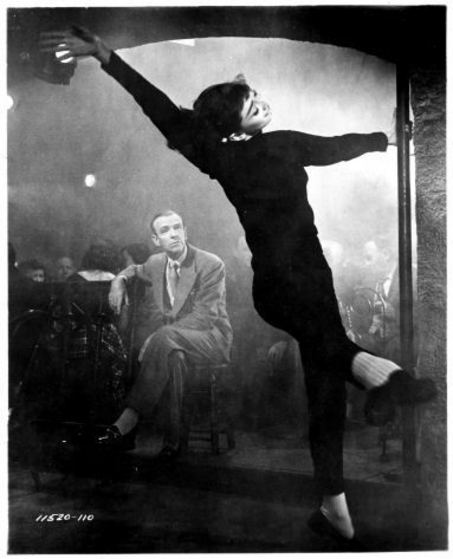
As such, the Beats were relentlessly satirized by established pillars of culture. Thoroughly mocked– in venues ranging from television shows such as Dobie Gillis and The Beverly Hillbillies, to movies such as Funny Face starring Audrey Hepburn. The point is that poets and writers mattered. The Beats suffered the slings and arrows of the culturally challenged but they also created exciting fun art.

Audrey Hepburn funny face 50s black polo neck beatnikdancing white socks

(Audrey Hepburn.)


Underground Hemingway

AN ADVENTURE IN NORTHERN MICHIGAN’S HEMINGWAY COUNTRY

DSC06869

(A moose at the Mitchell Street Pub in Petoskey.)

WHILE we were on our honeymoon two weeks ago, one of our more fascinating experiences was an underground tour conducted by a young woman who may or may not exist in reality. (A ghost?)

We were at the City Tavern Grill in the quaint town of Petoskey, both of us sitting at the bar, in a saloon which young Hem himself used to frequent. I was at the exact spot– second from the end– which Hemingway was said to like.

We must’ve seemed easy marks. Out of nowhere, a woman approached us and asked if we’d like a tour of the saloon, including its underground tunnels.

“Sure,” we said.

The woman was dressed like someone from another time period– the 1920’s, perhaps– with a feather in her hair and wearing a delicate retro black dress. In build she was tiny, as if from that bygone era when people were smaller than today. Her waist could not have been more than 20 inches around– Scarlett O’Hara territory.

Beyond this, she spoke in a dramatic manner, as if on a Victorian stage. She batted her eyelashes like a silent movie actress. When she walked, she shimmied like a flapper from the pages of a Scott Fitzgerald story.

DSC06872

The woman knew, somehow, by looking at us that we were Ernest Hemingway fans. She told us how often Hemingway frequented this spot– named The Annex in his time. The bar and its furnishings were the same. She showed us signed bills from Hemingway for food and drinks. The last one was from 1947.

This narrative was related in a secretive manner, as if she’d personally known the man.

Her name, she said, was Mary Ellen. She reminded us that in the time Ernest Hemingway first came here, Prohibition was in force. At any sign of police, observed through a peephole, booze and customers moved swiftly downstairs, to the basement.

Mary Ellen asked us cryptically if we’d like to visit the basement.

Without waiting for a response she turned and made her way down rickety stairs to the basement. We followed.

DSC06876

The basement was gray and dimly lit. Bannisters, walls, shelves of liquor bottles– everything– was covered in dust. Layers of dust, in some cases. We looked at each other with our eyes, asking ourselves, “Can we trust this woman?”

In the way she spoke and was dressed, she could have indeed stepped through a time warp. Or, could she be instead an escapee from– ?

We didn’t continue that thought because we didn’t want to continue it. Instead we stumbled along after Mary Ellen, through lengthy depths.

DSC06878

Mary Ellen showed us a number of blocked or partly-blocked tunnels, used both to smuggle bootleg liquor into the saloon, or out of it. One of the tunnels led to the nearby Perry Hotel, where we happened to be staying for the week.

DSC06877

The smuggled booze came from the Al Capone gang. From his base in Chicago, Capone controlled all liquor going into resort towns which spread north along the Lake Michigan shoreline, including this one.

The lights began flickering.

“The lights are going out!” Mary Ellen said dramatically.

Her eyes seemed truly afraid. Perhaps the time allotted for the private tour was over, or someone above needed her. Or perhaps she was about to turn into a pumpkin, or vanish, or appear her real age, or something. We were, after all, only days from Halloween.

DSC06859

We made it back up shaky wood stairs to the main floor, breathing, despite ourselves, a sigh of relief.

The tour was one of many highlights we encountered in the quaint town of Petoskey.

-K. and K.

DSC06885

*******

Our “Best of the Net” 2018 Nominations

Here are our Best of the Net nominations for 2018.

botn2017

They encompass work published online between July 1, 2017 and June 30, 2018.

(Best of the Net 2017 is here. The Sundress Publications website is here.)
*******

AS ALWAYS we had more good work than we were able to nominate. For fiction, we nominated two of our longer stories– both require some investment in reading. Both stories required an ample investment in imagination and work in writing. Both stories are excellent in very different ways. They exhibit the range available within a “Pop Lit” designation.

WE hope you read or re-read all of the nominated works.

We thank these writers and all the writers who’ve generously allowed us to publish their work.

Fiction:

“Churchgoing in New England” by Richard Greenhorn,
published 9/28/17.
“The Rottweiler” by Alex Bernstein,
published 1/12/18.

Non-Fiction:

“Hemingway” by Samuel Stevens,
published 7/28/17
“Cry Wolfe” by Robin Wyatt Dunn,
published 11/16/17.

Poetry:

“Black Water” by Robert Beveridge,
published 10/16/17.
“Processed World” by Rus Khomutoff,
published 02/02/18.
“Starbucks Bars to Be Sung I” by Timmy Chong,
published 4/12/18.
“Jonesing” by Timmy Chong,
published 4/12/18.
“Tourist Trap” by Holly Day,
published 4/18/18.
“Losing Another One” by James Croal Jackson,
published 5/7/18.
*******

Why Did They Publish It?

THE COLLAPSE OF BIG FIVE PUBLISHING IS ONGOING

james frey

Call it a collapse of credibility more than anything.

James Frey may be the most egregious person on the literary scene today.

Frey’s 2003 best-selling memoir, A Million Little Pieces, was later revealed by The Smoking Gun to contain large fabrications.

In 2010 James Frey was shown by Suzanne Mozes of New York magazine to be running a “fiction factory” ruthlessly taking advantage of aspiring young writers.

Frey’s just-released novel, Katerina, is getting slammed by literary critics.

-Including by Ron Charles at the Washington Post, who says it may be “the worst novel of the year.”

-Including by Claire Fallon at Huffington Post, who states firmly that “James Frey Still Sucks.”

THE QUESTION everyone is asking is “Why does James Frey continue to be published?”

It has to be more than Ms. Fallon’s take that he’s published simply because he’s a white guy. There are scores of talented white male writers out there who aren’t landing big book contracts from Big Five publishers like Simon & Schuster. At New Pop Lit we’ve published many of them, including Clint Margrave, Jack Somers, Brian Eckert, Richard Greenhorn, Gregory YelnishAlan Swyer, D.C. Miller, Alex Bernstein, Alex Olson, Jon Berger, Michael Howard, Don Waitt, Wred FrightJoshua Caleb Wilson, and Elias Keller, to name some of the more recent names.

simon & schuster bldg(Simon & Schuster Building.)

COULD IT BE that giant book companies which are part of gigantic media conglomerates and insulated by layers of bureaucracy within Manhattan skyscrapers are simply unable to locate actual literary talent? Instead they take the easiest path: “Round up the usual suspects!”

It’s a top-heavy and feckless system worthy of collapse.
****

-Karl Wenclas, New Pop Lit NEWS

Junot Diaz and the Sensitivity Police

SENSITIVITY TRAINING FOR ALL NOVELISTS?

USAF_Mess_Dress

(NOT the Sensitivity Police.)

I DISCUSSED the matter months ago in the latter part of my second post about the Junot Diaz controversy. The rules and standards the writer must obey, and the lines he or she must never cross, expand by the day. Maybe the hour.

The writer’s personal behavior is subject to scrutiny in the new Orwellian literary world. But as important is a person’s writings. Fiction is no longer regarded as fiction. It will be used in judging you.

dress uni woman w knife

Case in point is this essay by Lyta Gold from the precocious characters at Current Affairs which appeared on May 8th. (I’ve covered Current Affairs before at this blog, including here.) Note how, referring to Junot Diaz, Lyta Gold has “strongly suspected, from his prose alone, that he’s a virulent misogynist.” Quite a leap. (Was the character Popeye in William Faulkner’s novel Sanctuary based on Faulkner? Who knows!)

The atmosphere of Gold’s essay is not that of literature, but religion. Current Affairs‘ peculiar pseudo-Communist/Social Justice religion.

Military_of_Hungary-welcome

The giveaway line is when Lyta Gold says, about Junot Diaz’s writing, “his work was presumptively taken to be flawless and free of sin. . . .”

Free of sin? Is this how writing is being judged?

Nun_ruler - Edited

Lyta Gold further says that “no writer . . . gets to be validated by invisible particles of virtue.”

Well, yeah. But is this the standard? Is this why Junot Diaz was validated to begin with?

Virtue?

David_A_Christian_in_dress_uniform(Literary awards– for virtue?)

Or because of his writing? Why are writers published? If all that will be accepted, after thorough personal screenings and background checks, are virtuous writers, the art of literature will be in even more trouble than it is now.
***

current affairs staff

(Current Affairs staff, from their website.)

PART of what’s happening, ironically enough, is the imposition of bourgeois morality. The Current Affairs staff, like many such staffs, is completely bourgeois in background and sensibility. When expedient– in feeding their own selfish needs and conveniences– they’re as egoistic as Ayn Rand. In the case of Current Affairs, ambitious careerist ladder climbers. Harvard grads, most of them.

The happenings which Junot Diaz puts into his stories and novels are outside their experience. Not surprising, then, that they’re thrown by them. Which doesn’t justify an easily applied label like “misogynist” (a clinical term). If we start judging writers by their musings, their fantasies, and their fictional characters, we’re all in trouble.

This could be the future, if the Sensitivity Police have their way. A kinder, gentler literature– innocuous, harmless, and irrelevant.

The_Bow_(11106700545)

Comments are welcomed.
****

-Karl Wenclas for New Pop Lit NEWS

What’s the Future of Bookselling?

A TRIP TO A BOOKSTORE

Barnes_&_Noble_Interior

WE HAPPENED to step into a Barnes and Noble bookstore the other day. The experience set the wheels in my head turning– reawakening ideas I’ve had for a while.

On one level the experience was disheartening. An enormous store filled with tens of thousands of titles of well-packaged books on every possible subject– with about seven customers in the entire gigantic place, counting the two of us. As it was, there were two clerks for the store– several registers sitting closed, as well as an information counter. We eventually found a stray clerk to help us– the other was at a front register which seemed a mile away.

I’ve often thought that while big box stores may work in some instances, they aren’t ideal for books. You need large turnover– one would think– simply to pay for leasing, lighting, and heating the monster places. High-ceilings yet. Tremendous overhead– not to mention the amount of stock.

Titles, yes, and authors. Too many for any of them to stand out.

book stacks

What am I saying? Less is more. Smaller is better. Avoiding Too Much Information is the first rule of sales.

OR– a new style of bookstore could be developed– it’s on our drawing board. It would work only in conjunction with the right kind of promotion, driving demand, and with an entirely new style of literary writing designed to stand out. Which hits the reader hard from the start.

The novel itself needs to be overhauled.

No easy trick– but possible.
*******

-Karl Wenclas, New Pop Lit NEWS

Who Defends Artistic Expression?

LastCommand11_zps83a7f075
THE LATEST NEWS is that literary editors are adding what they themselves refer to as Morality Clauses to their sites. Not an aesthetic guideline for submitted work– the clause regards the writers themselves. Editors are doing background checks on writers via google and other tools. Background checks! The mindset has come full circle. We’ve entered a neo-puritan world.

For these uptight-to-the-max editors, getting along with the herd– enforcing an ideology– is their primary focus. Art is a secondary consideration.

THE EDITING POLICE

Police_officer_in_Granada,_Spain

These literary editors have taken it upon themselves to monitor the writer’s behavior– including after the work has been published. “Yep, he did something regrettable and embarrassing. We published his poem five years ago. Doesn’t matter. Yank it out!”

The entire history of literature is filled with writers engaging in bad behavior. (It once was a badge of honor.) Beginning with Christopher Marlowe– who wouldn’t make the cut in this day and age. Neither would Shakespeare. There’s that rather disconcerting speech in Hamlet when he says, “Get thee to a nunnery!” Hurtful words. Yank his works.

WHEN I fronted an activist group from about 2000 to 2008, our numbers included many outcasts, outsiders, and those who regularly engaged in bad behavior. They were from every possible ideological stripe, left to right. We had no litmus tests or background checks.

Today, we see Editor-as-Cop. “Are your papers in order? Where are your papers! Can you prove you did not engage in harassment and abuse?” (One silly lit editor argued for R****l C****r proving she hadn’t engaged in verbal abuse.)

AT ONE TIME, the novel, poem or play itself was considered verbal abuse! Its very existence.

Has the writer engaged in bad behavior outside the walls of  our little literary project known as New Pop Lit? What’s that to me? I’m a literary editor. If he or she has broken a law, report them to the authorities.

A QUESTION: Would you publish a story or poem by a convicted murderer sitting in prison if the work were good enough? 

LAST LINE OF DEFENSE

Every other segment of society has reasons to limit or crush artistic expression. The state, the advertiser, the dependent-on-donors foundation, the speech-squelching university, the project-a-proper-image corporation. It’s the task of the artist; the writer– and the editor, the publisher, the promoter, the arts impresario– to stand up for creative expression. For the ability to be creative. The ability to surprise, stir, anger, or shock. If not us: Who else?
*******

-Karl Wenclas, New Pop Lit News