The Decline of Literary Criticism?

OR THE DECLINE OF LITERATURE?

ERNEST HEMINGWAY

AN INTERESTING ARTICLE appeared last week at the Time Literary Supplement“Death of the Critic?” by Michael LaPointe. The article addresses the topic of the decline of literary criticism via addressing two recent books on the subject.

LaPointe argues against nostalgia for bygone literary days. He says the importance of literary critics circa 1950 was an aberration. In his eyes the absence of strong figures like Edmund Wilson and Lionel and Diana Trilling today is not to be taken too seriously. He concludes, in fact, by suggesting literature must become more detached from the culture-at-large. From general society. You know, like monks scribbling away in monasteries in bygone medieval days.

The bigger story is right in front of him, but Michael LaPointe waves the story away– the decline of literature in the culture.

CULTURAL FOOTPRINTS

Publishing seems as healthy as it’s ever been. Book readership has kept pace with GDP growth, demographic changes and the like. But that’s the point– it’s only kept pace the last seven decades, maintaining incremental improvement year-by-year, while overall cultural noise has exploded exponentially. While rival claimants for attention– notably sports and music– have increased their cultural profile many times over.

QUICK: Can anyone name an NFL player from 1950? Bob Waterfield maybe? Or a basketball player??

c o ebay(photo c/o ebay.)

In 1950 NFL football was scarcely a blip on the cultural radar screen. It produced zero (0) figures as recognizable and renowned as Ernest Hemingway.

Today the situation is reversed. With the rise of the NFL has come countless commentators and analysts– magazines by the score and entire cable networks– devoted exclusively to picking apart every last personality and encounter involving their favorite game.

Music? The music business began increasing its cultural footprint beginning in 1956– interest generated by energetic new products and wildly charismatic personalities.
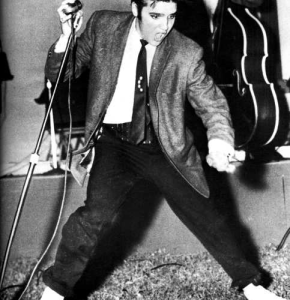
elvis-1

With the rise of rock came the creation of the rock critic, via flagship rock magazines like Creem, Rolling Stone, and many others.
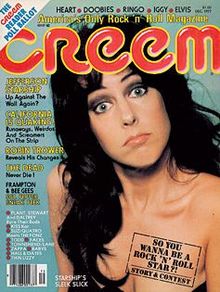
creem

Meanwhile, the ship of literature floated placidly along. Unconcerned. Unaware. Complacently satisfied that within the stuffy world of letters, all seemed fine.
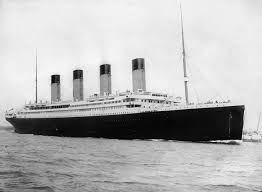
titanic

Literature’s leading figures became less charismatic, less interesting. Finally– with the likes of Donna Tartt and Jonathan Franzen– either reclusive or irredeemably bland.

Jonathan_Franzen

The art’s attempts to reverse this situation– with authors literary or popular from Roxane Gay to George R.R. Martin– are going no place. (Bret Easton Ellis fights heroically to gain cultural attention, but is himself too identified with a moribund and stuffy “Big 5”-backed establishment literary scene to make much headway.)

Without an exciting underlying art to describe, there are unlikely to be exciting critics to describe it.

IS THERE A SOLUTION? 

YES! The solution is the one we prescribe: to mesh both poles of the art, the literary and the popular, creating a new synthesis that’s relevant and meaningful yet connects with a large portion of the populace at the same time. Popular critics would arrive as byproduct.

This starts with a better product. (See recent posts of ours about the 3D Short Story here and here and here.)

Then, more striking personalities to become faces of a renewed art.

Quixotic? Maybe. Art is never transformed by the timid.

Titanic_the_sinking

It’s time for literature to walk away from its clubby salons and musty university lounges and step fully back into the game.

THE 3D STORY DEBUTS JUNE 6 AT OUR MAIN SITE.

http://www.newpoplit.com
*******

-Karl Wenclas, New Pop Lit NEWS

3-D Story Release Date

EIGHT YEARS IN DEVELOPMENT

3-D-Day 2-page-001 - Edited

WHAT BETTER day to introduce the 3D Short Story than D-Day, June 6th?

“D-Day” in 1944 was the date American, British, and other Allied soldiers under the overall direction of General Dwight Eisenhower invaded the European continent to help rescue it from the Nazi menace. The assault changed the face of the war. Within a year the Nazi regime was over, Adolf Hitler dead from a self-inflicted bullet wound in the mouth.

WILL the 3D Short Story change the literary scene that swiftly? To that extent?

One can hope.

333DDD 2-page-001 - Edited
*******

Critics and New Art

THOUGHTS ON THE 3D SHORT STORY

impression sunrise claude monet(“Impression Sunrise” by Claude Monet.)

THE TEST of an artistic critic is how swiftly the person adapts to artistic change. The ability to embrace the NEW and not be left behind.

EXAMPLES from the past include the rise of modernist art, beginning with the 19th century Impressionists. As Robert Hughes and others noted, the inability of art critics to keep up with change became a cliche, until anything new was automatically accepted in fear of being wrong again.

jazz singer

ANOTHER example is the transition in the late 1920’s from silent cinema to sound. Or, in the 50’s and 60’s, from “silver screen” movies to Technicolor and Cinemascope, which even as astute a film critic as Pauline Kael found difficulty dealing with, so enamored was she with smaller films of the 1930’s. Kael’s antipathy to wide screen movies was such that director David Lean once exclaimed to her, “You won’t be happy with any movie I make unless it’s shot on 16 mm in black and white!”

lawrenceof

HOW will literary critics react to the emergence of a new style of short story? One faster, more designed, more exciting than any short story offered now? A story, moreover, which fuses literary and pop elements to create a visibly different work?

Questions, questions. . . .
*******

Karl Wenclas, New Pop Lit NEWS

Literature of Limits

THOUGHTS ON SALLY ROONEY’S NOVEL NORMAL PEOPLE

steel box

ONE CAN’T HELP but notice, with the massive hype accompanying the U.S. release of the Sally Rooney novel Normal People, how willing literary people today are to settle for limited accomplishment from limited talents. To accept the achievement of small effects, delicately arrived at.

I read the novel before most because a friend of ours in the U.K. gave it to us. It’s not a bad novel. Not at all. But the final emotion given this reader upon finishing it was, “So what?” Is this really the best Big Five London-New York publishing can come up with? Careful language, careful plotting, careful characters, careful themes and ideas– as if today’s world of political correctness has put today’s writer into a cage.

rusted-lock-on-the-fence

Maybe it’s not politics (though there are signs that it is). Possibly it’s the temperament of this age, to see the world in muted tones. Melodrama? Heavens no. The reverse. By and large no drama– other than a couple brief appearances of a mostly offstage male villain in the form of an angry brother– whose rage is never explained or understood. Or the drama of deciding which MFA writing program to enroll in. (I kid you not.)

For temperament and limits, this novel can be compared to the delicate poems of recently deceased award-winning poet Mary Oliver, which aim for modest achievement, limited effects. Worthy, if that’s all you want– but a distinct dropping off from the exuberance of a Walt Whitman or Allen Ginsberg. Or the craft and passion of a Sylvia Plath.

Today’s literature exists inside the constraints of a cage or a box. It’s time to crash out.

(As we’ll attempt to do with our 3D Story project.)

3-D BIG 4-page-001 - Edited
*******

-Karl Wenclas, New Pop Lit News

Pop Lit as Art

BASICS OF 3D STORY THEORY

ART! postcard b&w-page-001 - Edited (1)

WHAT Ernest Hemingway was working toward in his early short stories– before he adopted the persona of Papa Hemingway– was writing as art object. Whole and complete. As finished project.

MANY books and articles, too many to list, document the influence of modernist painters such as Joan Miro and Paul Cezanne on Hemingway’s writing. Though his quoted remarks are vague on the specifics of that influence, we can look at his works themselves to see. Not simply the marvelous descriptions (the opening to A Farewell to Arms for instance), but the sense of form and conciseness in his best stories. “A Clean, Well-Lighted Place” to name one.

HEMINGWAY was working toward something which could metaphorically be put on a wall and looked at– meaning, seeing the entirety of the work. Moving away from linearity.

This is a starting place for Pop Lit. Emphasis on clarity and transparency. The essence of “Pop.” Pop as in an Andy Warhol painting, or in a classic two-minute pop-rock song. Or a two-minute punk rock song which gives the listener two minutes of concentrated energy, then abruptly ends.

This is what I was striving for in my experimental work Ten Pop Stories. (An ebook written under the pen name King Wenclas.) Ten pop songs– or ten pop paintings.

THE MAIN IDEA is giving the reader a sense of the American experience– as Andy Warhol in his depictions of Coca-Cola bottles and of Marilyn Monroe so brilliantly conveyed the fast-paced madness of American experience. The American civilization, which for a hundred years has been the world’s dominant civilization.

THE 3D STORY

Speed and immediacy– what this aspect of Pop-Lit theory is about. What the upcoming 3D Story form will be about, in multiples. If our experiments work, things in the literary realm are about to become very exciting.

yellowpop

*******

-Karl Wenclas, New Pop Lit News


Modernism and Editing

FURTHER THOUGHTS ON 3D WRITING

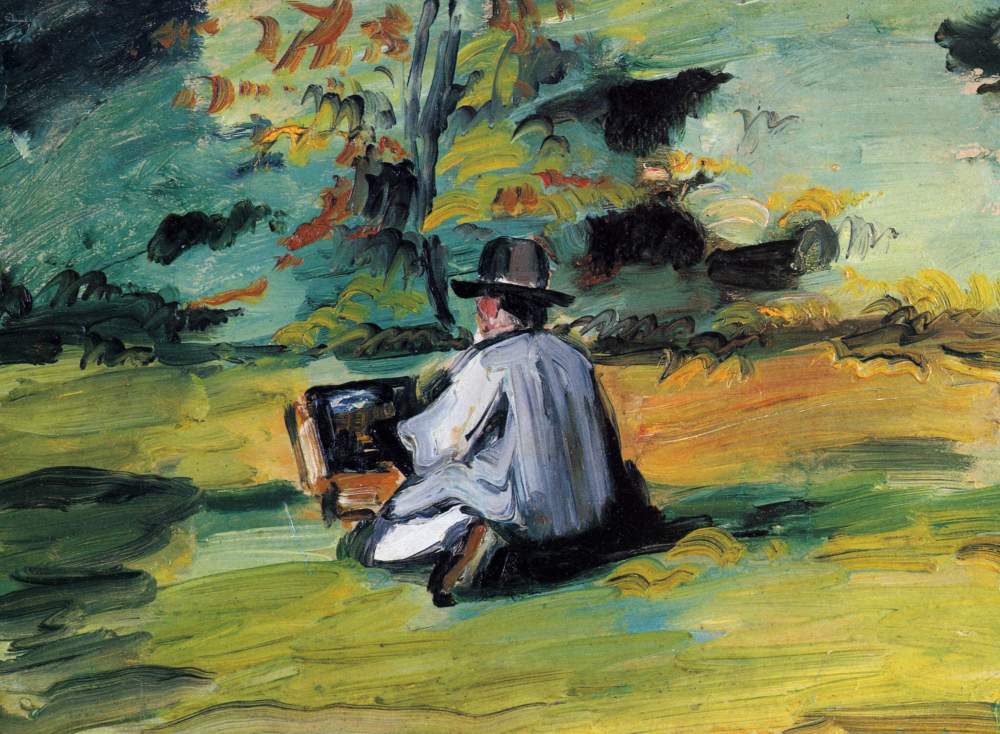
Paul_Cézanne_058(“A Painter at Work” by Paul Cezanne.)

Modernist art IS editing. It’s cutting away all unnecessary material and allowing our minds to fill in the empty spaces. A technique in writing pioneered by Gertrude Stein, Ernest Hemingway, and Georges Simenon.

These writers knew painting and they knew how a daub or two of paint could touch our emotions and allow us to “see” the reality of the image. In writing, a key touch of color or taste or sound to suggest something greater. To stimulate our memories, our own experiences.

This is the antithesis of standard literary writing which strives to tell you everything, overwhelming the narrative with details.

****

AN EXAMPLE of modernist editing in another art form can be found in this movie trailer:

The film: the 1959 version of Ben-Hur. (Which WILL be playing in movie theaters across the country this month, April 14 and 17, to celebrate the film’s 60th anniversary.)

The trailer is a work of art, superbly edited to suggest the four-hour long motion picture. It achieves a conciseness, a modernist sharpness, not possible from the larger work it serves to advertise. Note especially how the unknown editor uses voice-overs from other scenes to make thematic points; and how he dissolves the two biggest sequences, the chariot race and the crucifixion, into each other.

All movies are shaped and “cut.” Material left out. The trailer is extremely cut.

The idea points a direction for those wishing to make fiction– the short story in particular– as sharp, angled, fast-paced, and exciting as possible.

Which we’re attempting to do with the 3D Story.
*******

Karl Wenclas, New Pop Lit NEWS

Gimmicks and Art

THOUGHTS ON THE 3D SHORT STORY

IS the 3-D Story a gimmick? Yes. Most arts innovations at first are gimmicks.

A classic example was the change from silent movies to sound ones, which began in 1927 with The Jazz Singer. In that Al Jolson flick, sound was used strictly as a gimmick– intended only for the musical numbers. That Al Jolson ad-libbed a few lines of dialogue created (according to this video) a sensation and signaled the upcoming end of silent cinema.

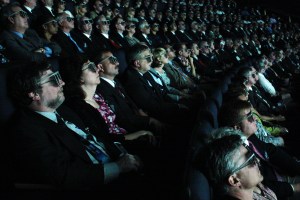
CINEMA in its early years progressed through continual innovation. Most of them when they were tried were considered to be gimmicks. (As movies themselves at the outset were thought to be a gimmick and not art.) Among developments: Technicolor, introduced in the 1930’s and becoming widespread by the 1950’s. The 50’s also saw the rise of wide screen film processes like Cinemascope, Vista-Vision, and Todd-AO, culminating in triple-screen Cinerama, most famously used for 1963’s How the West Was Won. The ultimate movie gimmick of course, in the 1950’s and more recently, was 3-D.

Viewing_3D_IMAX_clips

All of them began as gimmicks, but some were perfected and became standard part of the film art form.

Sound became so dominant, the making of a silent film in 2011, The Artist, was– let’s face it– a gimmick

****

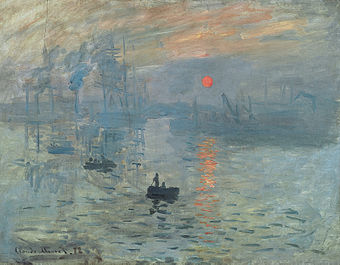
GIMMICKS have sustained the world of painting since the late 19th century, beginning with the impressionists–

340px-Claude_Monet,_Impression,_sunrise(Claude Monet, “Impression, Sunrise.”)

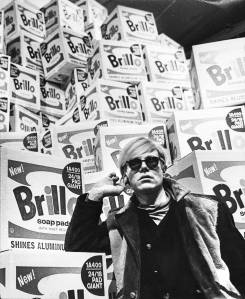
–then expressionists, cubists, Dadaists and surrealists. Abstract art, fluxus, op art, pop art. Was not Andy Warhol a genius of gimmicks?

Andy-Warhol-Stockholm-1968

Only recently has the art world run out of new ideas.

****

What about music? Rock n’ roll— though it sprung from authentic American roots music– was definitely a gimmick, promoted by carny barker hustlers like Alan Freed, Colonel Tom Parker, and Dick Clark.

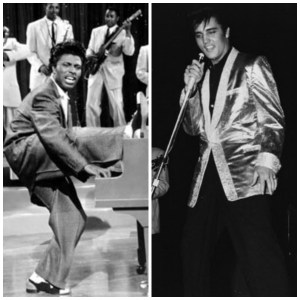
rock n rollers(Little Richard and Elvis Presley.)

Some might say that hip-hop began as a gimmick as well.

dmc and mc hammer(Run DMC and MC Hammer.)

****

ONLY ONE arts field has displayed no gimmicks– and no progress– for sixty years: literature.

Our task is to change that.

(We’ll be ready to preview our innovative new story in one month.)

****

BONUS: “You Gotta Have a Gimmick” from Gypsy (1962)–

*******

Karl Wenclas, New Pop Lit NEWS

How to Change Literature

WHO NEEDS THE 3-D STORY?

mosaic photo a lesik via shutterstock(Photo: A Lesik via Shutterstock.)

I’ve been engaging in a lot of talk about the three-dimensional story, and will engage in more of it, BECAUSE whether or not we at New Pop Lit are able to perfect the idea– or someone else does– it’s a way out of the box into which the literary art has placed itself.

rabbitinbox

WHO needs the 3D short story?

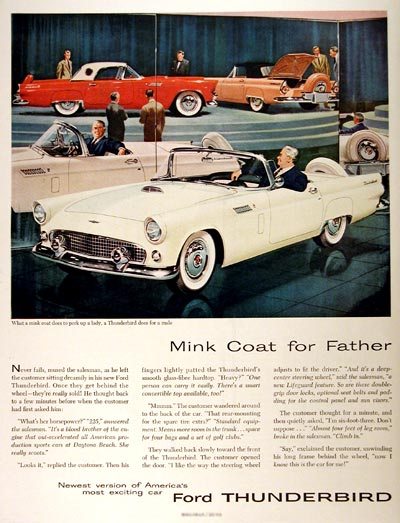
EVERYONE involved in the literary game in any way needs it– including at the highest levels, which are filled with caretakers and functionaries as much as literary artists. The scene is starved for a new kind of product– akin to the automobile business in the early 1950’s before the arrival of the Corvette, the Thunderbird, and the Mustang.

Thunderbird-1956-ad-2

(Especially had the only models available back then been stodgy Studebakers and Ramblers. Which is the condition of today’s established literary world.)

TIME FOR A NEW MODEL

The 3-D Story is the key to unlocking the future of literature. At this time, at New Pop Lit headquarters, in our labs and workshops, we’re furiously designing story prototypes– discarding some, keeping others, with a single goal:

To create the most brilliant and exciting short story ever written.

Once the new model is perfected and street-ready– fully readable and unique– the task will become leveraging it. Properly announcing the better literary product to the world.

These posts, at this blog, are laying that groundwork.
*******

-Karl Wenclas, New Pop Lit NEWS

The 3-D Story IS Coming!

DESIGNING A BETTER SHORT STORY?

3D postcard 1-page-001 - Edited

THE PROBLEM is that the new-style three-dimensional short story (now on our drawing board) is ridiculously difficult to write. The original plan was to have five or six prototypes finished by summer. As of now: One completed, another being worked on. I’ll be lucky to have that story revised and polished by summer. I have another 3-D story outlined (sketchy notes for others), and still hope to have that one ready by Halloween, as it has a Halloween theme.

My partner is trying the idea with a novel she’s been writing.
****

My first half-assed attempt to place into reality ideas regarding “literary montage” was in 2014. That story attempt morphed into a novella–

ONCE the improved 3-D story is launched and successful, the price of “X” will be set dramatically higher, because– as imperfect as it is– the work contains enough clues on what the fully-realized version should look like to give the game away. IF the idea truly works, the trend-following literary herd will be certain to grab onto the concept. We plan to hold a monopoly on the style as long as we can.

The goal: To surpass-not-match ANY contemporary short story written by anybody.

With the 3-D story we fully intend to SHOCK the literary world.

Cassius Clay After Winning Championship

*******

-Karl Wenclas, New Pop Lit NEWS

Literature Living in the Past

(Editor’s Note: With this post we’re living in the past, in that this short essay originally appeared under the same title on August 9, 2013, at the Attacking-the-Demi-Puppets blog. It’s being reprinted because its approach represents the impetus behind our quest to reinvent the short story form– and because in five-plus years things haven’t much changed.)
****

SHIRLEY JACKSON AND THE NEW YORKER

220px-Original_New_Yorker_cover

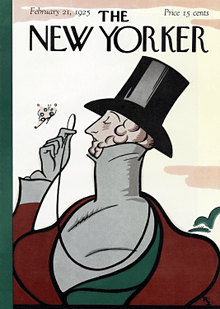
The centerpiece of The New Yorker’s August 5 summer fiction issue is a story by Shirley Jackson named “Paranoia.” In style the short story reads like any other New Yorker short story published over the past year. Being from Shirley Jackson, it’s more entertaining than the run-of-the-mill NewYorker story. The biggest difference between “Paranoia” and other well-crafted New Yorker stories is that the story “Paranoia” by Shirley Jackson is sixty years old.

Did the run-of-the-mill New Yorker reader notice?

Likely not. In the first place, fiction appearing in The New Yorker is never read, A.) because the magazine’s purpose isn’t to be read, but to sit upon refined coffee tables in upscale residences from Manhattan to Newport Beach (but not very much in Newport Beach) as a marker of breeding and good taste—the unique cover announcing the week’s message; and B.) because the pieces that are actually read when an ambitious subscriber decides to read the magazine are the movie reviews and show listings, maybe the week’s big think piece, but never—never—the fiction. That the magazine still publishes “fiction,” even if no one reads the fiction, is all that’s required. “Oh, the fiction,” a person responds, looking at the Table of Contents. “Still there. Good.”

In on-line blurbs for the issue, The New Yorker hearkens back to a previous New Yorker story by Shirley Jackson, “The Lottery,” which received more mail response than any story they’ve ever published, before or since. “The Lottery” by Shirley Jackson was published in 1948!

With today’s establishment-produced “fictions” we’re not talking about a healthy art form. There’s not been a lot of change in it. After sixty-plus years of presenting the same thing, the few remaining publishers of literary short stories have lost their audience. Renowned-but-little-read short story writer Charles Baxter acknowledges as much in a Daily Beast interview this week, with hardly a shrug. No attempt to understand the reasons. No desire to create something strikingly new. Charles Baxter has been writing the same kind of short stories for thirty years (not a long period from The New Yorker’s perspective). One thing we can bet about the short stories Baxter has published then and now is that they haven’t changed one iota. Since no one reads them, beyond dutiful writing students eager to learn how to duplicate them, does it matter?

A healthy art form—think of rock music from 1964 to 1967—is engulfed in explosions of creative discoveries everyplace, new trails blazed, the standard centerpiece of the art (the pop song) presenting radical new experiments and experiences by the week.

In literature, we get the unchanging literary story. As unchanged in 60 years as the proverbial generic McDonald’s hamburger left on a plate that never changes, always looking the same.

But The New Yorker is happy, and if they’re happy, the unthinking unblinking literary herd is also happy. Yes. A good year for the short story. 1948!

Maybe next they’ll bring back Joe DiMaggio to play for the Yankees.
*******

-Karl Wenclas, New Pop Lit News