Modernism and Editing

FURTHER THOUGHTS ON 3D WRITING

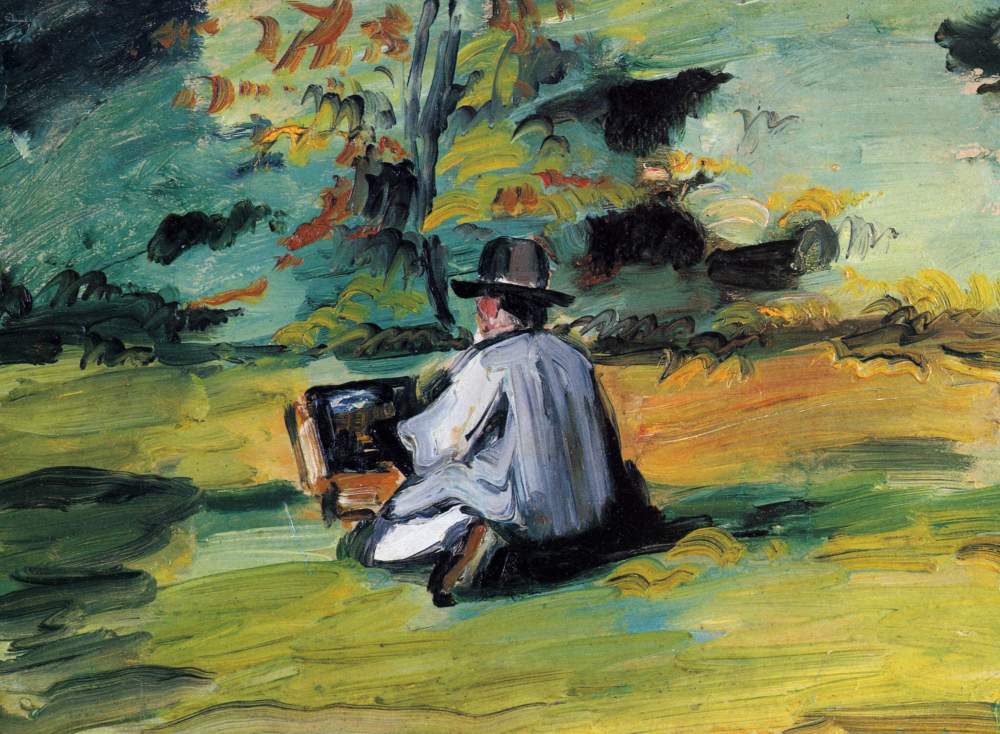
Paul_Cézanne_058(“A Painter at Work” by Paul Cezanne.)

Modernist art IS editing. It’s cutting away all unnecessary material and allowing our minds to fill in the empty spaces. A technique in writing pioneered by Gertrude Stein, Ernest Hemingway, and Georges Simenon.

These writers knew painting and they knew how a daub or two of paint could touch our emotions and allow us to “see” the reality of the image. In writing, a key touch of color or taste or sound to suggest something greater. To stimulate our memories, our own experiences.

This is the antithesis of standard literary writing which strives to tell you everything, overwhelming the narrative with details.

****

AN EXAMPLE of modernist editing in another art form can be found in this movie trailer:

The film: the 1959 version of Ben-Hur. (Which WILL be playing in movie theaters across the country this month, April 14 and 17, to celebrate the film’s 60th anniversary.)

The trailer is a work of art, superbly edited to suggest the four-hour long motion picture. It achieves a conciseness, a modernist sharpness, not possible from the larger work it serves to advertise. Note especially how the unknown editor uses voice-overs from other scenes to make thematic points; and how he dissolves the two biggest sequences, the chariot race and the crucifixion, into each other.

All movies are shaped and “cut.” Material left out. The trailer is extremely cut.

The idea points a direction for those wishing to make fiction– the short story in particular– as sharp, angled, fast-paced, and exciting as possible.

Which we’re attempting to do with the 3D Story.
*******

Karl Wenclas, New Pop Lit NEWS

Gimmicks and Art

THOUGHTS ON THE 3D SHORT STORY

IS the 3-D Story a gimmick? Yes. Most arts innovations at first are gimmicks.

A classic example was the change from silent movies to sound ones, which began in 1927 with The Jazz Singer. In that Al Jolson flick, sound was used strictly as a gimmick– intended only for the musical numbers. That Al Jolson ad-libbed a few lines of dialogue created (according to this video) a sensation and signaled the upcoming end of silent cinema.

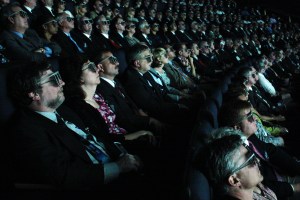
CINEMA in its early years progressed through continual innovation. Most of them when they were tried were considered to be gimmicks. (As movies themselves at the outset were thought to be a gimmick and not art.) Among developments: Technicolor, introduced in the 1930’s and becoming widespread by the 1950’s. The 50’s also saw the rise of wide screen film processes like Cinemascope, Vista-Vision, and Todd-AO, culminating in triple-screen Cinerama, most famously used for 1963’s How the West Was Won. The ultimate movie gimmick of course, in the 1950’s and more recently, was 3-D.

Viewing_3D_IMAX_clips

All of them began as gimmicks, but some were perfected and became standard part of the film art form.

Sound became so dominant, the making of a silent film in 2011, The Artist, was– let’s face it– a gimmick

****

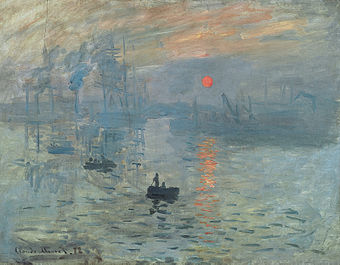
GIMMICKS have sustained the world of painting since the late 19th century, beginning with the impressionists–

340px-Claude_Monet,_Impression,_sunrise(Claude Monet, “Impression, Sunrise.”)

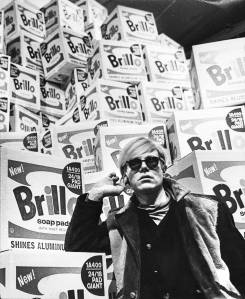
–then expressionists, cubists, Dadaists and surrealists. Abstract art, fluxus, op art, pop art. Was not Andy Warhol a genius of gimmicks?

Andy-Warhol-Stockholm-1968

Only recently has the art world run out of new ideas.

****

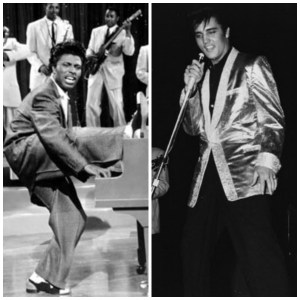
What about music? Rock n’ roll— though it sprung from authentic American roots music– was definitely a gimmick, promoted by carny barker hustlers like Alan Freed, Colonel Tom Parker, and Dick Clark.

rock n rollers(Little Richard and Elvis Presley.)

Some might say that hip-hop began as a gimmick as well.

dmc and mc hammer(Run DMC and MC Hammer.)

****

ONLY ONE arts field has displayed no gimmicks– and no progress– for sixty years: literature.

Our task is to change that.

(We’ll be ready to preview our innovative new story in one month.)

****

BONUS: “You Gotta Have a Gimmick” from Gypsy (1962)–

*******

Karl Wenclas, New Pop Lit NEWS

Year-End Wrap-Up 2018

CONCLUSIONS OR DELUSIONS?

Paranoid-schizophrenia
(Painting c/o wikipedia commons, “outsider art.”)

2018 was a challenging year, as we injected ourselves, on several occasions, wisely or unwisely, into debates in defense of free expression and of truth.

A score of posts at this blog were devoted to our investigation of the Junot Diaz Controversy. See one of our reports here.

We also came out publicly in opposition to the depublishing of poets in response to pressure by what I called “Poetry Cops.” One of our reports on that matter is here. In this post we asked the question, “Is American literature becoming a censorship horror show?” As of this writing it remains an open question.
****

AMID the noise, we found time to present some of the best fiction and poetry found anywhere, from present and future literary luminaries and of all kinds and styles. Examine them and their work at our Features line-up here.
****

OUR own highlight at this blog and in our lives in 2018 was this trip back up to northern Michigan’s Hemingway country, this time for distinctly personal reasons.
****

2019-page-001 - Edited

What’s in store for New Pop Lit for 2019?

More new fiction and poetry,

BUT ALSO–

We’ll attempt to reinvent the short story. That’s all.
*******

-Karl Wenclas, New Pop Lit News

WHO’S NEXT at New York Review of Books?

IN HINDSIGHT–

A man at a writing desk, by Rembrandt

In hindsight, the appointment of Ian Buruma as Editor of the New York Review of Books was a disaster. Buruma was daring enough to court controversy, but not strong enough to fight for the integrity and independence of his publication.

Ian Buruma (2015)

(Ian Buruma.)

A fighter would’ve done a better job of explaining why he ran the Jian Ghomeshi essay. Why recovery and redemption are important. Why editorial autonomy is necessary– especially in a climate of rush-to-judgement lynch mobs and unthinking hysteria.

A fighter would’ve gone to advertisers– one by one if need be– to make his case. Instead, Ian Buruma became one more casualty of today’s Literary McCarthyism.

WHAT KIND OF EDITOR?

What kind of editor is needed as Ian Buruma’s replacement?

Someone who could replicate the daring intellectual excitement represented by the New York Review of Books when it arrived on the media scene in February, 1963.

1963-02-01-600x0-c-default

NEEDED: A large personality.

A contentious, voluble writer akin to Norman Mailer. A person willing to be aggressive in taking on and dispersing any unthinking mob– willing to use the momentum of intellect and power of voice to restore sanity to today’s literary world.

mailer at mic

WHO?

WHO WILL New York Review of Books choose instead?

One of two safe alternatives.

1.) Almost certainly, a woman. Knee-jerk reaction to appease the angry mob. In this time of MeToo mania, it would be too risky for their risk-averse publishers to choose otherwise. Have to remember those advertisers!

(The result: A completely neutered intellectual journal.)

2.)  IF they were to choose a male editor, it would be someone properly screened and defanged, without a shred of volatility. Fully establishment and left-leaning, on the order of smiling Keith Gessen. Ready to appease everybody. Affable, innocuous, and bland.

gessen smiling

Someone who’s had a relationship with New York Review of Books. Whose own publication, n+1 magazine was in many ways made by them.

Or someone of that kind.

(Painting: “Scholar at His Desk” by Rembrandt.)
*******

-Karl Wenclas, New Pop Lit NEWS

Cultural Revolutions

WHAT REALLY HAPPENED TO IAN BURUMA?

chinesemaoists

What happened to Ian Buruma is that he was perceived by younger members of the literary herd to be out-of-step and slow, and so he had to go.

Step back, gain perspective, and you’ll see what’s happening is that English-speaking culture is in the midst of an ongoing cultural revolution, which is really a hundred mini-revolutions occurring simultaneously. Miscreants shamed, editors toppled, with accompanying cheers from twitter mobs and in halls of the academy.

What’s happening is as old as humanity. An energetic young generation wishing to displace those in their way, grabbing any excuse necessary.

Yes, the old system, populated by decaying icons like Ian Buruma, is corrupt, clueless, patriarchal, fossilized. Some of its members are toxic– but not as toxic as what’s coming.

It’s akin to what happened with the Bolshevik Revolution. The very flawed Czar and his aristocracy were removed. Those who took their place– Lenin, Stalin, and the like– pursued the cause of social justice but were in fact another level of corruption and ruthlessness from what they replaced. As history demonstrated.

In today’s cultural scene, the ambitious newcomers seeking to topple the gatekeepers are another level of volatility and drive from the likes of Buruma, David Remnick at The New Yorker, or The Boston Review‘s Joshua Cohen. Cohen, Remnick, and Buruma perceive themselves as leftist, maybe even as Sixties-style radicals, but they aren’t really. They’ve been playing. They’ve held to long-time liberal principles of open debate, free speech, the pursuit of objectivity. Now they’re seeing with the arrival of the Jesse Browns and Monica Byrnes onto the cultural scene genuine revolutionaries whose only principle is the pursuit of power and self, letting nothing stand in their way.

Don’t kid yourself. Instinctively, the Joshua Cohens, David Remnicks, and Ian Burumas are the actual targets of those who want to clean house of toxic debris. Not consciously, but instinctively– and the Jesse Browns, Monica Byrnes, and Zinzi Clemmons of the social justice mob run chiefly on instinct. Their ideology is simply the available weapon– the justification– allowing them to achieve their actual ends. Their unconscious needs.

Targets such as Jian Ghomeshi and Junot Diaz are collateral damage. Objectives to take out on the road toward the big guys.

What of that Old Guard? Remnick, Buruma, Cohen, and others yet to be discredited?

They’re akin to Stepan Trofimovitch Verhovensky in Fyodor Dostoevsky’s masterpiece novel The Possessed, (aka Demons or Devils). Feckless liberals seeing the world around them change, in unpredictable and dangerous ways.

possessed

COMING: Part II of these speculations.
*******

-Karl Wenclas, New Pop Lit NEWS


The Real Literary Gender Gap?

VANISHING MEN IN LITERATURE AND PUBLISHING

Penguin_Random_House_Tower_New_York_2005

Much noise is made by organizations like VIDA about the gender gap in today’s publishing world. When you examine the actual data, however, you find a different tale.  According to this story from 2016 in The Guardian, the U.S. publishing industry is not only predominately white, but 78% women. (At the executive level, with hangers-on from past male dominance, the industry is 60% women.)

Doing swift calculations of the figures, we can further say that the single largest demographic group in the industry is white women, at more than 60%. By contrast, Latino men make up 1.2% of the industry– hardly registering, which makes the dilemma of Junot Diaz more eye-opening.

Another striking article is this one which appeared in The Atlantic in 2017, which describes how many male authors pretend to be women in order to be published– a turnaround from the days of George Sand. According to this article, 80% of fiction readers are women.

Do you want more statistics? Per the Humanities Indicators site, approximately two-out-of-three English graduates– bachelors, masters, and Phd– are women. Per Data USA, 62% of “writers and authors” are women.

documents

We’re beginning to see these ratios reflected in literary awards. For the most recent National Book Foundation awards, 15 of 20 finalists were women. All five of the “5 Under 35” award winners were women.

As I pointed out in an earlier post about the Society of Children’s Book Writers and Illustrators, the few male authors in some writers organizations are so outnumbered by women they feel like kids in a candy store– some of them getting into trouble for too many affairs, too many hook-ups while partaking in the book industry’s “meet and greet” soirees.
****

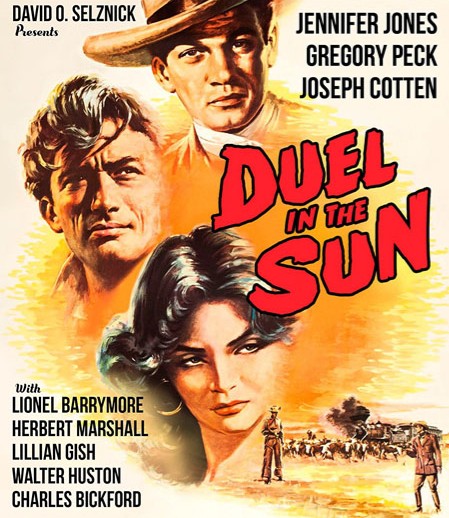
WHAT does it all mean? For starters, an industry or art form catering to the public gets into trouble when it disregards half of its potential audience. For example look at what happened to the Western movie when it began focusing almost exclusively on men characters (many Spaghetti Westerns did not have a single woman in the cast)– writing out the women who played a large part in the historic West, to present instead sociopathic narratives of obsessive bloodletting, often starring squinty-eyed and emotionless Clint Eastwood. A far cry from the days of the torridly romantic Selznick spectacular “Duel in the Sun.”

duelinthesunb - Edited

Today, the Western movie has all but vanished.
****

IF figures pertaining to class were available, we’d find the narrowness of viewpoint further skewed. Examine the mastheads of Manhattan magazines which cover arts and letters and you’ll find the staffers from the top down are graduates overwhelmingly of Ivy League universities, with a few Stanford grads and Brits from Oxford thrown in. The same holds true, from what I’ve examined, for the Big 5 New York City-based publishers. Those who decide which authors and books are published and reviewed are, in the main, upper-class women. Not by any measure the best way to create a representative literature for a very large and complex civilization like ours.
****

With an array of male authors and editors being purged from the book industry after “MeToo” revelations, the trend toward an all-female business and audience doesn’t look to turn around any time soon.

MORE TO SAY on this matter. . . .
****

-Karl Wenclas, New Pop Lit News

Power Grabbers of Literature

HISTORY DOES repeat itself, but in vastly different ways. The patterns are there if you look for them.

Sea_Trials_of_RMS_Titanic,_2nd_of_April_1912

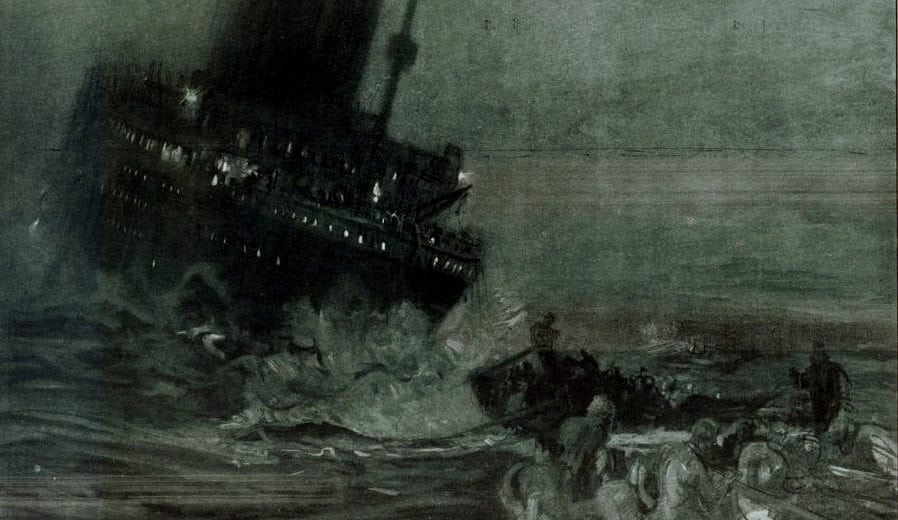
The ship of culture– even of literature– floats placidly along, but below deck revolution is taking place. All is conflict. The takeover of the ship is of a Gramscian variety– one room at a time.

SIMULTANEOUSLY occurs a struggle within the revolution itself, the pertinent question there being: Who controls it?

It’s a truism that in revolutions the communists devour the anarchists. (See Russia 1918; Spain 1938.) Philosophically, this is happening in the English language poetry scene– Control Freaks taking over, seeking to eliminate all who hold the opposite viewpoint. To shut down those who believe poetry– art itself– is imaginative commotion. Who think the way to attain this is through unrestricted expression. A vanishing attitude being squeezed between Left and Right. For the Control Freaks– the Poetry Cops and their go-along-to-get-along acolytes– this casual attitude is dangerous.

(The P.C.– Poetry Cops– are extremely casual about the poetry itself– but not about what it says, or who says it!)

DIFFERENT patterns from the past occur throughout the ship. One is a last gasp reaction of the (academic) aristocrats, similar to what happened in Russia during the civil war of 1919 between “Reds” and “Whites.” It’s what the noise of Jordan Peterson, Claire Lehmann, Quillette Magazine and their allies is about. This is doomed to failure. You can’t reimpose an ancien regime.

The question remains–

WHO CONTROLS CHANGE?

Old power structures are beginning to crumble, and a new paradigm in which a multiplicity of voices and identities hold authority is emerging. 

This is a quote from an article at Dispatches Poetry Wars, one of the new literary outfits struggling to get to the forefront of radical change in the poetry field. The key to their mindset is to “hold authority,” because that’s what the poetry wars they promote and document are about. Publicly denouncing alleged abusers like Joseph Massey is a means toward that end. It’s not about the poetry. For thirty years or more it hasn’t been about the poetry– which is why an Anders Carlson-Wee poem in The Nation won’t find too many defenders, because in truth it’s not very good. It’s political posturing more than poetry.

IT’S NOT SURPRISING that most if not all of the writers being attacked or taken down by MeToo advocates the past six months or last few years have been on the Left– because that’s all who inhabit the scene. (Not surprising that both Joseph Massey and Anders Carlson-Wee have had poetry in the faux-Leftist magazine The Nation, which publishes short examples of the dwindled art on their site, in-between splashy ads for hyper-priced Alfa Romeos.)

What a Dispatches Poetry Wars is about is the total politicization of the art.

I’ve read their manifesto. I have to say, I agree with much of it. It could’ve been distributed fifteen years ago by the Underground Literary Alliance and no one would’ve been surprised. But let’s understand why these fellows are using activism– for the same reason the ULA used activism: To increase their profile. To upend the literary scene and become a credible player within that scene. With DPW however I smell a trace of phoniness– in that they don’t really want to liberate “autonomous” zones (safe spaces). They don’t actually support unruly, “wild poets,” because otherwise they wouldn’t be joining the chorus of Poetry Cops eager to remove from the scene the work of all those who scribble or act outside the lines of acceptable behavior. (A Rachel Custer, say.) But they do see in which direction the parade is headed. They call for Robespierre-style denunciations and more denunciations.

463px-Labille-Guiard_Robespierre

–we’re appalled by the silence emanating from institutions that have supported this person and granted him platforms from which to extend his predation.

A LITTLE CHECKING reveals that Dispatches Poetry Wars is run by two older white guys, Michael Boughn and Kent Johnson, who have ties of their own to the established poetry world. Boughn (if it’s the same Boughn) seasonally teaches at the University of Toronto, Jordan Peterson’s old stomping grounds. Kent Johnson (if it’s the same Johnson) has received grants from the heart of the cultural establishment, including a National Endowment for the Arts Literature Fellowship and a PEN grant.

I suspect their position is analogous to that we outlined here of Boston Review editor Joshua Cohen. Unleash the mob and it may someday turn on yourself!

The-Sinking-of-the-Titanic-–-Drawn-by-Henry-Reuterdahl-898x520
*******

(Titanic paintings by Karl Beutel and Henry Reuterdahl. Portrait of Maximilien Robespierre by Labille-Guiard.)

-Karl Wenclas for New Pop Lit NEWS

Collapsing New York City Media?

NEW YORK DAILY NEWS: THE BIGGER PICTURE

2010-Chile-Earthquake-81

SOMETIMES things move slowly. Incrementally. Glacially. Ever see snails? They come out when it rains. They’re not moving– but they are. One minute in one spot. Later it’s in another spot, and you can’t be sure, really, how it got there.

snail

“How did you go bankrupt?”

“Two ways,” Mike said. “Gradually then suddenly.”

-Ernest Hemingway, The Sun Also Rises
****

SUCH is the case with the mighty edifice of New York City media. With every aspect of New York media: newspapers, magazines, publishing companies. You can’t see them collapsing, but they are. The New York Daily News layoffs were inevitable. There will be more layoffs at other Manhattan flagships. Many more.

New_York_Daily_News.svg

Why? Because the fundamentals are strongly against them. New York City is a ridiculously expansive place in which to do business– yet Big Five publishing and their many acolytes insist on being there. In the internet age when one can set up anyplace, there’s no reason to be on that narrow island or its environs– other than to have swanky three-martini lunches at Sardi’s while playing the role of Manhattan editor or journalist circa 1959.

OLYMPUS DIGITAL CAMERA

Taxes, rents, leases, staffs, cost of living– everything in New York City is hyperexpensive.

A recent cost of living index put out by the Council for Community and Economic Research put Manhattan’s cost of living rating at 238.6. By contrast, Detroit’s is 96.9.

Manhattan’s recent average cost of office space was pegged at $75 per square foot. Downtown Detroit’s? It’s risen to $20 per square foot.

Manhattan is a more appealing place to live, no doubt. But when you’re in competition in business, the arithmetic will eventually catch up to you. Glamor or no glamor.

It’s not just the where these legacy businesses are located. It’s how they’re constructed– top-heavy, vertical, overstaffed. Leaner, meaner, more aggressive upstarts will eventually destroy them. Hungrier upstarts– those willing to do most of their work rent-free at Starbucks, or set up printing presses in a basement. And eat at McDonald’s.

mcdonald's sign

The Ivy League prep school crowd inhabiting New York skyscrapers may scoff (or whine and cry when they lose their jobs), but it’s the way of the world. Always has been. Doesn’t look to change now.
****

-Karl Wenclas for New Pop Lit News

How Does a News Story Go Viral?

PUBLICITY IN THE JUNOT DIAZ CONTROVERSY

epstein in cavern

I ADMIT IT. I’m amazed at how fast the publicity game has changed, thanks to social media. Compared to ten years ago, the creation of buzz moves now at lightning speed.

It’s the difference between military techniques in World Wars One and Two. The speed of blitzkrieg in the latter contest revolutionized the game.

As I’ve said a couple times in this series: Who wins the debate over the sexual harassment allegations about prize-winning author Junot Diaz will be decided by who’s better at PR. Institutions (MIT; Boston Review) cleared Diaz, but it’s out of their hands. In the new media age, static bureaucracies have been left behind.

A key post of ours in this regard is “System versus Zeitgeist.”

The Junot Diaz camp is now fully in the game with their army of twitter fans and trolls. They’ve moved quickly up to speed. Will it be enough?

We have two opinion armies maneuvering against one another online– across twitter, blogs, and media sites.

The accusers’ side has made significant mistakes– but their opening moves in the chess game which began May 4th were breathtaking.

CREATING HYSTERIA
epstein again

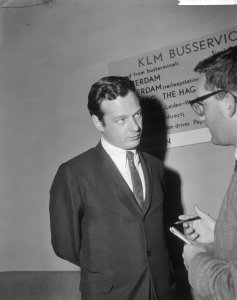
THE GREATEST publicity feat of all time was the creation of Beatlemania. Most people believe it was spontaneous. Yeah, yeah, the band was talented and young people liked them. As simple as that? Not really.

In November, 1961, Liverpool record store manager Brian Epstein saw an unkempt band playing in an underground club in that beaten-down UK working class city and thought, “I can make these guys bigger than Elvis Presley.” A hidden genius behind the scenes, Brian Epstein was in back of every step of the band’s rise. Some of the facts of how he accomplished this are known. For instance, mass hysteria in New York City in February 1964 when the little-known (in America) band landed for the first time. Reluctant Capitol Records was forced by Epstein to spend $70,000 ($570,000 in today’s dollars) to promote their arrival and the concurrent release of their single, “I Want to Hold Your Hand.”

The-Beatles-At-JFK-tarmac-530x353

WE ALSO know the mob of kids holding signs at the airport wasn’t a spontaneous happening. Their presence was arranged. The kick-off of Beatlemania was staged.

MAY 4 ANTI-JUNOT DIAZ HYSTERIA

I’m still amazed at how quickly fervor against Junot Diaz took place. Three threads of tweets from Zinzi Clemmons, Monica Byrne, and Carmen Maria Machado taking place in the middle of night, one right after another. By morning they’d gone viral. To such extent that The Cut’s Anna Silman was already contacting Monica Byrne for a statement.

Spontaneous? Byrne said to Silman, “The network was activated”– which might be clue enough for an explanation.

Monica Byrne’s unsupported rumors about Melania Trump in June 2017, which went viral, albeit on a smaller scale, served as trial run for this situation. This time out Byrne had at least a smattering of substance to the story, and other women on her side. Enough substance that even the mighty and respectable New York Times joined the generated hysteria.

QUESTION: Was the hysteria against Junot Diaz generated or spontaneous?

Another tweet from Monica:

AIDING buzz creation was dramatic language used by the accusers in the tweeted narratives.

BYRNE: “I’ve never faced such virulent misogyny in my adult life.”

MACHADO: “–a blast of misogynist rage.”

Promotional blitzkrieg on May 4th worked masterfully– on that very same day the accusations were news across the globe. The feat deserves a chapter of its own in the history of publicity. The planning and coordination worked– but not well enough to claim quick victory. No knockout. Junot Diaz apologized, but he and his institutional backers held firm. By now, today, the controversy has settled into trench warfare– both sides sniping at each other from steady lines, World War One-style.

For the time being, the controversy is at a stalemate.

wwI
****

WILL the stalemate continue? More to come from:

-New Pop Lit News-
https://newpoplitnews.wordpress.com/

-Karl Wenclas on the literary news beat.
 

Playboy and Today’s War Between the Sexes

OR: WHY ARE PROGRESSIVE MEN HARASSING WOMEN?

New Pop Lit

The question isn’t as off-the-wall as it seems. What’s taking place is an internal war between two parts of the sexual/social/cultural revolution which kicked-off in the 1960’s and is ongoing.

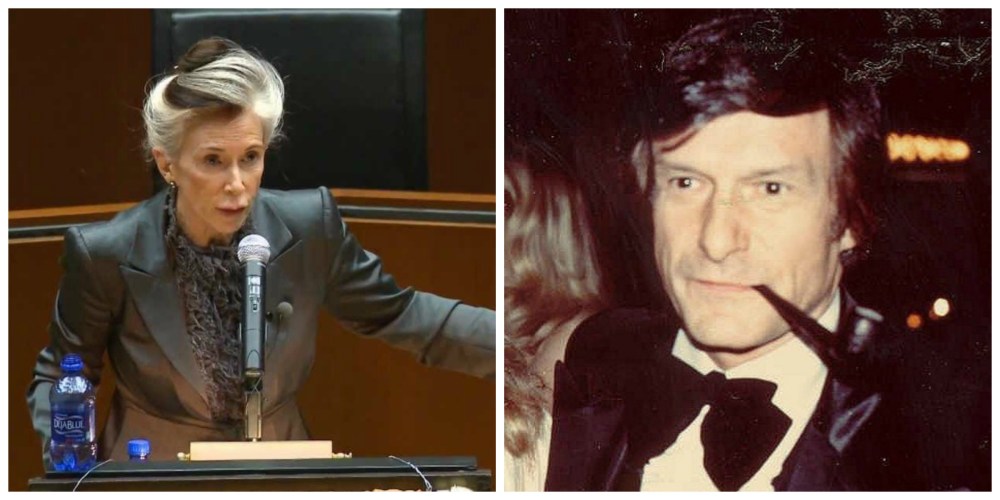
ON ONE SIDE you have the hedonists and free-love people. Their first advocate was Hugh Hefner of Playboy magazine fame.

playboy

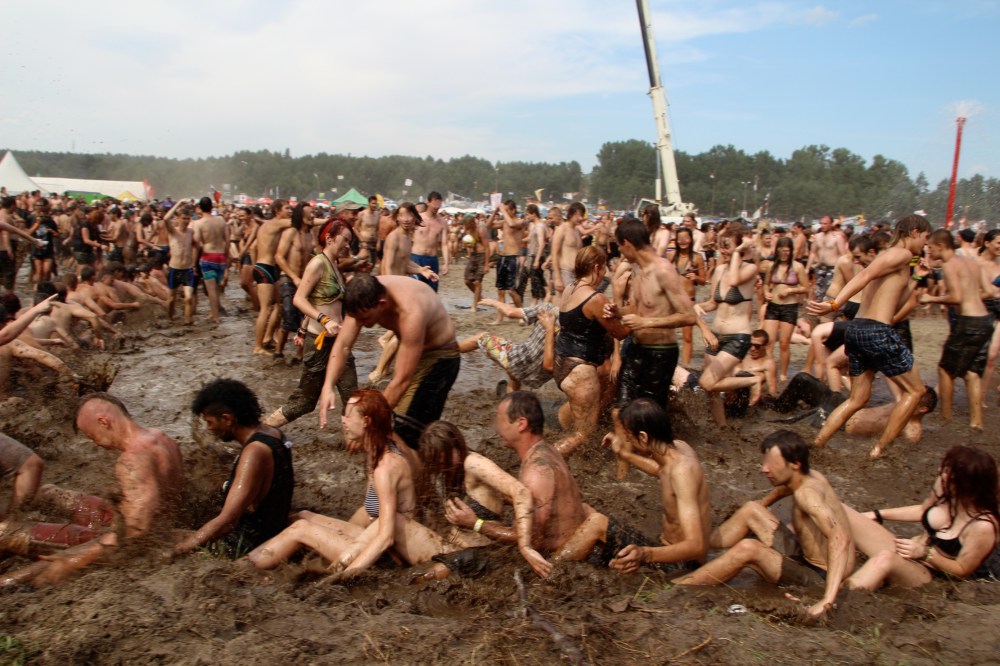
Recall his ethos? The playboy devotes himself to having as many women as he can, all the time. A generation of men– several generations, really– were raised to believe that their share of the sexual revolution could be summed up in one word, which begins with a “p.” (It’s not “playboy.”) Give women their rights; give them their freedom, and this in return was the payment. Another “p” word, “the Pill,” made this, at least for a time, reality. Woodstock, 1969:

Przystanek Woodstock 2012

Free love. Old-fashioned monogamy destroyed.

THOSE MEN who eagerly embraced this were sexist pigs, yes, but many were on the left– or, if they weren’t to start with, soon enough joined it. Businessmen throwing away their ties and grabbing paisley shirts and beads before eagerly jumping into the pigpen with the rest of the gang. Liberation.

*******

THE OTHER SIDE in this battle is the feminist movement, a huge portion of which has pulled back on this unlimited freedom, no limits, appetite-all-the-time part of the deal. Their avatar is Catherine MacKinnon.

mackinnon

What does this have to do with men accused of sexual harassment in the literary realm?

HAVE progressive men, in sympathy with women and women’s issues, felt at liberty to go beyond normal bounds with them?

I’ll explore this, with examples, in my next post. Coming soon.

-K.W.

(Be sure to follow this blog to get all the updates. Much is upcoming.)