Pushcart 2018!

NEW POP LIT’S 2018 NOMINATIONS

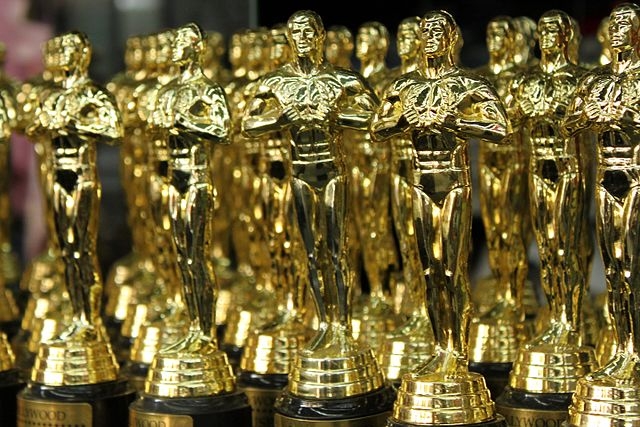
18352_academy_awardsp

And the nominations are. . . .

Every year we vow not to do Pushcart Prize nominations and every year we send them in anyway– usually right at the deadline.

After all, in 2018, despite our ups and downs, we featured a lot of talented writers. The difficulty is choosing among them.

This year we’ve nominated five short stories and one poem. A stylistically diverse mix of the offbeat and the traditional.

FICTION (in order of publication date):

“The First Time” by Anne Leigh Parrish.

“The Hunting Cabin” by Brian Eckert.

“Up On the Mountain” by Jack Somers.

“On the Rails, Off the Rails” by Elias Keller.

“Yelp in Reverse” by Wred Fright.

POETRY:

On Midsummer’s Night” by C.A. Shoultz.
*******

We thank all writers who allow us to present their writing.

(We thank Pushcart Press for their tremendous work!)

Neo-Beats Out of Control!

style

(Classic style.)

At least, they’ve taken over the New Pop Lit site. New Beat writing in all its various iterations.

First, a review of an anthology of Beat-style in-the-larger-sense fiction and poetry.

Second, a current poetry feature of lakebeatgrunge poems from beat56.

AND, a home page Intro to all of this.

HELP!!!

(Our self-appointed task is to cover what’s happening in the lit world. What’s happening at the moment might be right here.)

A NOTE ON STYLE

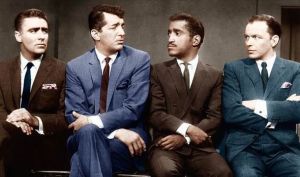
One thing the cultural period of the late 1950’s and early 60’s had was style. The Beats were the obverse to the established “Mad Men” look. (Think Frank Sinatra’s Rat Pack, pictured.)

rat pack

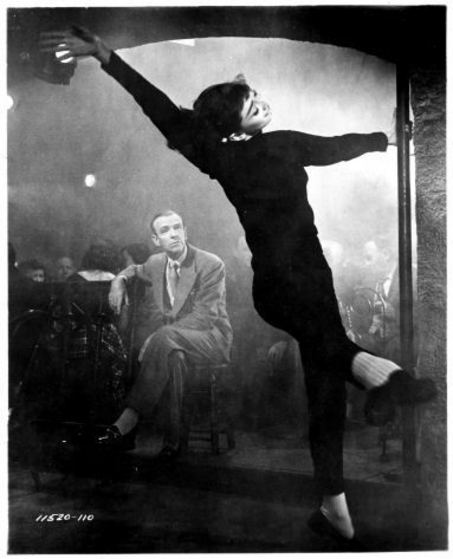
As such, the Beats were relentlessly satirized by established pillars of culture. Thoroughly mocked– in venues ranging from television shows such as Dobie Gillis and The Beverly Hillbillies, to movies such as Funny Face starring Audrey Hepburn. The point is that poets and writers mattered. The Beats suffered the slings and arrows of the culturally challenged but they also created exciting fun art.

Audrey Hepburn funny face 50s black polo neck beatnikdancing white socks

(Audrey Hepburn.)


Underground Hemingway

AN ADVENTURE IN NORTHERN MICHIGAN’S HEMINGWAY COUNTRY

DSC06869

(A moose at the Mitchell Street Pub in Petoskey.)

WHILE we were on our honeymoon two weeks ago, one of our more fascinating experiences was an underground tour conducted by a young woman who may or may not exist in reality. (A ghost?)

We were at the City Tavern Grill in the quaint town of Petoskey, both of us sitting at the bar, in a saloon which young Hem himself used to frequent. I was at the exact spot– second from the end– which Hemingway was said to like.

We must’ve seemed easy marks. Out of nowhere, a woman approached us and asked if we’d like a tour of the saloon, including its underground tunnels.

“Sure,” we said.

The woman was dressed like someone from another time period– the 1920’s, perhaps– with a feather in her hair and wearing a delicate retro black dress. In build she was tiny, as if from that bygone era when people were smaller than today. Her waist could not have been more than 20 inches around– Scarlett O’Hara territory.

Beyond this, she spoke in a dramatic manner, as if on a Victorian stage. She batted her eyelashes like a silent movie actress. When she walked, she shimmied like a flapper from the pages of a Scott Fitzgerald story.

DSC06872

The woman knew, somehow, by looking at us that we were Ernest Hemingway fans. She told us how often Hemingway frequented this spot– named The Annex in his time. The bar and its furnishings were the same. She showed us signed bills from Hemingway for food and drinks. The last one was from 1947.

This narrative was related in a secretive manner, as if she’d personally known the man.

Her name, she said, was Mary Ellen. She reminded us that in the time Ernest Hemingway first came here, Prohibition was in force. At any sign of police, observed through a peephole, booze and customers moved swiftly downstairs, to the basement.

Mary Ellen asked us cryptically if we’d like to visit the basement.

Without waiting for a response she turned and made her way down rickety stairs to the basement. We followed.

DSC06876

The basement was gray and dimly lit. Bannisters, walls, shelves of liquor bottles– everything– was covered in dust. Layers of dust, in some cases. We looked at each other with our eyes, asking ourselves, “Can we trust this woman?”

In the way she spoke and was dressed, she could have indeed stepped through a time warp. Or, could she be instead an escapee from– ?

We didn’t continue that thought because we didn’t want to continue it. Instead we stumbled along after Mary Ellen, through lengthy depths.

DSC06878

Mary Ellen showed us a number of blocked or partly-blocked tunnels, used both to smuggle bootleg liquor into the saloon, or out of it. One of the tunnels led to the nearby Perry Hotel, where we happened to be staying for the week.

DSC06877

The smuggled booze came from the Al Capone gang. From his base in Chicago, Capone controlled all liquor going into resort towns which spread north along the Lake Michigan shoreline, including this one.

The lights began flickering.

“The lights are going out!” Mary Ellen said dramatically.

Her eyes seemed truly afraid. Perhaps the time allotted for the private tour was over, or someone above needed her. Or perhaps she was about to turn into a pumpkin, or vanish, or appear her real age, or something. We were, after all, only days from Halloween.

DSC06859

We made it back up shaky wood stairs to the main floor, breathing, despite ourselves, a sigh of relief.

The tour was one of many highlights we encountered in the quaint town of Petoskey.

-K. and K.

DSC06885

*******

WHO’S NEXT at New York Review of Books?

IN HINDSIGHT–

A man at a writing desk, by Rembrandt

In hindsight, the appointment of Ian Buruma as Editor of the New York Review of Books was a disaster. Buruma was daring enough to court controversy, but not strong enough to fight for the integrity and independence of his publication.

Ian Buruma (2015)

(Ian Buruma.)

A fighter would’ve done a better job of explaining why he ran the Jian Ghomeshi essay. Why recovery and redemption are important. Why editorial autonomy is necessary– especially in a climate of rush-to-judgement lynch mobs and unthinking hysteria.

A fighter would’ve gone to advertisers– one by one if need be– to make his case. Instead, Ian Buruma became one more casualty of today’s Literary McCarthyism.

WHAT KIND OF EDITOR?

What kind of editor is needed as Ian Buruma’s replacement?

Someone who could replicate the daring intellectual excitement represented by the New York Review of Books when it arrived on the media scene in February, 1963.

1963-02-01-600x0-c-default

NEEDED: A large personality.

A contentious, voluble writer akin to Norman Mailer. A person willing to be aggressive in taking on and dispersing any unthinking mob– willing to use the momentum of intellect and power of voice to restore sanity to today’s literary world.

mailer at mic

WHO?

WHO WILL New York Review of Books choose instead?

One of two safe alternatives.

1.) Almost certainly, a woman. Knee-jerk reaction to appease the angry mob. In this time of MeToo mania, it would be too risky for their risk-averse publishers to choose otherwise. Have to remember those advertisers!

(The result: A completely neutered intellectual journal.)

2.)  IF they were to choose a male editor, it would be someone properly screened and defanged, without a shred of volatility. Fully establishment and left-leaning, on the order of smiling Keith Gessen. Ready to appease everybody. Affable, innocuous, and bland.

gessen smiling

Someone who’s had a relationship with New York Review of Books. Whose own publication, n+1 magazine was in many ways made by them.

Or someone of that kind.

(Painting: “Scholar at His Desk” by Rembrandt.)
*******

-Karl Wenclas, New Pop Lit NEWS

Media Insanity Report

KEEPING UP ON MAINSTREAM MEDIA ANTICS

beautiful and damned

-A NEW FEATURE-

WE JUST learned today that the term “lady” is now considered unacceptable by the Orwellian arbiters of thought and language. I’ve seen the notorious wannabe-totalitarians known as the Poetry Cops complain about the term. Now, from someone a bit higher up on the media power ladder– Ginia Bellafante of “paper of record” The New York Times.

QUESTIONS arise.

-Is the term “gentleman” also considered offensive? (Does this explain Brett Kavanaugh‘s alleged behavior in the past?)

-Does the prospective outlawing of these terms explain a lot of behavior from a great many people in recent years?

And finally–

-WHO is going to tell Lady Mary?

downton-lady-mary_3061685b

THE spectacular success of Downton Abbey (movie version being filmed as I type this) might be because a large part of the populace is tired of people looking like slobs. They’d like a return to those old-fashioned concepts of grace, beauty, class, and style.

Even (gasp!) a return to ladies, and gentlemen.
*******

-Karl Wenclas, New Pop Lit NEWS

Fiction Illuminating Life

TWO classic American stories are wry commentaries on non-fictional news events.
*******

gaitskill2

“The Girl on the Plane” by Mary Gaitskill, written in 1993, concerns a man on a plane flight who gets into a conversation with a younger woman sitting next to him. This takes the man back to events in his youth. I don’t want to give away the plot, but IF you’re at all interested in the allegations about Supreme Court nominee Brett Kavanaugh, especially those coming from Julie Swetnick, I suggest you read the story. As the man on the flight says, “It’s complicated.” OR– things are never as simplistic as camps on both sides of the aisle pretend to make them.

READ IT– Not least because it’s well constructed and packs an emotional punch. One of the better– and more relevant– American short stories ever written.
*******

baldwin

“Come Out the Wilderness” by James Baldwin, written in 1965, illuminates an event much talked-about of late: the similar Senate hearings which took place when current Supreme Court Justice Clarence Thomas was nominated. In the Baldwin story, a young black secretary has lunch with a black executive from the same company. He drops the company facade for a moment to speak in an earthier tone. It’s a reflection of sorts on the more awkward conversations Clarence Thomas sought to have with Anita Hill, which were taken in a less kindly light than does the secretary in Baldwin’s story.

James Baldwin wrote several dynamite short stories which rank with any writer’s. This is one of them.

*******

-K.W. 

Our “Best of the Net” 2018 Nominations

Here are our Best of the Net nominations for 2018.

botn2017

They encompass work published online between July 1, 2017 and June 30, 2018.

(Best of the Net 2017 is here. The Sundress Publications website is here.)
*******

AS ALWAYS we had more good work than we were able to nominate. For fiction, we nominated two of our longer stories– both require some investment in reading. Both stories required an ample investment in imagination and work in writing. Both stories are excellent in very different ways. They exhibit the range available within a “Pop Lit” designation.

WE hope you read or re-read all of the nominated works.

We thank these writers and all the writers who’ve generously allowed us to publish their work.

Fiction:

“Churchgoing in New England” by Richard Greenhorn,
published 9/28/17.
“The Rottweiler” by Alex Bernstein,
published 1/12/18.

Non-Fiction:

“Hemingway” by Samuel Stevens,
published 7/28/17
“Cry Wolfe” by Robin Wyatt Dunn,
published 11/16/17.

Poetry:

“Black Water” by Robert Beveridge,
published 10/16/17.
“Processed World” by Rus Khomutoff,
published 02/02/18.
“Starbucks Bars to Be Sung I” by Timmy Chong,
published 4/12/18.
“Jonesing” by Timmy Chong,
published 4/12/18.
“Tourist Trap” by Holly Day,
published 4/18/18.
“Losing Another One” by James Croal Jackson,
published 5/7/18.
*******

Cultural Revolutions

WHAT REALLY HAPPENED TO IAN BURUMA?

chinesemaoists

What happened to Ian Buruma is that he was perceived by younger members of the literary herd to be out-of-step and slow, and so he had to go.

Step back, gain perspective, and you’ll see what’s happening is that English-speaking culture is in the midst of an ongoing cultural revolution, which is really a hundred mini-revolutions occurring simultaneously. Miscreants shamed, editors toppled, with accompanying cheers from twitter mobs and in halls of the academy.

What’s happening is as old as humanity. An energetic young generation wishing to displace those in their way, grabbing any excuse necessary.

Yes, the old system, populated by decaying icons like Ian Buruma, is corrupt, clueless, patriarchal, fossilized. Some of its members are toxic– but not as toxic as what’s coming.

It’s akin to what happened with the Bolshevik Revolution. The very flawed Czar and his aristocracy were removed. Those who took their place– Lenin, Stalin, and the like– pursued the cause of social justice but were in fact another level of corruption and ruthlessness from what they replaced. As history demonstrated.

In today’s cultural scene, the ambitious newcomers seeking to topple the gatekeepers are another level of volatility and drive from the likes of Buruma, David Remnick at The New Yorker, or The Boston Review‘s Joshua Cohen. Cohen, Remnick, and Buruma perceive themselves as leftist, maybe even as Sixties-style radicals, but they aren’t really. They’ve been playing. They’ve held to long-time liberal principles of open debate, free speech, the pursuit of objectivity. Now they’re seeing with the arrival of the Jesse Browns and Monica Byrnes onto the cultural scene genuine revolutionaries whose only principle is the pursuit of power and self, letting nothing stand in their way.

Don’t kid yourself. Instinctively, the Joshua Cohens, David Remnicks, and Ian Burumas are the actual targets of those who want to clean house of toxic debris. Not consciously, but instinctively– and the Jesse Browns, Monica Byrnes, and Zinzi Clemmons of the social justice mob run chiefly on instinct. Their ideology is simply the available weapon– the justification– allowing them to achieve their actual ends. Their unconscious needs.

Targets such as Jian Ghomeshi and Junot Diaz are collateral damage. Objectives to take out on the road toward the big guys.

What of that Old Guard? Remnick, Buruma, Cohen, and others yet to be discredited?

They’re akin to Stepan Trofimovitch Verhovensky in Fyodor Dostoevsky’s masterpiece novel The Possessed, (aka Demons or Devils). Feckless liberals seeing the world around them change, in unpredictable and dangerous ways.

possessed

COMING: Part II of these speculations.
*******

-Karl Wenclas, New Pop Lit NEWS