Unlocking the Junot Diaz Puzzle
SEVENTH IN A SERIES

Abuser or non-abuser? Who, in the end, is telling the truth about this puzzling lit-world affair? Is there or will there ever be a way to tell?
THE CASE against famed author Junot Diaz is fairly well presented here, where you’ll find the statements– the charges, if you will– against him.
THE STORY is in the descriptions of these encounters– the crux of the matter in this passage taken from Monica Byrne’s narrative:
The table struck up a light conversation about the significance of statistics in publishing. I made a point emphasizing how personal narrative is important in empowering the marginalized. He said (and this is my memory, so I’m not including quotation marks), Well, I don’t know if you know how statistics work, but that’s like saying, Oh, I haven’t been RAPED, so RAPE must not exist.
Monica Byrne mentions the importance of personal narrative. Junot Diaz disagrees with her. Ironically, the accusations against him are three examples of personal narrative and the question is to what extent we should trust them.
Three intense narratives. Three brief encounters with Junot Diaz which occurred four-to-seven years ago. Are the narratives strictly accurate?
The three women were aspiring young writers meeting one of their idols. Could anyone in that situation not treat it as an important encounter? Would (just asking) the impact of any dismissive or abrupt gesture, a raising of his voice– any formidable disagreement from him– be multiplied several times over?
One of the encounters has already been unlocked. Read the Carmen Maria Machado description– of her encounter with Diaz– linked to above. Then listen to the recorded audio of the same event (their exchange begins at the 33 minute mark):
https://drive.google.com/file/d/1Oc-g4-jx-jlCQG_cuWsJa3IFrET1-3uV/view
A window into history. A disputed event six years ago is history.
A PARALLEL?

When I was a kid my dad kept around the house a collection of boxing magazines. He wasn’t much of a reader– never read a book in his life– but he’d boxed a little in his youth and did like boxing magazines. One of the mags detailed the changes in perception wrought by film archivist Jim Jacobs, who restored footage of many of the classic fights of the late 19th century and beyond, including the Jim Corbett versus Bob Fitzsimmons heavyweight contest of 1897.
BY the 1960’s and 70’s, when these magazines were published, the old-time fights had gained the gravity of myth, due to hyperbolic descriptions in publications like The Police Gazette— which after all needed to sell copies and had to have something exciting to present.
In print, these were terribly contentious, blood-drenched battles. When grizzled boxing writers who’d been raised on the legends saw the long-lost footage, their jaws dropped. Cigars fell from their mouths. Action on the screen was minimal. Being no-limit fights in the hot sun, the boxers paced themselves. The men were merely human beings, not superheroes. (Fitzsimmons knocked-out Corbett in the thirteenth round.)

DRAMATIC LANGUAGE
The reporters in 1897 used dramatic language which colored their descriptions, adding intensity to the event. “Fitzsimmons face was pouring blood–“ Pouring? He had a cut.
Does Machado, a creative writer, color her description?
–he became freshly enraged when I refused to capitulate . . . all (“all”) I got was a blast of misogynist rage and public humiliation–
IS this in the audio?
*******
IN THE DESCRIPTION of her encounter with Junot Diaz, author Monica Byrne– who I covered in this blog’s previous two posts– writes with similar intensity.
His response was completely bizarre, disproportionate, and violent. I was speechless and felt sick.
Understandable, if Junot Diaz was indeed shouting at her. The question– was he?
UNLOCKING HISTORY
The past gives us innumerable examples of historical events or periods which have been colored in some way– intensified, romanticized, or toned-down– overstated or understated– by later narratives.
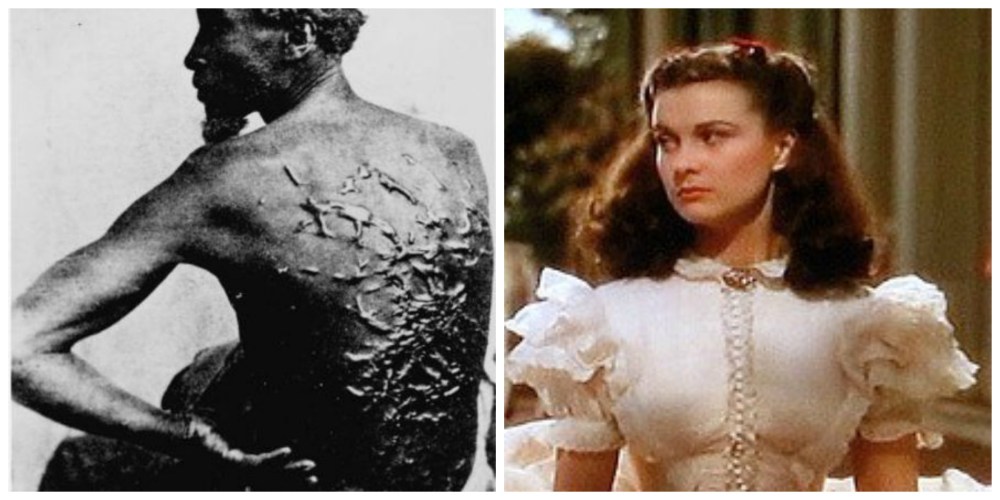
A ready example from the world of letters would be Margaret Mitchell’s novel Gone With the Wind. Mitchell was raised on descriptions of antebellum times in the Old South. She learned the romance of those days, not the horrors.
****
THE FLIPSIDE to this is today’s accepted narrative about the 1950’s. Perhaps due to Eisenhower’s low-key presidency (Gore Vidal: “The Great Golfer”), and that it preceded the tumultuous 60’s, it’s considered a bland decade.

Part of this perception was intentionally created by the polemicists of cultural rebellion. They needed a punching bag to knock around. In truth, in the aftermath of the nightmare of the Second World War, America embraced its traditions of country, home, church, and family. Much of the decade was indeed conformist– though hardly as machine-conformist as now.
YET when vintage 50’s cars parade on avenues in display in summer “dream cruises”– a tradition in the Detroit area– perception changes. One can only remark, “Wow!” at the colors and outrageousness on display.

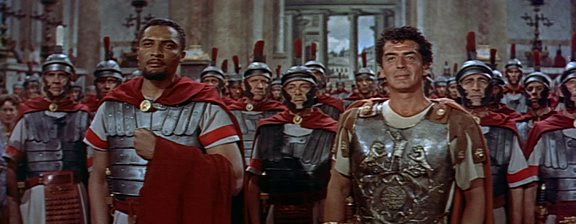
Another example is the sumptuous wide-screen Technicolor movies of the era. No restrained tones or muted emotions in that era. Actors declaimed, music scores blasted and garish color bled from the screen.
ABUSIVE LANGUAGE
HOW do we classify speech as abusive? Where are the lines drawn? Who draws them?
Should we begin regulating not only what a writer says, but how he says it?
Fortunate for Junot Diaz that he publicly speaks in the low-key tones of an academic. He has circulated long enough in the homogenized land of the gentry, and seems to know their codes.
But what of those whose voices are naturally loud and aggressive? Whose personas in public performance and discussion go beyond the acceptable bounds? Can this be allowed?
Questions, questions. Never-ending questions. . . .
-Karl Wenclas