Junot Diaz and the Sensitivity Police

SENSITIVITY TRAINING FOR ALL NOVELISTS?

USAF_Mess_Dress

(NOT the Sensitivity Police.)

I DISCUSSED the matter months ago in the latter part of my second post about the Junot Diaz controversy. The rules and standards the writer must obey, and the lines he or she must never cross, expand by the day. Maybe the hour.

The writer’s personal behavior is subject to scrutiny in the new Orwellian literary world. But as important is a person’s writings. Fiction is no longer regarded as fiction. It will be used in judging you.

dress uni woman w knife

Case in point is this essay by Lyta Gold from the precocious characters at Current Affairs which appeared on May 8th. (I’ve covered Current Affairs before at this blog, including here.) Note how, referring to Junot Diaz, Lyta Gold has “strongly suspected, from his prose alone, that he’s a virulent misogynist.” Quite a leap. (Was the character Popeye in William Faulkner’s novel Sanctuary based on Faulkner? Who knows!)

The atmosphere of Gold’s essay is not that of literature, but religion. Current Affairs‘ peculiar pseudo-Communist/Social Justice religion.

Military_of_Hungary-welcome

The giveaway line is when Lyta Gold says, about Junot Diaz’s writing, “his work was presumptively taken to be flawless and free of sin. . . .”

Free of sin? Is this how writing is being judged?

Nun_ruler - Edited

Lyta Gold further says that “no writer . . . gets to be validated by invisible particles of virtue.”

Well, yeah. But is this the standard? Is this why Junot Diaz was validated to begin with?

Virtue?

David_A_Christian_in_dress_uniform(Literary awards– for virtue?)

Or because of his writing? Why are writers published? If all that will be accepted, after thorough personal screenings and background checks, are virtuous writers, the art of literature will be in even more trouble than it is now.
***

current affairs staff

(Current Affairs staff, from their website.)

PART of what’s happening, ironically enough, is the imposition of bourgeois morality. The Current Affairs staff, like many such staffs, is completely bourgeois in background and sensibility. When expedient– in feeding their own selfish needs and conveniences– they’re as egoistic as Ayn Rand. In the case of Current Affairs, ambitious careerist ladder climbers. Harvard grads, most of them.

The happenings which Junot Diaz puts into his stories and novels are outside their experience. Not surprising, then, that they’re thrown by them. Which doesn’t justify an easily applied label like “misogynist” (a clinical term). If we start judging writers by their musings, their fantasies, and their fictional characters, we’re all in trouble.

This could be the future, if the Sensitivity Police have their way. A kinder, gentler literature– innocuous, harmless, and irrelevant.

The_Bow_(11106700545)

Comments are welcomed.
****

-Karl Wenclas for New Pop Lit NEWS

The Real Literary Gender Gap?

VANISHING MEN IN LITERATURE AND PUBLISHING

Penguin_Random_House_Tower_New_York_2005

Much noise is made by organizations like VIDA about the gender gap in today’s publishing world. When you examine the actual data, however, you find a different tale.  According to this story from 2016 in The Guardian, the U.S. publishing industry is not only predominately white, but 78% women. (At the executive level, with hangers-on from past male dominance, the industry is 60% women.)

Doing swift calculations of the figures, we can further say that the single largest demographic group in the industry is white women, at more than 60%. By contrast, Latino men make up 1.2% of the industry– hardly registering, which makes the dilemma of Junot Diaz more eye-opening.

Another striking article is this one which appeared in The Atlantic in 2017, which describes how many male authors pretend to be women in order to be published– a turnaround from the days of George Sand. According to this article, 80% of fiction readers are women.

Do you want more statistics? Per the Humanities Indicators site, approximately two-out-of-three English graduates– bachelors, masters, and Phd– are women. Per Data USA, 62% of “writers and authors” are women.

documents

We’re beginning to see these ratios reflected in literary awards. For the most recent National Book Foundation awards, 15 of 20 finalists were women. All five of the “5 Under 35” award winners were women.

As I pointed out in an earlier post about the Society of Children’s Book Writers and Illustrators, the few male authors in some writers organizations are so outnumbered by women they feel like kids in a candy store– some of them getting into trouble for too many affairs, too many hook-ups while partaking in the book industry’s “meet and greet” soirees.
****

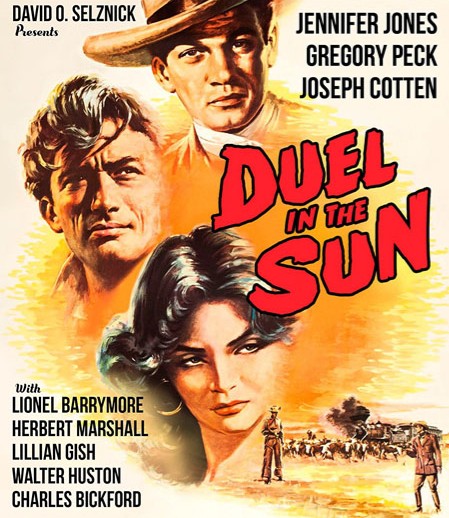
WHAT does it all mean? For starters, an industry or art form catering to the public gets into trouble when it disregards half of its potential audience. For example look at what happened to the Western movie when it began focusing almost exclusively on men characters (many Spaghetti Westerns did not have a single woman in the cast)– writing out the women who played a large part in the historic West, to present instead sociopathic narratives of obsessive bloodletting, often starring squinty-eyed and emotionless Clint Eastwood. A far cry from the days of the torridly romantic Selznick spectacular “Duel in the Sun.”

duelinthesunb - Edited

Today, the Western movie has all but vanished.
****

IF figures pertaining to class were available, we’d find the narrowness of viewpoint further skewed. Examine the mastheads of Manhattan magazines which cover arts and letters and you’ll find the staffers from the top down are graduates overwhelmingly of Ivy League universities, with a few Stanford grads and Brits from Oxford thrown in. The same holds true, from what I’ve examined, for the Big 5 New York City-based publishers. Those who decide which authors and books are published and reviewed are, in the main, upper-class women. Not by any measure the best way to create a representative literature for a very large and complex civilization like ours.
****

With an array of male authors and editors being purged from the book industry after “MeToo” revelations, the trend toward an all-female business and audience doesn’t look to turn around any time soon.

MORE TO SAY on this matter. . . .
****

-Karl Wenclas, New Pop Lit News

What’s the Future of Bookselling?

A TRIP TO A BOOKSTORE

Barnes_&_Noble_Interior

WE HAPPENED to step into a Barnes and Noble bookstore the other day. The experience set the wheels in my head turning– reawakening ideas I’ve had for a while.

On one level the experience was disheartening. An enormous store filled with tens of thousands of titles of well-packaged books on every possible subject– with about seven customers in the entire gigantic place, counting the two of us. As it was, there were two clerks for the store– several registers sitting closed, as well as an information counter. We eventually found a stray clerk to help us– the other was at a front register which seemed a mile away.

I’ve often thought that while big box stores may work in some instances, they aren’t ideal for books. You need large turnover– one would think– simply to pay for leasing, lighting, and heating the monster places. High-ceilings yet. Tremendous overhead– not to mention the amount of stock.

Titles, yes, and authors. Too many for any of them to stand out.

book stacks

What am I saying? Less is more. Smaller is better. Avoiding Too Much Information is the first rule of sales.

OR– a new style of bookstore could be developed– it’s on our drawing board. It would work only in conjunction with the right kind of promotion, driving demand, and with an entirely new style of literary writing designed to stand out. Which hits the reader hard from the start.

The novel itself needs to be overhauled.

No easy trick– but possible.
*******

-Karl Wenclas, New Pop Lit NEWS

Power Grabbers of Literature

HISTORY DOES repeat itself, but in vastly different ways. The patterns are there if you look for them.

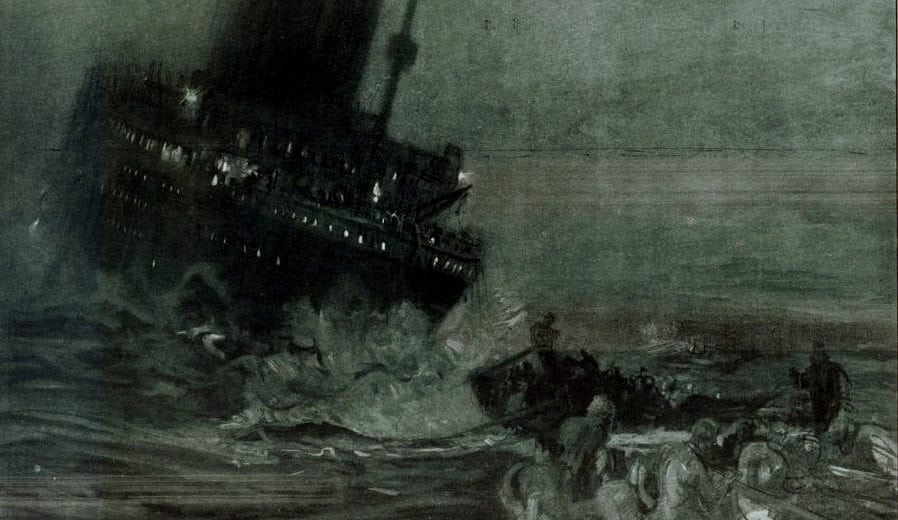
Sea_Trials_of_RMS_Titanic,_2nd_of_April_1912

The ship of culture– even of literature– floats placidly along, but below deck revolution is taking place. All is conflict. The takeover of the ship is of a Gramscian variety– one room at a time.

SIMULTANEOUSLY occurs a struggle within the revolution itself, the pertinent question there being: Who controls it?

It’s a truism that in revolutions the communists devour the anarchists. (See Russia 1918; Spain 1938.) Philosophically, this is happening in the English language poetry scene– Control Freaks taking over, seeking to eliminate all who hold the opposite viewpoint. To shut down those who believe poetry– art itself– is imaginative commotion. Who think the way to attain this is through unrestricted expression. A vanishing attitude being squeezed between Left and Right. For the Control Freaks– the Poetry Cops and their go-along-to-get-along acolytes– this casual attitude is dangerous.

(The P.C.– Poetry Cops– are extremely casual about the poetry itself– but not about what it says, or who says it!)

DIFFERENT patterns from the past occur throughout the ship. One is a last gasp reaction of the (academic) aristocrats, similar to what happened in Russia during the civil war of 1919 between “Reds” and “Whites.” It’s what the noise of Jordan Peterson, Claire Lehmann, Quillette Magazine and their allies is about. This is doomed to failure. You can’t reimpose an ancien regime.

The question remains–

WHO CONTROLS CHANGE?

Old power structures are beginning to crumble, and a new paradigm in which a multiplicity of voices and identities hold authority is emerging. 

This is a quote from an article at Dispatches Poetry Wars, one of the new literary outfits struggling to get to the forefront of radical change in the poetry field. The key to their mindset is to “hold authority,” because that’s what the poetry wars they promote and document are about. Publicly denouncing alleged abusers like Joseph Massey is a means toward that end. It’s not about the poetry. For thirty years or more it hasn’t been about the poetry– which is why an Anders Carlson-Wee poem in The Nation won’t find too many defenders, because in truth it’s not very good. It’s political posturing more than poetry.

IT’S NOT SURPRISING that most if not all of the writers being attacked or taken down by MeToo advocates the past six months or last few years have been on the Left– because that’s all who inhabit the scene. (Not surprising that both Joseph Massey and Anders Carlson-Wee have had poetry in the faux-Leftist magazine The Nation, which publishes short examples of the dwindled art on their site, in-between splashy ads for hyper-priced Alfa Romeos.)

What a Dispatches Poetry Wars is about is the total politicization of the art.

I’ve read their manifesto. I have to say, I agree with much of it. It could’ve been distributed fifteen years ago by the Underground Literary Alliance and no one would’ve been surprised. But let’s understand why these fellows are using activism– for the same reason the ULA used activism: To increase their profile. To upend the literary scene and become a credible player within that scene. With DPW however I smell a trace of phoniness– in that they don’t really want to liberate “autonomous” zones (safe spaces). They don’t actually support unruly, “wild poets,” because otherwise they wouldn’t be joining the chorus of Poetry Cops eager to remove from the scene the work of all those who scribble or act outside the lines of acceptable behavior. (A Rachel Custer, say.) But they do see in which direction the parade is headed. They call for Robespierre-style denunciations and more denunciations.

463px-Labille-Guiard_Robespierre

–we’re appalled by the silence emanating from institutions that have supported this person and granted him platforms from which to extend his predation.

A LITTLE CHECKING reveals that Dispatches Poetry Wars is run by two older white guys, Michael Boughn and Kent Johnson, who have ties of their own to the established poetry world. Boughn (if it’s the same Boughn) seasonally teaches at the University of Toronto, Jordan Peterson’s old stomping grounds. Kent Johnson (if it’s the same Johnson) has received grants from the heart of the cultural establishment, including a National Endowment for the Arts Literature Fellowship and a PEN grant.

I suspect their position is analogous to that we outlined here of Boston Review editor Joshua Cohen. Unleash the mob and it may someday turn on yourself!

The-Sinking-of-the-Titanic-–-Drawn-by-Henry-Reuterdahl-898x520
*******

(Titanic paintings by Karl Beutel and Henry Reuterdahl. Portrait of Maximilien Robespierre by Labille-Guiard.)

-Karl Wenclas for New Pop Lit NEWS

Who Defends Artistic Expression?

LastCommand11_zps83a7f075
THE LATEST NEWS is that literary editors are adding what they themselves refer to as Morality Clauses to their sites. Not an aesthetic guideline for submitted work– the clause regards the writers themselves. Editors are doing background checks on writers via google and other tools. Background checks! The mindset has come full circle. We’ve entered a neo-puritan world.

For these uptight-to-the-max editors, getting along with the herd– enforcing an ideology– is their primary focus. Art is a secondary consideration.

THE EDITING POLICE

Police_officer_in_Granada,_Spain

These literary editors have taken it upon themselves to monitor the writer’s behavior– including after the work has been published. “Yep, he did something regrettable and embarrassing. We published his poem five years ago. Doesn’t matter. Yank it out!”

The entire history of literature is filled with writers engaging in bad behavior. (It once was a badge of honor.) Beginning with Christopher Marlowe– who wouldn’t make the cut in this day and age. Neither would Shakespeare. There’s that rather disconcerting speech in Hamlet when he says, “Get thee to a nunnery!” Hurtful words. Yank his works.

WHEN I fronted an activist group from about 2000 to 2008, our numbers included many outcasts, outsiders, and those who regularly engaged in bad behavior. They were from every possible ideological stripe, left to right. We had no litmus tests or background checks.

Today, we see Editor-as-Cop. “Are your papers in order? Where are your papers! Can you prove you did not engage in harassment and abuse?” (One silly lit editor argued for R****l C****r proving she hadn’t engaged in verbal abuse.)

AT ONE TIME, the novel, poem or play itself was considered verbal abuse! Its very existence.

Has the writer engaged in bad behavior outside the walls of  our little literary project known as New Pop Lit? What’s that to me? I’m a literary editor. If he or she has broken a law, report them to the authorities.

A QUESTION: Would you publish a story or poem by a convicted murderer sitting in prison if the work were good enough? 

LAST LINE OF DEFENSE

Every other segment of society has reasons to limit or crush artistic expression. The state, the advertiser, the dependent-on-donors foundation, the speech-squelching university, the project-a-proper-image corporation. It’s the task of the artist; the writer– and the editor, the publisher, the promoter, the arts impresario– to stand up for creative expression. For the ability to be creative. The ability to surprise, stir, anger, or shock. If not us: Who else?
*******

-Karl Wenclas, New Pop Lit News

Collapsing New York City Media?

NEW YORK DAILY NEWS: THE BIGGER PICTURE

2010-Chile-Earthquake-81

SOMETIMES things move slowly. Incrementally. Glacially. Ever see snails? They come out when it rains. They’re not moving– but they are. One minute in one spot. Later it’s in another spot, and you can’t be sure, really, how it got there.

snail

“How did you go bankrupt?”

“Two ways,” Mike said. “Gradually then suddenly.”

-Ernest Hemingway, The Sun Also Rises
****

SUCH is the case with the mighty edifice of New York City media. With every aspect of New York media: newspapers, magazines, publishing companies. You can’t see them collapsing, but they are. The New York Daily News layoffs were inevitable. There will be more layoffs at other Manhattan flagships. Many more.

New_York_Daily_News.svg

Why? Because the fundamentals are strongly against them. New York City is a ridiculously expansive place in which to do business– yet Big Five publishing and their many acolytes insist on being there. In the internet age when one can set up anyplace, there’s no reason to be on that narrow island or its environs– other than to have swanky three-martini lunches at Sardi’s while playing the role of Manhattan editor or journalist circa 1959.

OLYMPUS DIGITAL CAMERA

Taxes, rents, leases, staffs, cost of living– everything in New York City is hyperexpensive.

A recent cost of living index put out by the Council for Community and Economic Research put Manhattan’s cost of living rating at 238.6. By contrast, Detroit’s is 96.9.

Manhattan’s recent average cost of office space was pegged at $75 per square foot. Downtown Detroit’s? It’s risen to $20 per square foot.

Manhattan is a more appealing place to live, no doubt. But when you’re in competition in business, the arithmetic will eventually catch up to you. Glamor or no glamor.

It’s not just the where these legacy businesses are located. It’s how they’re constructed– top-heavy, vertical, overstaffed. Leaner, meaner, more aggressive upstarts will eventually destroy them. Hungrier upstarts– those willing to do most of their work rent-free at Starbucks, or set up printing presses in a basement. And eat at McDonald’s.

mcdonald's sign

The Ivy League prep school crowd inhabiting New York skyscrapers may scoff (or whine and cry when they lose their jobs), but it’s the way of the world. Always has been. Doesn’t look to change now.
****

-Karl Wenclas for New Pop Lit News

View from the Dominican Republic

OUR COVERAGE OF THE JUNOT DIAZ CONTROVERSY CONTINUES

viewfinder

WE’VE been receiving a certain number of tips and information regarding the Junot Diaz matter and are trying to look into all of them. Several of them come from the Dominican Republic.

One, for instance, about the mysterious @Get_Hip twitter account. This person joined the anti-Junot Diaz bandwagon when news broke, claiming to be from the Dominican Republic. Journalist Anna Silman even encouraged this individual to contact her– but when “Get Hip” was questioned about her claims the twitter account swiftly vanished. One of Monica Byrne’s apocryphal 38 names?

punta_cana

AMONG other emails we’ve received, I can excerpt these quotes, from individuals who wish to remain anonymous:

One (almost) invisible aspect– at least in the mainstream media–of this saga is the silence of the Dominican artistic community. Why? you might wonder. According to a well respected male Dominican writer and early supporter of Junot –and early means the time he was starving like a dog–there is a climate of fear thanks to the way some people have reclaimed the #MeToo movement or sentiment to advance their own personal, reactionary and individualistic agendas that have nothing to do with fighting for women’s liberation or fighting for a just and better world. So some people are waiting to see how it all ends. No one wants their careers, personal reputations or livelihoods destroyed by a media frenzy. Despues de la tormenta viene la calma.

And this:

When the Junot affair exploded it also had important ramifications in the Dominican Republic where most people adore him except for right wingers because of his political outlook. In social media, right-wingers used Zinzi Clemmons’ words to destroy Junot and demonstrate what a ‘pervert” and “degenerate” he was. For right wingers, Junot should be silenced at all cost for his outspoken support of social justice causes: immigrant rights, abortion, gay liberation, etc. Was Zinzi aware of the damage she was inflicting on Junot or the Dominican community? Did she know that by attacking Junot she was also silencing someone who spoke out against injustice against immigrants and other marginalized groups in society not only in the Dominican Republic but also in the US? Perhaps she never cared about the consequences or she was not aware of the activism Junot was involved. Or better yet, she never cared. The middle class never cares. Clearly, there are class issues at play. 

Zinzi and the others aided far right xenophobic elements in the Dominican Republic who now argue that Junot is a rapist or a sexual predator. Her actions damaged the reputation of one of the most outspoken writers of these last decades in the US and the world, someone who went to picket lines; denounced corrupt politicians here and abroad and expressed solidarity for the best causes. And the end, this is the story of how a media frenzy was able to silence–for the time being– a public intellectual.
*******

THESE quotes are a mix of information, speculation, and opinion. I’m offering them here for information purposes– our goal to present vantage points not given by the mainstream media. Take them for what you will– Dominican writers can better judge their accuracy than I can.

THOUGH I think in some sense the affair is over– or should be over, given what’s been discovered about the weakness of the accusations against Junot Diaz– I also believe there’s more to find out about the larger picture. Including the full role of media people in creating this controversy on May 4.

If YOU have credible information to add, feel free to send it to us c/o newpoplitATgmailDOTcom.

*******

-Karl Wenclas for New Pop Lit News

How Does a News Story Go Viral?

PUBLICITY IN THE JUNOT DIAZ CONTROVERSY

epstein in cavern

I ADMIT IT. I’m amazed at how fast the publicity game has changed, thanks to social media. Compared to ten years ago, the creation of buzz moves now at lightning speed.

It’s the difference between military techniques in World Wars One and Two. The speed of blitzkrieg in the latter contest revolutionized the game.

As I’ve said a couple times in this series: Who wins the debate over the sexual harassment allegations about prize-winning author Junot Diaz will be decided by who’s better at PR. Institutions (MIT; Boston Review) cleared Diaz, but it’s out of their hands. In the new media age, static bureaucracies have been left behind.

A key post of ours in this regard is “System versus Zeitgeist.”

The Junot Diaz camp is now fully in the game with their army of twitter fans and trolls. They’ve moved quickly up to speed. Will it be enough?

We have two opinion armies maneuvering against one another online– across twitter, blogs, and media sites.

The accusers’ side has made significant mistakes– but their opening moves in the chess game which began May 4th were breathtaking.

CREATING HYSTERIA

epstein again

THE GREATEST publicity feat of all time was the creation of Beatlemania. Most people believe it was spontaneous. Yeah, yeah, the band was talented and young people liked them. As simple as that? Not really.

In November, 1961, Liverpool record store manager Brian Epstein saw an unkempt band playing in an underground club in that beaten-down UK working class city and thought, “I can make these guys bigger than Elvis Presley.” A hidden genius behind the scenes, Brian Epstein was in back of every step of the band’s rise. Some of the facts of how he accomplished this are known. For instance, mass hysteria in New York City in February 1964 when the little-known (in America) band landed for the first time. Reluctant Capitol Records was forced by Epstein to spend $70,000 ($570,000 in today’s dollars) to promote their arrival and the concurrent release of their single, “I Want to Hold Your Hand.”

The-Beatles-At-JFK-tarmac-530x353

WE ALSO know the mob of kids holding signs at the airport wasn’t a spontaneous happening. Their presence was arranged. The kick-off of Beatlemania was staged.

MAY 4 ANTI-JUNOT DIAZ HYSTERIA

I’m still amazed at how quickly fervor against Junot Diaz took place. Three threads of tweets from Zinzi Clemmons, Monica Byrne, and Carmen Maria Machado taking place in the middle of night, one right after another. By morning they’d gone viral. To such extent that The Cut’s Anna Silman was already contacting Monica Byrne for a statement.

Spontaneous? Byrne said to Silman, “The network was activated”– which might be clue enough for an explanation.

Monica Byrne’s unsupported rumors about Melania Trump in June 2017, which went viral, albeit on a smaller scale, served as trial run for this situation. This time out Byrne had at least a smattering of substance to the story, and other women on her side. Enough substance that even the mighty and respectable New York Times joined the generated hysteria.

QUESTION: Was the hysteria against Junot Diaz generated or spontaneous?

Another tweet from Monica:

AIDING buzz creation was dramatic language used by the accusers in the tweeted narratives.

BYRNE: “I’ve never faced such virulent misogyny in my adult life.”

MACHADO: “–a blast of misogynist rage.”

Promotional blitzkrieg on May 4th worked masterfully– on that very same day the accusations were news across the globe. The feat deserves a chapter of its own in the history of publicity. The planning and coordination worked– but not well enough to claim quick victory. No knockout. Junot Diaz apologized, but he and his institutional backers held firm. By now, today, the controversy has settled into trench warfare– both sides sniping at each other from steady lines, World War One-style.

For the time being, the controversy is at a stalemate.

wwI
****

WILL the stalemate continue? More to come from:

-New Pop Lit News-
https://newpoplitnews.wordpress.com/

-Karl Wenclas on the literary news beat.


How to Write a Hatchet Job

PRELUDE TO EXAMINING SLATE’S JUNOT DIAZ ARTICLE

axe3

THE TRUTH is that a character assassination can be written on anyone– especially when you delve into the person’s long history of writings and cherry pick from them to bolster your argument.

Did Slate‘s Lili Loofbourow do this in her examination of the Junot Diaz sexual harassment controversy now dividing the literary world?

THE TRICK is that the same treatment could be performed on Ms. Loofbourow. For instance, two minutes of google searching found this article:

“In Praise of Fleabag and the Unapologetically Flawed Female Antihero.”

fleabag

The television show Loofbourow acclaims is, in her own words, “–a tremendous, oddly nourishing show about a liar and thief.” “It’s the story . . . of a woman who reads people too well and takes advantage of them,” “somehow desperate,” “a lean, amoral Matilda with no impulse control.”

(Anyone we know. . . ?)

Reading the article, one would think Lili Loofbourow doesn’t care, really, about apologies– nor about ethical behavior and truth. One could readily believe that Lili Loofbourow is simply a media gun-for-hire, fixing her opinions to fit the needs of her editors– or those of the greater conglomerate media herd.

That would be unfair.

***
THE SLATE article is interesting to me, because it reminds me of a long essay that was written fifteen years ago for a major literary publication, about an activist writers group. A writers group coincidentally devoted to exposing blatant corruption in the established literary world. That long-ago essay was a well-written hatchet job, filled with half-truths, distortions, and omissions. It defined us, creating a narrative which became “the truth” about us in everyone’s heads, so much so that any journalist afterward covering the organization read that essay as part of their research on it, viewing it through the same prism of misconceptions.
***

I’m not complaining. I’m stating how the game is played. Those who rise to a position where they crank out articles for a variety of publications play the game very, very well.

The solution? To create an alternative literary world, and alternative lit-media, not based in the shark tank of New York– one devoted to facts, talent, and truth.

COMING SOON: A more direct look at the Slate article.

-Karl Wenclas for New Pop Lit News.