Busting the Supply-Demand Equation

THE NEED FOR FICTION REINVENTION

Tesla_colorado_adjusted

People fail to realize the extent to which most things in life are influenced by the supply-demand situation.

For instance in politics, the enormous oversupply of liberal arts graduates is one of the drivers of left-wing activity. Alexandria Ocasio-Cortez (who after college worked as a bartender) is a classic example.

But what about art? Writing?

WHEN GOOD ISN’T GOOD ENOUGH

Many competent short story writers are published every year in literary journals across the country. Several of them are crafting short stories better than vaunted New Yorker magazine fiction– which for decades has been the model for writing programs across the nation. We’ve published a few of those better writers at our main New Pop Lit site.

Having fiction placed in The New Yorker has been thought of as the Holy Grail for the standard MFA writing student. Thousands of MFA grads are attempting to follow that model. To squeeze through that narrow doorway. Lining up. Jamming up. A department store before the doors open on Black Friday.

black-friday_target_long-lineup

THE PROBLEM

The problem is that there are too many creative writers, and too few paying-or-prestigious outlets for their work. A vast oversupply of product. To meet it, tiny demand: very few people who read the overwritten New Yorker model. Today the creative writer’s audience consists of other creative writers, who’ve been trained to read and appreciate that obsolete style of story writing. (New Yorker stories themselves, with rare exceptions, are unread by most New Yorker subscribers.) Well-crafted literary stories are made to be admired, not read.

Today it doesn’t matter how well you the writer can write. The margin of difference between the best and the merely competent is small enough that decisions on who deserves publication and attention are made for reasons other than quality and talent. Instead, they’re made for reasons of politics, correctness, or connections.

THE SOLUTION
breaking glass

The solution is to bust the supply-demand equation which currently exists in writing. This can be done on both ends.

1.) Create a faster, vastly more readable and exciting short story model– one so new and thrilling it demands to be read. Done right, this could grow the audience for short fiction several times over.

At this point the art is so marginalized there’s ample room for growth.

2.) Create a short story prototype so different from the standard– and difficult to do well– that few writers will be able to write it.

Doing this will create the “perfect storm” of jump-started demand, with few writers able to fill that demand. Those writers a step ahead of cultural history will be in a valuable spot. The vocation of fiction writer will become a worthwhile pursuit, for the first time in years.

Creating that new product won’t be easy. I’ve been working intensively on the matter for many months– really, longer (did my first rough version five years ago)– and am finding the going anything but easy.

Then again, life isn’t easy.
*******

-Karl Wenclas, New Pop Lit NEWS

 

Value of the Mind

REFLECTIONS THE MORNING AFTER THE SUPERBOWL

patriots

The NFL will have to invoke the mercy rule. The New England Patriots have gone to the Superbowl too many times. They’ve turned the vaunted National Football League into something of a joke. Despite all attempts at creating parity in the league, one increasingly creaky team continues to dominate.

They achieved the Lombardi Trophy for winning the Superbowl with a 41 year-old quarterback against three teams each with more talent than them.

HOW DO THEY DO IT?

The New England Patriots’ success illustrates the truth that value in the world, as in an economy, comes from the mind.

For 18 years the Patriots have leveraged some incremental intangible advantage– somehow out-training and out-thinking their adversaries. Not by a lot, but by enough. Over the years that edge has multiplied so that even this year with a team of players literally in some cases off the street, Bill Belichick and Tom Brady, instituters of a slightly better system, have devastated the league– to the extent that critics continue to cry “luck!” or “cheating!” Which illustrates the critics’ lack of understanding.

HOW THE WORLD WORKS

Isn’t it the way of the world that an enterprise gains a slight edge over its competitors, and that edge multiplies itself again and again until the business dominates its field? In some cases becoming a monopoly. This explains the success of Starbucks and McDonald’s. They have a slight intangible edge– are able to in some way out-think and outperform their rivals. A better plan. Better thinking.

The key part of this is the way an edge is leveraged. Which explains the creation of billionaires.

This phenomenon applies to history. It explains, for instance, the rise of the West– how a better economic system combined with a stronger belief system gave Europe an edge which continued to increase, and increase. The phenomenon explains how America became, in less than 200 years after its founding, the greatest civilization the world has ever seen.

THAT America continues to value the individual mind more than do other countries– the key to American success– continues to give it an edge which draws value, in the form of ambitious go-getters, from around the world.

BETTER THINKING APPLIED TO LITERATURE?

Our bet at New Pop Lit is that creating and discovering better literary products, and presenting them in a better way, will give us an edge which will multiply quickly throughout the literary realm– and draw ambitious talent to our modest site.

WE SEE how the wrong way of writing has multiplied itself throughout literature and publishing, via MFA programs and take-no-risks conglomerates– which explains the stagnation of the dominance of mere competence in fiction and poetry circa 2019.

The task is to change that.

New England Patriots at Washington Redskins 08/28/09
*******

Karl Wenclas, New Pop Lit NEWS


Thinking Beyond the Flat Narrative

ABOUT THREE-DIMENSIONAL THINKING

animatedspiral2
(image per uncyclopedia.)

Social media is forcing us to change how we see things. Because of social media, our minds are changing how we perceive and process reality.

PREVIOUS THINKING

The previous way of thinking and perceiving is to take a news story handed us by the Big Screen at face value. Yet what you’re receiving has been heavily edited– often in order to present a rigged, structured viewpoint. It looks at a news item from a single angle. Everything from established news outlets is geared toward narrowing and focusing the story, for greater impact.

QUESTIONING THE NARRATIVE

Social media adds more information– often from unapproved sources like your average citizen. (The essence of democracy.) Unexpected video– or the full video before editing. New, different angles. The truth of a matter is suddenly not as certain as we were originally led to believe.

Many of those trained to think one-dimensionally have trouble handling this. A leftist friend of mine recently tweeted out this statement:

The idea that there are two sides to every story, and that you gotta hear ’em, is probably the most destructive ideological position operating today.

In truth there are more than two sides to every story– but at least two. We should accept two at minimum, because the alternative is totalitarianism.

SEEING THE FULL PICTURE

Modified by CombineZP

The person who wants to be more than a blind follower of this herd or that one, has to think in as broad a fashion as possible– and engage in games or exercises designed to get the mind outside a narrow corridor. Chess runs on rigid rules, but trains the player to think side-to-side as well as straight ahead. More importantly, to be good at chess you have to put yourself in the shoes of your opponent, to see the game board through his eyes, from his viewpoint. Poker trains the player to study the person as well as the cards– to try to understand the minds of a variety of players.

The three-dimensional thinker is ahead of the curve. Within several years, those who aren’t seeing the world three-dimensionally will be far behind.

Examining a variety of views and opinions simultaneously isn’t comfortable or easy. For indoctrinated ideologues especially, confrontation with contrary viewpoints is especially painful. It goes against their schooling; against every part of the way they’ve been trained and educated.

Standard education practices teach students in a linear way. The student progresses in stages, from one level to another, as if in a corridor– using texts which proceed in a linear fashion. Everything is geared to reinforce the impression that the universe works in a linear, one-dimensional mode. But it doesn’t. The environment we emerge into is far more complex than we’d like to believe. Linear thinking is a shorthand way of understanding the world– but only that. Extremely limited and ridiculously incomplete.

THE CHOICES

The creation of smartphones and the rise of social media have given us a bombardment of information. There are three ways for ourselves and our brains to handle that.

A.)  Our personalities and our brains break down in the face of it. We go insane.

B.)  A totalitarian state or giant monopoly drastically restricts the flow of information the public receives. Unapproved participants to be kicked out; shut down; disallowed.

C.)  Our minds adjust. We learn to adapt, to process information faster. Which means, for one thing, faster reading. Not quite speed reading, but close. (The direction our Attention-Deficit society has been going in anyway.) Which will have many consequences for the literary art.

I’ll discuss those consequences, and the effect of three-dimensional thinking on the arts in general, in a future essay.
*******

-Karl Wenclas for New Pop Lit NEWS


Decline of a Corporation?

ANATOMY OF A NEWS STORY

general_motors,_a_century_of_progress_(nby_417209)

THE LATEST GENERAL MOTORS FIASCO

gm noose

SIX WEEKS DOING NOTHING

News in the social media age evolves swiftly. Too fast for the moribund PR bureaucrats at the General Motors auto company, apparently.

THE LATEST PR fiasco is news breaking nationally about virulent racism at a Toledo parts factory, covered in a story at CNN– a cable network with international reach.

TURNS OUT the story first broke on November 29, in an article written by Jamie L. LaReau at the Detroit Free Press.

According to the CNN story, response to the lawsuit and the initial accusations has been tepid at best.

I FIRST HEARD of the matter on my twitter feed yesterday. I checked both @GM and the twitter account of their CEO, @mtbarra. Hundreds of disgruntled customers were posting on their twitter feeds. Their response? Nothing.

The story had gone viral nationally, with articles at Slate, New York Post, and other places. Locally, with the NAIAS Detroit Auto Show taking place– positive press the order of the day– there was hardly a murmur. A couple perfunctory article eventually appeared. A recycling of the November 29 article by the Detroit Free Press. A short piece at the Detroit News. (I was traveling about, keeping tabs on my twitter feed on my phone.)

From General Motors, not a peep. Not a tweet.

This from a company which has received a mountain of bad publicity over its abrupt closure of several area factories during the holiday season– one the Poletown plant, about which many questions remain. Such as: HOW MUCH were the massive tax breaks General Motors received to build the thing?

The Poletown plant was built upon the bulldozed remains of a historic Polish-American Detroit neighborhood. (Disclosure: I was born in a hospital in that neighborhood.) An example, one could perhaps say, of ethnic cleansing.

MEANWHILE

Meanwhile, today, Friday, this evening, new congresswoman Rashida Tlaib and DSA people are to lead a protest downtown Detroit at the Detroit Auto Show, protesting the recent plant closures, among other things.

6260896153_7fc214cd0d_z

They may as well add to their actions a protest about GM’s inaction, its inertia, its lethargy. Just saying.
*******

-Karl Wenclas for NEW POP LIT News

Year-End Wrap-Up 2018

CONCLUSIONS OR DELUSIONS?

Paranoid-schizophrenia
(Painting c/o wikipedia commons, “outsider art.”)

2018 was a challenging year, as we injected ourselves, on several occasions, wisely or unwisely, into debates in defense of free expression and of truth.

A score of posts at this blog were devoted to our investigation of the Junot Diaz Controversy. See one of our reports here.

We also came out publicly in opposition to the depublishing of poets in response to pressure by what I called “Poetry Cops.” One of our reports on that matter is here. In this post we asked the question, “Is American literature becoming a censorship horror show?” As of this writing it remains an open question.
****

AMID the noise, we found time to present some of the best fiction and poetry found anywhere, from present and future literary luminaries and of all kinds and styles. Examine them and their work at our Features line-up here.
****

OUR own highlight at this blog and in our lives in 2018 was this trip back up to northern Michigan’s Hemingway country, this time for distinctly personal reasons.
****

2019-page-001 - Edited

What’s in store for New Pop Lit for 2019?

More new fiction and poetry,

BUT ALSO–

We’ll attempt to reinvent the short story. That’s all.
*******

-Karl Wenclas, New Pop Lit News

Blackballing 2018

A FICTIONAL EXAMINATION OF DEPLATFORMING AKA CENSORSHIP

hate free 2

WE BELIEVE that fiction is a valid way of addressing current issues. “Fiction” can illuminate truths escaping other forms of investigation and argument.

The trick, of course, with writings that are in any way political, is making them credible. Putting balance into them so they’re not simply polemics. Not merely an unbalanced screed. Toward that end I focused as much on the failings of the lead character as on the issue he deals with. That much-dissed concept of objectivity comes into play.

The short story is “Safe Zones,” posted at one of my several personal blogs. (When deplatforming of myself occurs, eliminating all my forums and writings will be no easy task!)

***One of the things I wanted to convey in the story is how we’ve completely lost control of our own lives. That everything we do today requires a technological platform of some kind– without them, it’s difficult to live; to survive.***

Feedback to the ideas expressed, and to the writing itself, is welcomed.

-Karl Wenclas, New Pop Lit NEWS

The Short Story Process

REINVENTING AN ART?

F_Scott_Fitzgerald_1921

In 2019 we plan to change things up a bit. Our commitment to excellence and artistic change will increase. The poem and short story both have become generic. Needed are drastic new ideas to improve them. Possibly, to blow up both forms and start over.

And so, “The Process.” We’ll start with the short story. I’ll be posting at one of my personal blogs several short stories I wrote in the 1990’s. Apprentice work, but a foundation for where I plan, personally, with my writing, to go. The first of these to go up is titled “The Revolutionaries.” A story with a connection to recently-deceased George H.W. Bush, so it’s appearance will be timely.

Before this I may post one of the new stories I’m working on, tentatively named “Safe Zones.” Again: timely.

Co-editor Kathleen M. Crane is also back writing, working on a rough draft of a new story– one which will carry forward her own ideas on clarity and conciseness in the short story art.

I’ll be discussing the process more in future posts. We have an end point– through radical artistic change, badly-needed renewal of the entire literary art.

hem

Stay tuned.

-Karl Wenclas for New Pop Lit NEWS

 

Pushcart 2018!

NEW POP LIT’S 2018 NOMINATIONS

18352_academy_awardsp

And the nominations are. . . .

Every year we vow not to do Pushcart Prize nominations and every year we send them in anyway– usually right at the deadline.

After all, in 2018, despite our ups and downs, we featured a lot of talented writers. The difficulty is choosing among them.

This year we’ve nominated five short stories and one poem. A stylistically diverse mix of the offbeat and the traditional.

FICTION (in order of publication date):

“The First Time” by Anne Leigh Parrish.

“The Hunting Cabin” by Brian Eckert.

“Up On the Mountain” by Jack Somers.

“On the Rails, Off the Rails” by Elias Keller.

“Yelp in Reverse” by Wred Fright.

POETRY:

On Midsummer’s Night” by C.A. Shoultz.
*******

We thank all writers who allow us to present their writing.

(We thank Pushcart Press for their tremendous work!)

Neo-Beats Out of Control!

style

(Classic style.)

At least, they’ve taken over the New Pop Lit site. New Beat writing in all its various iterations.

First, a review of an anthology of Beat-style in-the-larger-sense fiction and poetry.

Second, a current poetry feature of lakebeatgrunge poems from beat56.

AND, a home page Intro to all of this.

HELP!!!

(Our self-appointed task is to cover what’s happening in the lit world. What’s happening at the moment might be right here.)

A NOTE ON STYLE

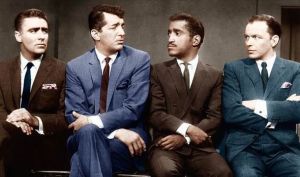
One thing the cultural period of the late 1950’s and early 60’s had was style. The Beats were the obverse to the established “Mad Men” look. (Think Frank Sinatra’s Rat Pack, pictured.)

rat pack

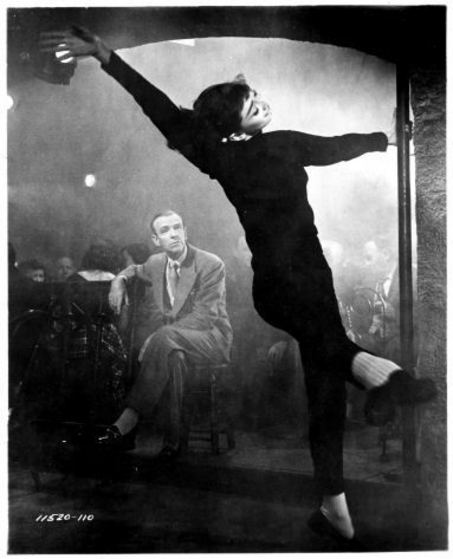
As such, the Beats were relentlessly satirized by established pillars of culture. Thoroughly mocked– in venues ranging from television shows such as Dobie Gillis and The Beverly Hillbillies, to movies such as Funny Face starring Audrey Hepburn. The point is that poets and writers mattered. The Beats suffered the slings and arrows of the culturally challenged but they also created exciting fun art.

Audrey Hepburn funny face 50s black polo neck beatnikdancing white socks

(Audrey Hepburn.)


Underground Hemingway

AN ADVENTURE IN NORTHERN MICHIGAN’S HEMINGWAY COUNTRY

DSC06869

(A moose at the Mitchell Street Pub in Petoskey.)

WHILE we were on our honeymoon two weeks ago, one of our more fascinating experiences was an underground tour conducted by a young woman who may or may not exist in reality. (A ghost?)

We were at the City Tavern Grill in the quaint town of Petoskey, both of us sitting at the bar, in a saloon which young Hem himself used to frequent. I was at the exact spot– second from the end– which Hemingway was said to like.

We must’ve seemed easy marks. Out of nowhere, a woman approached us and asked if we’d like a tour of the saloon, including its underground tunnels.

“Sure,” we said.

The woman was dressed like someone from another time period– the 1920’s, perhaps– with a feather in her hair and wearing a delicate retro black dress. In build she was tiny, as if from that bygone era when people were smaller than today. Her waist could not have been more than 20 inches around– Scarlett O’Hara territory.

Beyond this, she spoke in a dramatic manner, as if on a Victorian stage. She batted her eyelashes like a silent movie actress. When she walked, she shimmied like a flapper from the pages of a Scott Fitzgerald story.

DSC06872

The woman knew, somehow, by looking at us that we were Ernest Hemingway fans. She told us how often Hemingway frequented this spot– named The Annex in his time. The bar and its furnishings were the same. She showed us signed bills from Hemingway for food and drinks. The last one was from 1947.

This narrative was related in a secretive manner, as if she’d personally known the man.

Her name, she said, was Mary Ellen. She reminded us that in the time Ernest Hemingway first came here, Prohibition was in force. At any sign of police, observed through a peephole, booze and customers moved swiftly downstairs, to the basement.

Mary Ellen asked us cryptically if we’d like to visit the basement.

Without waiting for a response she turned and made her way down rickety stairs to the basement. We followed.

DSC06876

The basement was gray and dimly lit. Bannisters, walls, shelves of liquor bottles– everything– was covered in dust. Layers of dust, in some cases. We looked at each other with our eyes, asking ourselves, “Can we trust this woman?”

In the way she spoke and was dressed, she could have indeed stepped through a time warp. Or, could she be instead an escapee from– ?

We didn’t continue that thought because we didn’t want to continue it. Instead we stumbled along after Mary Ellen, through lengthy depths.

DSC06878

Mary Ellen showed us a number of blocked or partly-blocked tunnels, used both to smuggle bootleg liquor into the saloon, or out of it. One of the tunnels led to the nearby Perry Hotel, where we happened to be staying for the week.

DSC06877

The smuggled booze came from the Al Capone gang. From his base in Chicago, Capone controlled all liquor going into resort towns which spread north along the Lake Michigan shoreline, including this one.

The lights began flickering.

“The lights are going out!” Mary Ellen said dramatically.

Her eyes seemed truly afraid. Perhaps the time allotted for the private tour was over, or someone above needed her. Or perhaps she was about to turn into a pumpkin, or vanish, or appear her real age, or something. We were, after all, only days from Halloween.

DSC06859

We made it back up shaky wood stairs to the main floor, breathing, despite ourselves, a sigh of relief.

The tour was one of many highlights we encountered in the quaint town of Petoskey.

-K. and K.

DSC06885

*******