WHO’S NEXT at New York Review of Books?

IN HINDSIGHT–

A man at a writing desk, by Rembrandt

In hindsight, the appointment of Ian Buruma as Editor of the New York Review of Books was a disaster. Buruma was daring enough to court controversy, but not strong enough to fight for the integrity and independence of his publication.

Ian Buruma (2015)

(Ian Buruma.)

A fighter would’ve done a better job of explaining why he ran the Jian Ghomeshi essay. Why recovery and redemption are important. Why editorial autonomy is necessary– especially in a climate of rush-to-judgement lynch mobs and unthinking hysteria.

A fighter would’ve gone to advertisers– one by one if need be– to make his case. Instead, Ian Buruma became one more casualty of today’s Literary McCarthyism.

WHAT KIND OF EDITOR?

What kind of editor is needed as Ian Buruma’s replacement?

Someone who could replicate the daring intellectual excitement represented by the New York Review of Books when it arrived on the media scene in February, 1963.

1963-02-01-600x0-c-default

NEEDED: A large personality.

A contentious, voluble writer akin to Norman Mailer. A person willing to be aggressive in taking on and dispersing any unthinking mob– willing to use the momentum of intellect and power of voice to restore sanity to today’s literary world.

mailer at mic

WHO?

WHO WILL New York Review of Books choose instead?

One of two safe alternatives.

1.) Almost certainly, a woman. Knee-jerk reaction to appease the angry mob. In this time of MeToo mania, it would be too risky for their risk-averse publishers to choose otherwise. Have to remember those advertisers!

(The result: A completely neutered intellectual journal.)

2.)  IF they were to choose a male editor, it would be someone properly screened and defanged, without a shred of volatility. Fully establishment and left-leaning, on the order of smiling Keith Gessen. Ready to appease everybody. Affable, innocuous, and bland.

gessen smiling

Someone who’s had a relationship with New York Review of Books. Whose own publication, n+1 magazine was in many ways made by them.

Or someone of that kind.

(Painting: “Scholar at His Desk” by Rembrandt.)
*******

-Karl Wenclas, New Pop Lit NEWS
Media Insanity Report

KEEPING UP ON MAINSTREAM MEDIA ANTICS

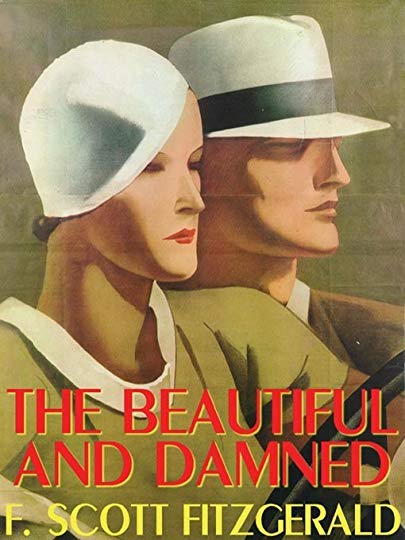
beautiful and damned

-A NEW FEATURE-

WE JUST learned today that the term “lady” is now considered unacceptable by the Orwellian arbiters of thought and language. I’ve seen the notorious wannabe-totalitarians known as the Poetry Cops complain about the term. Now, from someone a bit higher up on the media power ladder– Ginia Bellafante of “paper of record” The New York Times.

QUESTIONS arise.

-Is the term “gentleman” also considered offensive? (Does this explain Brett Kavanaugh‘s alleged behavior in the past?)

-Does the prospective outlawing of these terms explain a lot of behavior from a great many people in recent years?

And finally–

-WHO is going to tell Lady Mary?

downton-lady-mary_3061685b

THE spectacular success of Downton Abbey (movie version being filmed as I type this) might be because a large part of the populace is tired of people looking like slobs. They’d like a return to those old-fashioned concepts of grace, beauty, class, and style.

Even (gasp!) a return to ladies, and gentlemen.
*******

-Karl Wenclas, New Pop Lit NEWS

Fiction Illuminating Life

TWO classic American stories are wry commentaries on non-fictional news events.
*******

gaitskill2

“The Girl on the Plane” by Mary Gaitskill, written in 1993, concerns a man on a plane flight who gets into a conversation with a younger woman sitting next to him. This takes the man back to events in his youth. I don’t want to give away the plot, but IF you’re at all interested in the allegations about Supreme Court nominee Brett Kavanaugh, especially those coming from Julie Swetnick, I suggest you read the story. As the man on the flight says, “It’s complicated.” OR– things are never as simplistic as camps on both sides of the aisle pretend to make them.

READ IT– Not least because it’s well constructed and packs an emotional punch. One of the better– and more relevant– American short stories ever written.
*******

baldwin

“Come Out the Wilderness” by James Baldwin, written in 1965, illuminates an event much talked-about of late: the similar Senate hearings which took place when current Supreme Court Justice Clarence Thomas was nominated. In the Baldwin story, a young black secretary has lunch with a black executive from the same company. He drops the company facade for a moment to speak in an earthier tone. It’s a reflection of sorts on the more awkward conversations Clarence Thomas sought to have with Anita Hill, which were taken in a less kindly light than does the secretary in Baldwin’s story.

James Baldwin wrote several dynamite short stories which rank with any writer’s. This is one of them.

*******

-K.W. 

Our “Best of the Net” 2018 Nominations

Here are our Best of the Net nominations for 2018.

botn2017

They encompass work published online between July 1, 2017 and June 30, 2018.

(Best of the Net 2017 is here. The Sundress Publications website is here.)
*******

AS ALWAYS we had more good work than we were able to nominate. For fiction, we nominated two of our longer stories– both require some investment in reading. Both stories required an ample investment in imagination and work in writing. Both stories are excellent in very different ways. They exhibit the range available within a “Pop Lit” designation.

WE hope you read or re-read all of the nominated works.

We thank these writers and all the writers who’ve generously allowed us to publish their work.

Fiction:

“Churchgoing in New England” by Richard Greenhorn,
published 9/28/17.
“The Rottweiler” by Alex Bernstein,
published 1/12/18.

Non-Fiction:

“Hemingway” by Samuel Stevens,
published 7/28/17
“Cry Wolfe” by Robin Wyatt Dunn,
published 11/16/17.

Poetry:

“Black Water” by Robert Beveridge,
published 10/16/17.
“Processed World” by Rus Khomutoff,
published 02/02/18.
“Starbucks Bars to Be Sung I” by Timmy Chong,
published 4/12/18.
“Jonesing” by Timmy Chong,
published 4/12/18.
“Tourist Trap” by Holly Day,
published 4/18/18.
“Losing Another One” by James Croal Jackson,
published 5/7/18.
*******

Why Did They Publish It?

THE COLLAPSE OF BIG FIVE PUBLISHING IS ONGOING

james frey

Call it a collapse of credibility more than anything.

James Frey may be the most egregious person on the literary scene today.

Frey’s 2003 best-selling memoir, A Million Little Pieces, was later revealed by The Smoking Gun to contain large fabrications.

In 2010 James Frey was shown by Suzanne Mozes of New York magazine to be running a “fiction factory” ruthlessly taking advantage of aspiring young writers.

Frey’s just-released novel, Katerina, is getting slammed by literary critics.

-Including by Ron Charles at the Washington Post, who says it may be “the worst novel of the year.”

-Including by Claire Fallon at Huffington Post, who states firmly that “James Frey Still Sucks.”

THE QUESTION everyone is asking is “Why does James Frey continue to be published?”

It has to be more than Ms. Fallon’s take that he’s published simply because he’s a white guy. There are scores of talented white male writers out there who aren’t landing big book contracts from Big Five publishers like Simon & Schuster. At New Pop Lit we’ve published many of them, including Clint Margrave, Jack Somers, Brian Eckert, Richard Greenhorn, Gregory YelnishAlan Swyer, D.C. Miller, Alex Bernstein, Alex Olson, Jon Berger, Michael Howard, Don Waitt, Wred FrightJoshua Caleb Wilson, and Elias Keller, to name some of the more recent names.

simon & schuster bldg(Simon & Schuster Building.)

COULD IT BE that giant book companies which are part of gigantic media conglomerates and insulated by layers of bureaucracy within Manhattan skyscrapers are simply unable to locate actual literary talent? Instead they take the easiest path: “Round up the usual suspects!”

It’s a top-heavy and feckless system worthy of collapse.
****

-Karl Wenclas, New Pop Lit NEWS

Unreason and Literature

OBJECTIVE TRUTH IN THE JUNOT DIAZ CONTROVERSY

scalesofjustice

Interesting to me is how the Junot Diaz accusers and the accusers’ supporters aren’t interested in the truth of the matter. To them, objective truth is an outmoded concept. To them, objectivity is impossible. They don’t care about evidence or the lack of evidence, because to them, evidence is irrelevant.

Most important is the cause.

An anti-Junot Diaz advocate tweeted this quote from Nietzsche:

All things are subject to interpretation. Whichever interpretation prevails at a given time is a function of power and not truth.

Nietzsche

It’s a Nietzschean concept, and also a Hitlerian one.

We’re living in a post-truth age. We’ve seen this in fiction for awhile. More and more, best-selling novels are about fantasy, not reality. Fantasy of some kind, be it vampires, zombies, sci-fi– or the medieval dragons of George R. R. Martin and Company.  Quite a difference from, say, sixty years ago when readers still lived in reality and expected to encounter reality in their reading.

2010-01-C&E_Dragon(Artwork: David Revoy/Blender Foundation.)

A noteworthy example of this change is chief planner, organizer, and accuser in the Junot Diaz Controversy, Monica Byrne. Would that her novel was as well plotted as the Diaz takedown. Instead, it’s an assault of Too Much Information– experiences and imaginings jammed together with uncountable settings, characters, and ideas in a well-written but ultimately incoherent story.

Byrne classifies herself as a Christian– a style of Christianity untethered to any church or doctrine. A belief system where the individual herself determines her own beliefs, her own morality.

It’s old-fashioned Gnosticism, which gave established Christianity heavy competition around 150 A.D.

the-gnostic-gospels

-Whoever follows the direction of his own mind need not accept anyone else’s advice.

-Convinced that the only answers were to be found within, the gnostic engaged in an intensely private interior journey.

-Elaine Pagels
***

TODAY: Post-truth, post-reality, post-objectivity– spawned by postmodern philosophies which began with Nietzsche. Truth merely a construct. Who’s better at selling their version of truth? One version is as good as another– the conflict little more than a PR battle.

1979 Grammy Music Awards

Pretended truths and made-up belief systems on all sides. It’s not new. Nietzsche brought forth from his own insanities nothing new. The mindset has been with us for millennia.

Gnosticism matches the attitude toward objective truth found among the Junot Diaz accusers and their supporters. If it’s “your truth,” that’s all that matters. Your truth, your reality, accuser always believed. The accused is assumed to be guilty.
***
Responses to these remarks are invited.

-Karl Wenclas, New Pop Lit NEWS


Junot Diaz: Captive of the System

THE HARASSMENT CONTROVERSY VIEWED FROM A DIFFERENT ANGLE

phantom monster

IF all men are monsters, then that psychic grievance needs continual proof in the form of visible examples. Junot Diaz fit that need.

THE NARRATIVE

Evidence shows the accusations against Junot Diaz to be flimsy– more a case of bruised egos or a dismissive personality than sexual harassment. Junot Diaz fans blame the accusers themselves for the controversy. (Two accusers, in fact, are ambitiously eager to exploit every opportunity to gain publicity.)

For me the matter is caused more by a politicized literary scene– and by the media which covers that scene needing a steady supply of victims and guilty. The accusers are the Id of that media– the realized expression of their beliefs and needs. Without encouragement behind the scenes, the matter would never have become a story in the first place.

THE MACHINE

chaplin_charlie_modern_times_01

One has to write outside today’s New York-centered literary system in order to see it AS a system. Those inside it have no perspective on it.

THE PRISONER

Junot Diaz’s reaction to the accusations against him has been constrained by his membership in the club. He became successful as a creature of the machine, but now the bill has come due and he’s paying it.

MUCH has been made about Diaz hiring a PR firm, and by appearing at his Boston Globe interview accompanied by a lawyer– but these are shackles on no one so much as him.

Handcuffs01_2003-06-02

Did you see the expression on his face in the photo by Suzanne Kreiter which the Boston Globe used? The expression of a prisoner. What you didn’t see are the invisible handcuffs chaining him to that lawyer. Said attorney and said PR firm exist to keep Junot Diaz from speaking his mind. From being himself.

That’s a hell of a position for any artist to be in.

BUSINESS

What was the quote from the Hyman Roth character in the movie Godfather II?

hyman roth

“This is the business we’ve chosen.”

Junot Diaz chose the world of establishment literature when he signed up for the MFA program at Cornell University he was later to write about in his 2014 essay “MFA vs. POC.”

Cornell_University_arts_quad

Diaz was one of the few writers of color in that writing program. He also may have been the only non-bourgeois person in it.

MFA programs teach students how to write in the proper upper-middle class “literary” style of long slow paragraphs of finely-detailed descriptions expressed in well-wrought sentences and it’s all very impressive to the cognoscenti but it’s also removed from the fast-paced real world lives of 95% of the American populace– a big reason why the short story, once the most popular American art form in the vulgar days of O. Henry and Jack London, is today only the delicate captive of writing programs, MFA grads, and New Yorker magazines sitting unread on Manhattan-or-the-Hamptons coffee tables.

manhattan c of alexkotlickDOTcom(Photo c/o AlexKotlik.com.)

It’s to Junot Diaz’s credit that his talent rises above the limitations– the handcuffs– of that very same refined writing style.

NOW he’s being judged by the same people he loathed when he was in those classrooms. Yes, those perfect beings currently staffing Buzzfeed, The Cut, Slate, The New York Times, etc. etc.; almost all from privileged backgrounds and in their Resistance daydreams looking for purpose, looking for causes, looking for harsh macho misogynists looking for anyone they can accuse hang and shred on the altar of their virtue signaling. Someone to nail to the wall for offending their sensibilities with too much reality brushing indelicately and intolerably against the fragile bubbles of their sterling New York City lives.

pelt on wall

-Karl Wenclas, New Pop Lit News

Junot Diaz and the Sensitivity Police

SENSITIVITY TRAINING FOR ALL NOVELISTS?

USAF_Mess_Dress

(NOT the Sensitivity Police.)

I DISCUSSED the matter months ago in the latter part of my second post about the Junot Diaz controversy. The rules and standards the writer must obey, and the lines he or she must never cross, expand by the day. Maybe the hour.

The writer’s personal behavior is subject to scrutiny in the new Orwellian literary world. But as important is a person’s writings. Fiction is no longer regarded as fiction. It will be used in judging you.

dress uni woman w knife

Case in point is this essay by Lyta Gold from the precocious characters at Current Affairs which appeared on May 8th. (I’ve covered Current Affairs before at this blog, including here.) Note how, referring to Junot Diaz, Lyta Gold has “strongly suspected, from his prose alone, that he’s a virulent misogynist.” Quite a leap. (Was the character Popeye in William Faulkner’s novel Sanctuary based on Faulkner? Who knows!)

The atmosphere of Gold’s essay is not that of literature, but religion. Current Affairs‘ peculiar pseudo-Communist/Social Justice religion.

Military_of_Hungary-welcome

The giveaway line is when Lyta Gold says, about Junot Diaz’s writing, “his work was presumptively taken to be flawless and free of sin. . . .”

Free of sin? Is this how writing is being judged?

Nun_ruler - Edited

Lyta Gold further says that “no writer . . . gets to be validated by invisible particles of virtue.”

Well, yeah. But is this the standard? Is this why Junot Diaz was validated to begin with?

Virtue?

David_A_Christian_in_dress_uniform(Literary awards– for virtue?)

Or because of his writing? Why are writers published? If all that will be accepted, after thorough personal screenings and background checks, are virtuous writers, the art of literature will be in even more trouble than it is now.
***

current affairs staff

(Current Affairs staff, from their website.)

PART of what’s happening, ironically enough, is the imposition of bourgeois morality. The Current Affairs staff, like many such staffs, is completely bourgeois in background and sensibility. When expedient– in feeding their own selfish needs and conveniences– they’re as egoistic as Ayn Rand. In the case of Current Affairs, ambitious careerist ladder climbers. Harvard grads, most of them.

The happenings which Junot Diaz puts into his stories and novels are outside their experience. Not surprising, then, that they’re thrown by them. Which doesn’t justify an easily applied label like “misogynist” (a clinical term). If we start judging writers by their musings, their fantasies, and their fictional characters, we’re all in trouble.

This could be the future, if the Sensitivity Police have their way. A kinder, gentler literature– innocuous, harmless, and irrelevant.

The_Bow_(11106700545)

Comments are welcomed.
****

-Karl Wenclas for New Pop Lit NEWS

The Real Literary Gender Gap?

VANISHING MEN IN LITERATURE AND PUBLISHING

Penguin_Random_House_Tower_New_York_2005

Much noise is made by organizations like VIDA about the gender gap in today’s publishing world. When you examine the actual data, however, you find a different tale.  According to this story from 2016 in The Guardian, the U.S. publishing industry is not only predominately white, but 78% women. (At the executive level, with hangers-on from past male dominance, the industry is 60% women.)

Doing swift calculations of the figures, we can further say that the single largest demographic group in the industry is white women, at more than 60%. By contrast, Latino men make up 1.2% of the industry– hardly registering, which makes the dilemma of Junot Diaz more eye-opening.

Another striking article is this one which appeared in The Atlantic in 2017, which describes how many male authors pretend to be women in order to be published– a turnaround from the days of George Sand. According to this article, 80% of fiction readers are women.

Do you want more statistics? Per the Humanities Indicators site, approximately two-out-of-three English graduates– bachelors, masters, and Phd– are women. Per Data USA, 62% of “writers and authors” are women.

documents

We’re beginning to see these ratios reflected in literary awards. For the most recent National Book Foundation awards, 15 of 20 finalists were women. All five of the “5 Under 35” award winners were women.

As I pointed out in an earlier post about the Society of Children’s Book Writers and Illustrators, the few male authors in some writers organizations are so outnumbered by women they feel like kids in a candy store– some of them getting into trouble for too many affairs, too many hook-ups while partaking in the book industry’s “meet and greet” soirees.
****

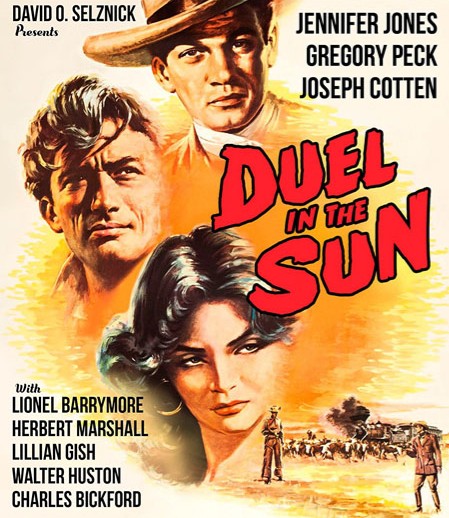
WHAT does it all mean? For starters, an industry or art form catering to the public gets into trouble when it disregards half of its potential audience. For example look at what happened to the Western movie when it began focusing almost exclusively on men characters (many Spaghetti Westerns did not have a single woman in the cast)– writing out the women who played a large part in the historic West, to present instead sociopathic narratives of obsessive bloodletting, often starring squinty-eyed and emotionless Clint Eastwood. A far cry from the days of the torridly romantic Selznick spectacular “Duel in the Sun.”

duelinthesunb - Edited

Today, the Western movie has all but vanished.
****

IF figures pertaining to class were available, we’d find the narrowness of viewpoint further skewed. Examine the mastheads of Manhattan magazines which cover arts and letters and you’ll find the staffers from the top down are graduates overwhelmingly of Ivy League universities, with a few Stanford grads and Brits from Oxford thrown in. The same holds true, from what I’ve examined, for the Big 5 New York City-based publishers. Those who decide which authors and books are published and reviewed are, in the main, upper-class women. Not by any measure the best way to create a representative literature for a very large and complex civilization like ours.
****

With an array of male authors and editors being purged from the book industry after “MeToo” revelations, the trend toward an all-female business and audience doesn’t look to turn around any time soon.

MORE TO SAY on this matter. . . .
****

-Karl Wenclas, New Pop Lit News

What’s the Future of Bookselling?

A TRIP TO A BOOKSTORE

Barnes_&_Noble_Interior

WE HAPPENED to step into a Barnes and Noble bookstore the other day. The experience set the wheels in my head turning– reawakening ideas I’ve had for a while.

On one level the experience was disheartening. An enormous store filled with tens of thousands of titles of well-packaged books on every possible subject– with about seven customers in the entire gigantic place, counting the two of us. As it was, there were two clerks for the store– several registers sitting closed, as well as an information counter. We eventually found a stray clerk to help us– the other was at a front register which seemed a mile away.

I’ve often thought that while big box stores may work in some instances, they aren’t ideal for books. You need large turnover– one would think– simply to pay for leasing, lighting, and heating the monster places. High-ceilings yet. Tremendous overhead– not to mention the amount of stock.

Titles, yes, and authors. Too many for any of them to stand out.

book stacks

What am I saying? Less is more. Smaller is better. Avoiding Too Much Information is the first rule of sales.

OR– a new style of bookstore could be developed– it’s on our drawing board. It would work only in conjunction with the right kind of promotion, driving demand, and with an entirely new style of literary writing designed to stand out. Which hits the reader hard from the start.

The novel itself needs to be overhauled.

No easy trick– but possible.
*******

-Karl Wenclas, New Pop Lit NEWS