Achieving Artistic Breakthrough
The Inside Game of AI

“The Coming AI Assault”

Making Creative Change

PART I: WHAT WE’RE NOT TAUGHT

Few people see the world as it really is, because we’re not taught to see it that way: As conflict between the dynamic and the static. The active agent, and the acted upon.

Count Leo Tolstoy discussed this in his massive masterpiece novel War and Peace. Is history the product of great men– or of the movement of massive unseen forces? Or a combination of both?

In his discussion of Napoleon and the invasion of Russia, Tolstoy saw the great man as merely along for the ride, accompanying a wave of economic and social forces. Yet change as often as not, even in the instance cited, is a matter of the willful individual pushing and driving the merely passive: the static. The inertia of movement pushing the inertia of the unmoving. Force upon molecules. One dynamic individual disturbing all around itself, like a cue ball upsetting a rack of balls in a pool hall.

XXXX

CHANGE should be especially true in the arts, which are intended to be dynamic. In constant flux.

The question for writers is: Which side of the equation are you on?

If you’re not published by one of the Big Four Manhattan publishers, or a professor at a university, it makes little sense to be on the side of the static. Of the aesthetic status quo. (Unless you write and publish as a hobby, to impress relatives and friends. But if you want more– ?)

NEXT: “Teaching Gatsby.”

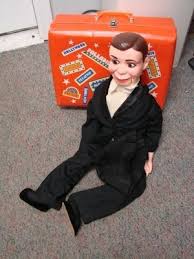
The Writer In a Suitcase ™

NOW AVAILABLE!

Popping up in writing programs across the country!

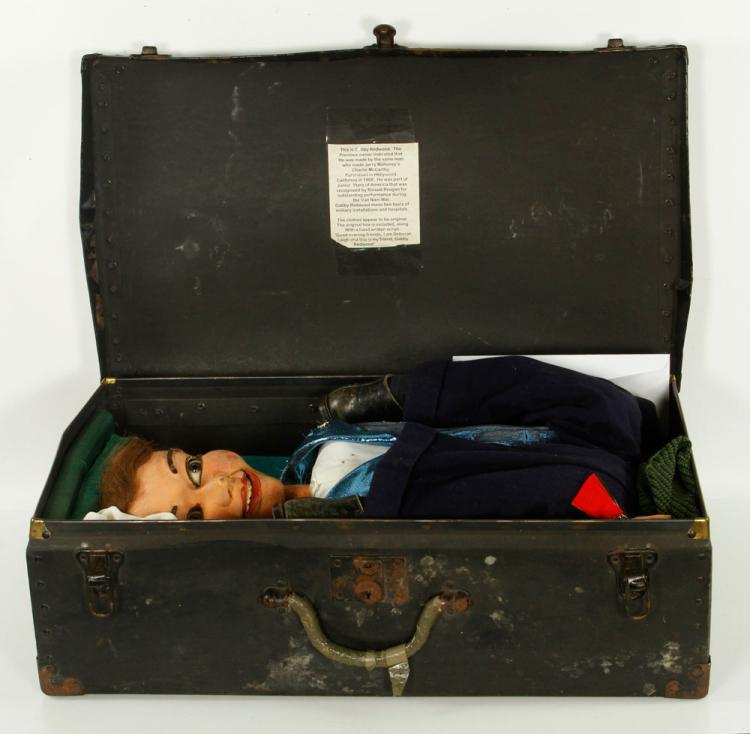
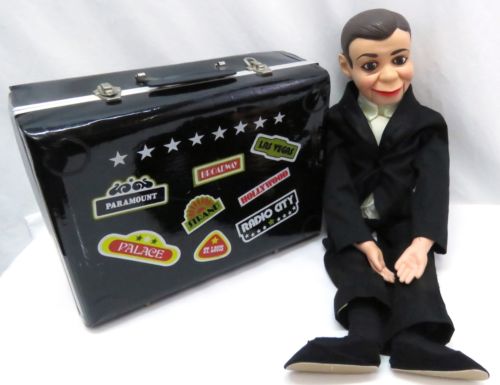
The Writer In a Suitcase ™ comes packaged in a box, and his mind– what there is of one– exists in a box. More, he puts all the people he meets into mental boxes, with labels on them. He perceives the world strictly through well-ordered labels and boxes.

Ease of Use! There’s no need for The Writer In a Suitcase ™ to monitor himself, as so many other writers now are doing. This writer comes pre-screened, proper acceptable attitudes built in, so to speak. There is zero possibility of The Writer In a Suitcase ever thinking an untoward thought, much less saying one.

Ease of Storage! At the end of a day of writing or editorial duties, The Writer In a Suitcase ™ can be put safely away in a drawer, there to be retrieved in the morning without a single change in perception, ideology, or beliefs. Guaranteed!

Though his literary style may be rather wooden, bloodless and humorless, without the failings of normal writers, this is small price to pay for the predictability of his writing. No surprises! No sarcasm, sneering, anger. No hate or lust. No mocking or violence or thunder: Nothing. Not a single self-generated emotion. What comes out of The Writer in the Suitcase‘s mouth is only what you the artistic gatekeeper put into it. This writer is utterly completely safe.

Order yours today!

-K.W.

Why Hemingway Was Hemingway

ERNEST HEMINGWAY AS LITERARY ROCK STAR?

In any group, Ernest was the most impressive personality.
-Charles Thompson, quoted in The True Gen.

THE HEMINGWAY PERSONA

First place to start in any examination of Ernest Hemingway is the larger-than-life Hemingway persona, which he spent a lifetime creating and perfecting. In that sense he was not unlike self-created Hollywood stars Cary Grant, Marilyn Monroe, and John Wayne. Intentional myth, which included his trademark macho bluster and swagger, but also his deliberately pushing himself into dangerous situations which could fuel that persona, that myth.

THE LOST GENERATION

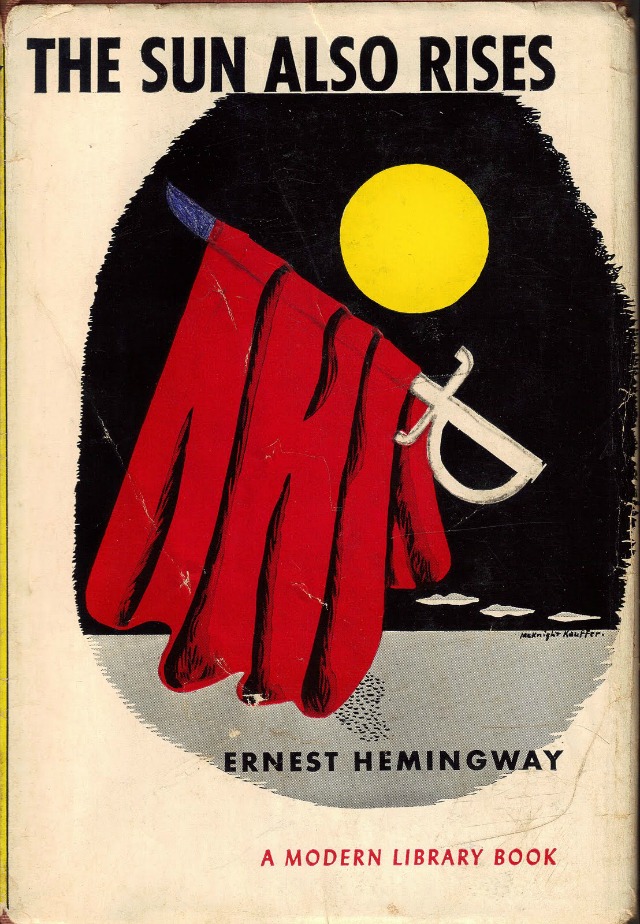
Much of the author’s myth and mystique came from being part of an artistic movement of expatriate writers and artists who congregated in Paris after the First World War. With the publication of The Sun Also Rises, Ernest Hemingway placed himself at the center of that movement.

HIS WRITING

Hemingway fictionalized his experiences, many of which were traumatic, such as being wounded during the First World War. This is most noteworthy in his first two novels, in which he gave his intense experiences just the right amount of distance, creating powerful effect and universal meaning.He was also a hard-core student of craft. His short story, “The Short, Happy Life of Francis Macomber,” is the most structurally complex story ever written, with deft switches between time and viewpoint, yet making the complexity unnoticeable. Seamless.

REVOLUTIONIZING THE LITERARY ART

It’s impossible for us to fully realize today the full extent to which Hemingway’s writing style (building on what he learned from Gertrude Stein, Sherwood Anderson, and Ezra Pound) hit the world with the shock of the new. His concise, well-crafted, often abrupt fiction was like the introduction of a new technology. It didn’t just add to the art of writing and the world of literature, but transformed them. His writing changed the way people viewed the world.

CULTURAL INFLUENCE

The popularity of the Hemingway style and ethos influenced the way people thought and talked. The very concept of noir fiction, for instance, stemmed from early stories of his like “The Killers” and those included in his collection In Our Time. One could most notice the influence in early sound movies from 1930 on, via tough guy actors like James Cagney, Edward G. Robinson, Clark Gable (the early version), and Humphrey Bogart. Bogie in particular played a Hemingwayesque character– the scarred existentialist hero– in most of his starring roles, including in one of the best films of all time, Casablanca.

AT THE CENTER OF HISTORY

One of the reasons Ernest Hemingway stood out from other writers during his lifetime was that he put himself at the center of world events, from World War I as an ambulance driver; the war’s aftermath as a correspondent, his public socializing in France and Spain, including his writing about bullfights; participant and war correspondent again during the Spanish Civil War and World War II in Europe, and of course his adventures hunting in Africa and deep sea fishing in the Caribbean.

THE GLOBAL AUTHOR

It was because he placed himself visibly on the world stage– in addition to his compelling writings– that Ernest Hemingway became one of the best-known persons on the planet. Universally read (only Jack London among American authors is comparable). One of America’s chief cultural exports at a time, in the mid-Twentieth Century, when American popular culture was sweeping across the planet.

Ernest Hemingway was a popular writer and at the same time an artistically serious one, that too-rare combination, which raised the standing of the literary art and inspired countless individuals to take up that art as their cause.

XXXX

-Karl Wenclas for New Pop Lit NEWS
The Tunnel Vision of Contemporary Literature

THE ROAD TO THE 3-D STORY

PostcardDetroitRiverRailroadTunnel(c/o Wikimedia Commons/T.C. Photochrom.)

THE RISK for any arts critic is to embrace the consensus of the presumed greatness of their art.

They’re almost forced to believe in it, surrounded as they are by the promotional noise of giant media conglomerates– including “Big Five” publishing– and other arms of an enormous status quo literary scene. That for all its enormity, whose many appendages carry the same premises and think the same way.

On some level the careers of the inhabitants of the established literary hive are dependent upon that belief in their art’s greatness. Their very number and the very size of the hive reinforces the belief. Which prevents them from looking outside the art, away from the current system.

The latest well-hyped release appears on their desk, and everyone is praising it. Can they fail to do likewise?

This limits their imaginations. They don’t search for those who don’t-play-the-game-the right-way. They don’t look for ways their art could be changed– or seek out those who are changing it. They fail to glance outside the tunnel– for instance, at other possible ways of writing the short story. At alternate modes of literary creation.

Many of them dismiss the idea.

Which reinforces cultural stagnation.

The mundane, the predictable, the dreary.

The authentic artist destroys the predictable. The cautious. The same.

It’s the only way to operate.
*******

-Karl Wenclas, New Pop Lit News

Reinventing the Short Story

CAN THE AMERICAN SHORT STORY BE REINVENTED?

question mark

MOST in the established literary scene would say, NO. They scoff at the idea. To them, work from currently approved writers– most if not all of them the product of prestigious writing programs– is the best of all possible worlds.

officer training(Photo public domain.)

The graduates are like soldiers in elite units of the U.S. Armed Forces. Navy Seals, Green Berets, Airborne and the like. Best of the best. HAVE been through rigorous screening and training. ARE the vanguard and face of a gigantic billion-dollar investment in the literary art, via hundreds of university writing programs headed and taught by hundreds of extremely talented writers.

photo by Virin(Photo by Virin.)

HOW COULD THEIR STORIES NOT BE THE BEST?

THE PROBLEM is the consensus itself. Because everyone within the system believes writing produced by the system is the best possible– raved about in articles, reviews, and blurbs– no one questions it. No one looks outside the parameters of the consensus searching for ways to change and rearrange the product.

NO ONE EXCEPT US!

COMING on 3D-Day June 6th, a different model for the short story.

3D postcard 5-page-001 - Edited

EXCLUSIVELY at NEW POP LIT.
http://www.newpoplit.com 
*******

Busting the Supply-Demand Equation

THE NEED FOR FICTION REINVENTION

Tesla_colorado_adjusted

People fail to realize the extent to which most things in life are influenced by the supply-demand situation.

For instance in politics, the enormous oversupply of liberal arts graduates is one of the drivers of left-wing activity. Alexandria Ocasio-Cortez (who after college worked as a bartender) is a classic example.

But what about art? Writing?

WHEN GOOD ISN’T GOOD ENOUGH

Many competent short story writers are published every year in literary journals across the country. Several of them are crafting short stories better than vaunted New Yorker magazine fiction– which for decades has been the model for writing programs across the nation. We’ve published a few of those better writers at our main New Pop Lit site.

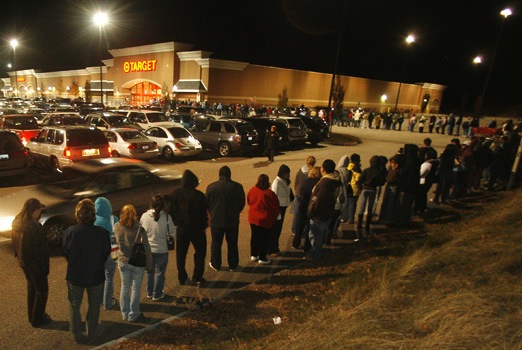
Having fiction placed in The New Yorker has been thought of as the Holy Grail for the standard MFA writing student. Thousands of MFA grads are attempting to follow that model. To squeeze through that narrow doorway. Lining up. Jamming up. A department store before the doors open on Black Friday.

black-friday_target_long-lineup

THE PROBLEM

The problem is that there are too many creative writers, and too few paying-or-prestigious outlets for their work. A vast oversupply of product. To meet it, tiny demand: very few people who read the overwritten New Yorker model. Today the creative writer’s audience consists of other creative writers, who’ve been trained to read and appreciate that obsolete style of story writing. (New Yorker stories themselves, with rare exceptions, are unread by most New Yorker subscribers.) Well-crafted literary stories are made to be admired, not read.

Today it doesn’t matter how well you the writer can write. The margin of difference between the best and the merely competent is small enough that decisions on who deserves publication and attention are made for reasons other than quality and talent. Instead, they’re made for reasons of politics, correctness, or connections.

THE SOLUTION

breaking glass

The solution is to bust the supply-demand equation which currently exists in writing. This can be done on both ends.

1.) Create a faster, vastly more readable and exciting short story model– one so new and thrilling it demands to be read. Done right, this could grow the audience for short fiction several times over.

At this point the art is so marginalized there’s ample room for growth.

2.) Create a short story prototype so different from the standard– and difficult to do well– that few writers will be able to write it.

Doing this will create the “perfect storm” of jump-started demand, with few writers able to fill that demand. Those writers a step ahead of cultural history will be in a valuable spot. The vocation of fiction writer will become a worthwhile pursuit, for the first time in years.

Creating that new product won’t be easy. I’ve been working intensively on the matter for many months– really, longer (did my first rough version five years ago)– and am finding the going anything but easy.

Then again, life isn’t easy.
*******

-Karl Wenclas, New Pop Lit NEWS


Schizophrenic Literary World

THE CURIOUS REHABILITATION OF TAO LIN

Tao_Lin_in_2010_(cropped)

THE WAR within establishment literature continues– as evidenced by this article by Jakob Maier of Buzzfeed News commenting on the sudden comeback of alt-lit opportunist Tao Lin.

(NOTE: Buzzfeed News was at the forefront of promoting accusations against Pulitzer Prize-winning author Junot Diaz— we have yet to receive a yes-or-no answer from reporters Amber Jamieson and Dara Levy about how much they knew in advance about the Zinzi Clemmons confrontation with Diaz at the Sydney Writers Festival this past May.)

ACCORDING to the Jakob Maier article, Tao Lin is currently being promoted by several icons of the established literary world– Vintage Books, The New Yorker and New York magazine. Anna Silman of The Cut (a New York mag project), has been leading the charge against Junot Diaz, so it’s a bit surprising to see this article in New York about what Tao Lin– accused of statutory rape four years ago– adds to his shopping cart.

shopping cart

AS Tao Lin infamously published a book titled Shoplifting at American Apparel, can we surmise that he doesn’t have a shopping cart? Confusion, confusion, all is confusion.

(To add to the confusion, the publisher of that book, Melville House, has also been on the anti-Junot Diaz bandwagon.)

For the record, Tao Lin as a writer is no Junot Diaz. In this critic’s opinion he has yet to demonstrate any writing talent at all.

More worrisome is possibility that the entire alt-lit movement of literary scam artists will make a comeback. Let’s hope not.